Russia says it downed 1,336 drones overnight, its highest tally of the war, while in Doha it fails to win senior roles at the International Telecommunication Union.
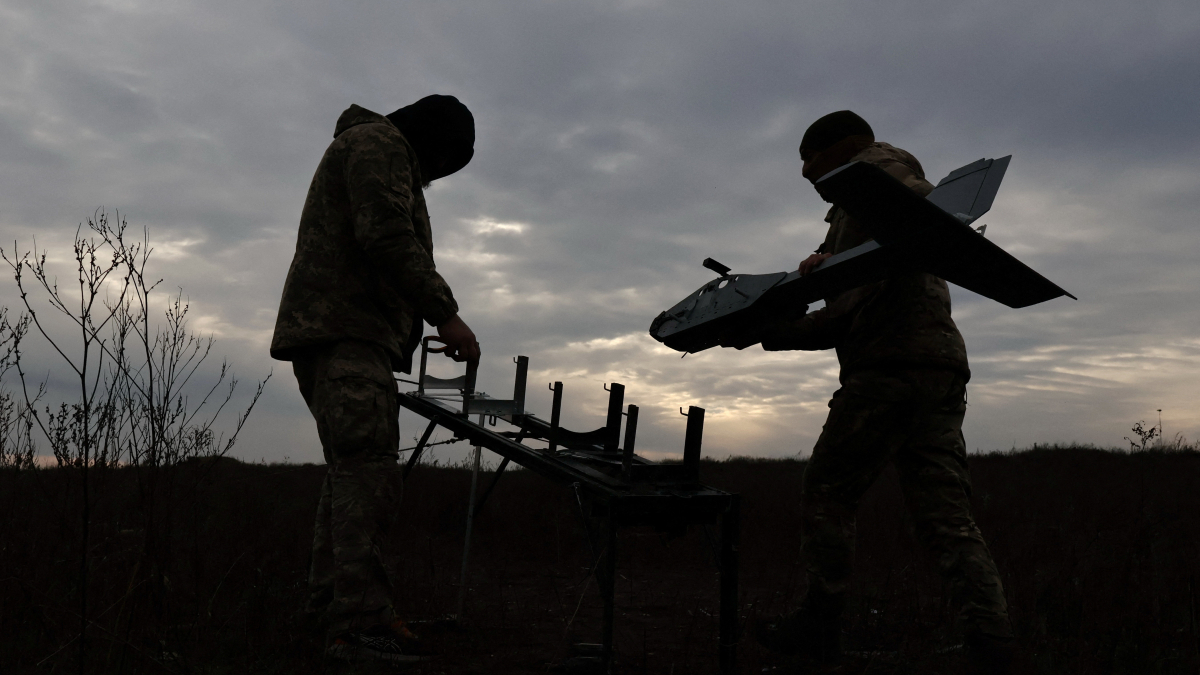
Ukraine targeted a strategically important bridge and oil refineries in an overnight assault that Russian defence ministry figures released on Monday indicated was the largest drone attack on the country since the full-scale war began in 2022.
Russia’s air defences shot down 1,336 Ukrainian drones across 16 regions, the ministry said, surpassing the previous record of 1,254 reported on 29 October.
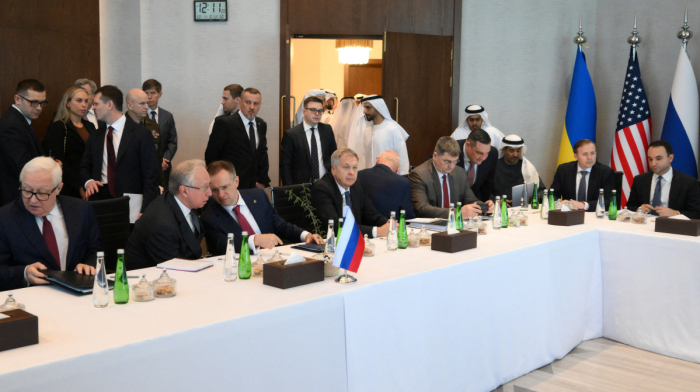
Separately, Russia failed to secure senior positions at the UN’s telecommunications agency during elections in Doha on Monday. Diplomats described the bid as part of Moscow’s efforts to reduce its international isolation over the war and expand its influence over digital technology.
Hundreds of drones target Moscow region
Moscow Mayor Sergei Sobyanin said around 600 Ukrainian drones had been launched towards the Moscow region since Sunday evening, with 191 intercepted.
The defence ministry said drones had also been shot down over Crimea, the Black Sea peninsula that Russia seized and annexed from Ukraine in 2014, as well as over the Sea of Azov and the Black Sea.
Key bridge linking Crimea and Russia hit
The road and rail bridge linking Crimea to Russia’s Krasnodar region was struck overnight, according to Sergei Aksyonov, the Russian-installed governor of Crimea.
The bridge is a major infrastructure project closely linked to Russian President Vladimir Putin.
The Kremlin described the damage as minor. Road traffic was temporarily suspended during repairs, but rail services continued to operate normally, the transport ministry said.
Oil refineries targeted as fires break out
Yuri Slyusar, governor of the Rostov region, home to several oil facilities, said fires had broken out at four industrial sites in Azov following the strikes. Emergency services were responding to the incidents, he said.
In the Krasnodar region, local officials reported a fire at an unnamed industrial site in Ilsky, a town with an oil refinery. Falling drone debris injured six people, including children, they added.
Ukraine has significantly intensified attacks on Russian oil refineries since the end of October. Ukrainian President Volodymyr Zelenskyy said late on Sunday that the strikes had disabled more than half of Russia’s refining capacity. Reuters could not immediately verify the claim.
Two industry sources told Reuters last week that the renewed attacks had reduced Russia’s refining capacity by about 30 per cent.
Russian officials and media reported the return of fuel shortages in at least six Russian regions last week. However, there has been no repeat of last summer’s lengthy queues at filling stations, when some motorists waited hours for fuel.
Strikes intensify despite peace efforts
Ukraine’s drone attacks have increased in both scale and frequency, as Russia intensifies its own drone and missile strikes. Both sides continue to target energy facilities and other critical infrastructure as the war of attrition deepens.
The escalation comes despite U.S.-brokered peace talks in Abu Dhabi last week, the first in nine months, alongside separate meetings between two U.S. envoys and Putin and Zelenskyy.
Kyiv and Moscow agreed to a major prisoner exchange, but the negotiations produced little progress on other key issues, including territory.
Russia controls about a fifth of Ukraine’s territory, although the front line has remained largely unchanged for months.
Russia loses key votes at UN telecommunications agency
Against the backdrop of continued fighting, Russia also suffered a diplomatic setback in Doha, where it had hoped to secure two senior roles at the International Telecommunication Union (ITU).
The agency’s 194 members voted to fill dozens of positions, but Moscow failed to secure either of its targets.
Russia received just 58 votes in the election for the Radio Regulations Board, compared with 111 for the successful candidate from Azerbaijan and 70 for the candidate from Kazakhstan.
It also failed to win a seat on the agency’s 48-member council, which oversees key aspects of its budget, strategy and administration.
“Russia should stop its aggression, otherwise it will remain isolated from main roads of international policy,” Yevhenii Tsymbaliuk, Ukraine’s ambassador to the UN in Geneva, told Reuters after the vote.
He said the outcome sent a clear message to Moscow.
Russia’s diplomatic mission to the UN in Geneva declined to comment.
War fatigue complicates efforts to isolate Russia
UN diplomats say some countries are becoming increasingly reluctant to publicly oppose Russia, as they seek to restore trade and security ties with Moscow despite the continuing war.
Diplomats believe Russia is seeking to capitalise on growing war fatigue to secure positions that could strengthen its influence within the UN system.
One diplomat said Moscow’s chances of success had improved, as some countries seeking to normalise relations with Russia were reluctant to challenge it openly.
Russia has faced similar diplomatic defeats. Last year, it failed to secure a seat on the board of the World Health Organization, while in 2023, it fell short of the votes needed to regain a place on the UN Human Rights Council in Geneva.
Why the UN telecommunications agency matters
The ITU, founded in 1865 to coordinate international telegraph services, is among the oldest UN agencies.
Based in Geneva, it organises major international conferences, coordinates the allocation of global radio spectrum and helps establish standards for artificial intelligence (AI) and emerging technologies.
Positions within the organisation are highly contested because they offer countries influence over critical technological decisions, including AI standards and radio spectrum allocation.
U.S. official Doreen Bogdan-Martin was re-elected as ITU secretary-general during Thursday’s meeting in Doha.
Before the vote, Western diplomats expressed concern about the prospect of Russia securing leadership positions, warning of the reputational implications and Moscow’s potential influence over global telecommunications policy.
Tsymbaliuk said Russian attacks had caused more than $2.5 billion in damage to Ukraine’s telecommunications infrastructure, excluding cyberattacks.
The ITU has previously upheld complaints over Russian interference with satellite signals.
A proposal led by Lithuania, currently under consideration, seeks to introduce tougher measures to prevent such interference.
Read more:









What is your opinion on this topic?
Leave the first comment