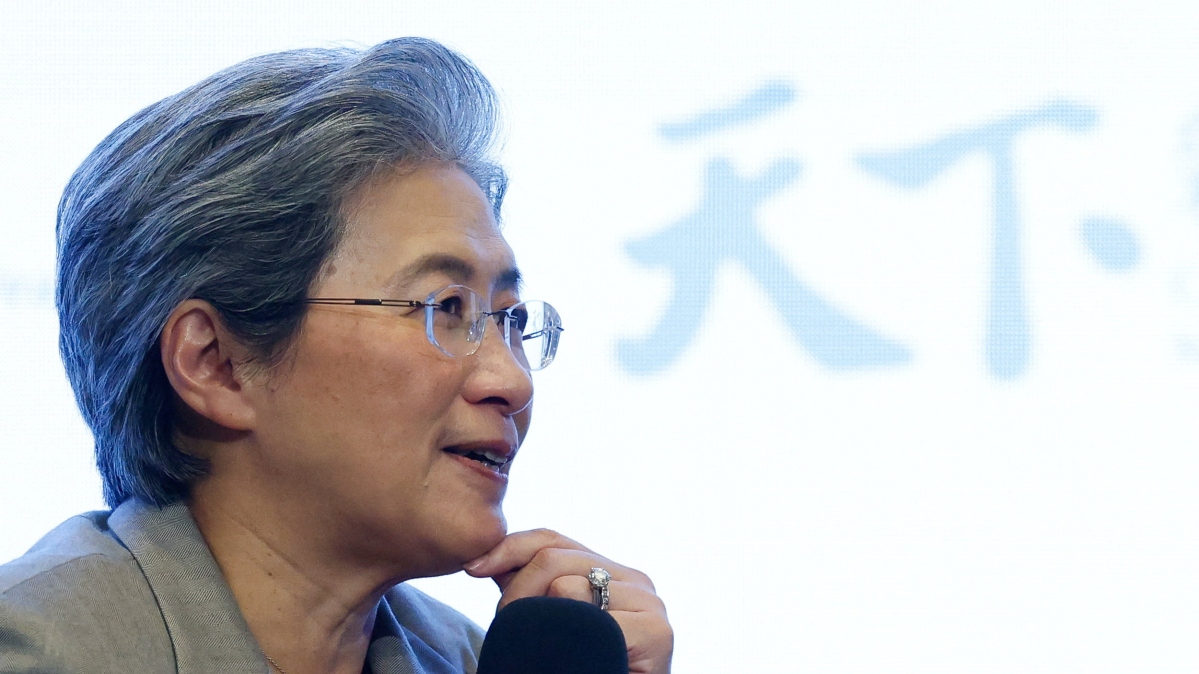
Nvidia CEO Jensen Huang and AMD CEO Lisa Su have joined the advisory board of Tsinghua University’s School of Economics and Management (SEM), bringing two of the world’s most influential AI chip executives into a forum linking global business leaders with Chinese officials.
The school announced the appointments on 29 September.
Huang and Su are among three new members named to the board. The third is Marc Pictet, senior managing partner of Swiss wealth and asset manager Pictet Group. Chinese media reported the appointments, citing the school’s official WeChat account.
New executives join board
Five other executives have joined the board as successor members, replacing former representatives of their companies following leadership transitions. They are BMW Chairman Milan Nedeljković, Walmart President and CEO John Furner, Coca-Cola CEO Henrique Braun, General Atlantic Co-President Martín Escobari and bp CEO Meg O'Neill.
Huang founded Nvidia in 1993 and has served as president and CEO ever since. Su has been AMD's CEO since 2014 and added the title of chair in 2022. Under her leadership, AMD has expanded in high-performance computing and AI, becoming a major rival to Nvidia in the market for advanced AI chips.
The SEM advisory board is chaired by Apple CEO Tim Cook, who has held the post since 2019. Former Chinese vice president Wang Qishan serves as honorary chairman.
The board is a high-level forum connecting global executives with senior Chinese officials. Its 27th annual meeting is scheduled for 13-14 October in the Chinese capital, with the new appointments coming ahead of the gathering.
Chip giants navigate U.S.-China tensions
The appointments come at a sensitive moment for the industry. Nvidia and AMD are seeking to maintain access to China, one of the world's largest semiconductor markets, while adapting to increasingly complex restrictions imposed by both the U.S. and China.
The board remains a channel connecting multinational companies with China despite tensions over technology and investment between the two countries.
Semiconductor export controls did not feature prominently in the public readouts of the recent summit between Chinese President Xi Jinping and U.S. President Donald Trump, and most of the restrictions remain in place. Huang attended a state dinner for Xi in Washington, a sign of how closely the Nvidia chief has been involved in broader U.S.-China engagement.
Huang appointment widely expected
Huang's appointment to the SEM board had been widely expected. He had reportedly accepted an invitation to join earlier this year, following his trip to China in mid-May as part of Trump's delegation.
At the time, his move to formalise an advisory role at China's most prestigious university drew attention as another sign of cautious re-engagement between U.S. technology firms and the Chinese market.
Balancing access and restrictions
For both companies, the appointments underline a balancing act. Each is keen to preserve its commercial presence in China, yet both operate under U.S. export rules that limit which advanced chips they can sell in the country, alongside measures imposed by Chinese authorities.
Whether the new board seats translate into any change in that landscape remains to be seen, but they give two of the industry's most influential leaders a regular seat at a table where Chinese policymakers and global business chiefs meet.
Read more:















What is your opinion on this topic?
Leave the first comment