The war between Iran and the U.S. is creating a widening security challenge for Saudi Arabia, stretching from Yemen’s Red Sea coast to Iraq as the Houthis emerge as a growing source of pressure on the kingdom.
The emerging threat is not simply about missiles crossing borders. Attacks on oil infrastructure and pressure on key shipping routes are disrupting global energy flows, while the movement of armed groups raises concerns that separate Iran-aligned fronts could increasingly strain Saudi defences.
To Saudi Arabia’s south, the Houthis have pushed towards one of the world’s most important maritime chokepoints. To the north, a drone attack launched from Iraqi territory has already struck a critical Saudi oil route.
Together, these developments show how the effects of the Iran war are spreading across the region, with Yemen remaining one of the most immediate concerns for Riyadh.
The Houthi front moves closer to Bab al-Mandab
The Houthis have expanded their presence along Yemen’s Red Sea coast, reaching Perim Island in the Bab al-Mandab Strait and taking the mainland coastal town of Dhubab, according to Yemeni government sources cited by Reuters.
Bab al-Mandab connects the Red Sea with the Gulf of Aden and forms part of a major maritime route linking the Indian Ocean, the Suez Canal and European markets. Sustained disruption could therefore affect far more than Saudi Arabia, potentially altering shipping patterns between Asia, the Middle East and Europe.
Reuters reported in September that the Houthi advance was increasing concerns over energy supplies and the security of the Red Sea shipping route.
The group has also stepped up attacks against Saudi Arabia. Saudi-led coalition forces said six ballistic missiles targeting Taif and the strategically important Red Sea port of Yanbu on 24 September were intercepted.
The Houthis have also been blamed for attempted attacks on Riyadh, while Saudi energy infrastructure has faced repeated threats.
That is where Iraq becomes part of the wider security picture.
Iraq adds another layer to the same confrontation
On 11 September, Saudi Arabia temporarily shut its East-West oil pipeline after a drone attack that Iraqi authorities acknowledged originated from Iraqi territory.
The 1,200-kilometre pipeline is strategically important because it allows Saudi crude to move from the Gulf to the Red Sea, providing an alternative export route when shipping through the Strait of Hormuz is disrupted.
The attack highlighted the geography of Saudi Arabia’s growing security challenge: Houthi forces were increasing pressure from Yemen and the Red Sea, while an attack originating in Iraq hit an important Saudi oil corridor from the opposite direction.
The fronts are separate, and there is no established evidence that the attacks were centrally coordinated. For Riyadh, however, the security challenge is increasingly regional rather than confined to its border with Yemen.
That makes the Houthi threat more consequential if Saudi Arabia must defend not only its southern border and Red Sea coastline, but also energy infrastructure vulnerable to attacks originating elsewhere in the region.
Hormuz is the third piece of the picture
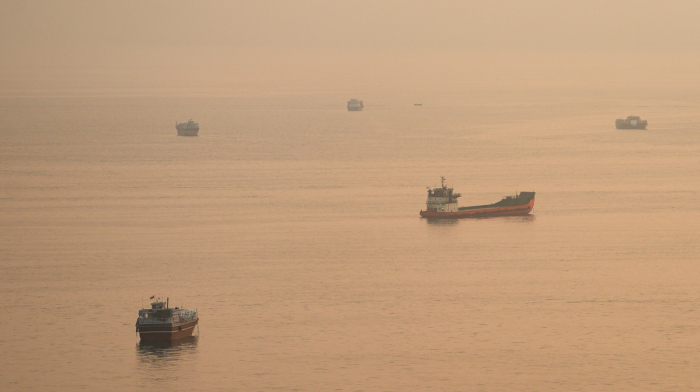
The Strait of Hormuz is the third part of the equation, with the crucial waterway under pressure from the wider Iran conflict.
Before the war, around 20 per cent of the world’s daily crude oil and liquefied natural gas supply moved through the strait. Middle Eastern crude exports recovered to about 16.3 million barrels per day in September, according to data from Kpler, but remained roughly 3.2 million barrels per day below February’s pre-war level of 19.5 million.
Saudi Arabia has consequently had to adjust its export routes and shipping arrangements to keep crude moving.
The strategic problem is straightforward: if Hormuz is disrupted, Gulf producers need alternative routes. If the East-West pipeline is attacked, Saudi Arabia loses capacity on one of those alternatives. If Bab al-Mandab is also threatened, the Red Sea route becomes another point of vulnerability.
That is why the Houthi advance has implications far beyond Yemen.
Iraq's changing security environment could make the problem harder
Developments in Iraq add another layer of uncertainty. On 30 September, U.S. forces completed their withdrawal from Iraq, ending a military presence that began with the 2003 invasion.
Iraqi security experts have warned that the departure could give Iran-aligned armed groups greater room to operate, while raising questions over intelligence and surveillance capabilities previously provided by U.S. forces.
That does not mean Iraq has entered the war, nor does it establish that Baghdad supports attacks against Saudi Arabia. It does, however, change the security environment in which the confrontation with the Houthis is unfolding.
Iraq is home to powerful Iran-aligned armed groups and sits between Iran and the Gulf states. Any weakening of Baghdad’s ability to control armed activity on its territory could make attacks against neighbouring states, energy infrastructure or transport corridors harder to prevent.
For Saudi Arabia and the wider Gulf region, that makes developments in Iraq increasingly relevant to the regional security calculations surrounding the Houthis.
A wider Houthi confrontation takes shape
The emerging regional security picture is becoming increasingly difficult to divide into isolated conflicts.
The Houthis are the most visible pressure point to Saudi Arabia’s south, with their advance towards and into positions around Bab al-Mandab giving them a strategic foothold along a major international shipping corridor.
Iraq represents another part of that security environment: its territory has already been used to launch an attack that affected Saudi energy infrastructure, while Iran-aligned armed groups retain significant influence there. Hormuz, meanwhile, remains the central energy chokepoint connecting the wider regional picture.
As the Iran war spreads across the region, the Houthi confrontation is becoming potentially more dangerous than a conventional conflict confined to Yemen. The group does not need to control Saudi territory to threaten the kingdom’s security or disrupt its energy exports.
Pressure around Bab al-Mandab, combined with attacks on infrastructure elsewhere in the region, could force Riyadh to protect multiple links in the same energy supply chain.
If Houthi pressure around Bab al-Mandab continues while Saudi infrastructure remains vulnerable to attacks originating from Iraqi territory, the kingdom’s security challenge will increasingly be defined not by a single battlefield, but by a network of pressure points stretching from Iran and Iraq to Yemen, the Red Sea and the Gulf.














What is your opinion on this topic?
Leave the first comment