The EU’s top diplomat says Moscow has shown no goodwill ahead of Abu Dhabi talks, while France unveils a G7-backed network linking 14 ports against drug trafficking.
The European Union’s foreign policy chief said on Monday that she saw little sign Russia genuinely wanted to negotiate an end to the war in Ukraine.
She argued that Moscow had already signed numerous agreements underpinning European security, but had failed to honour them.
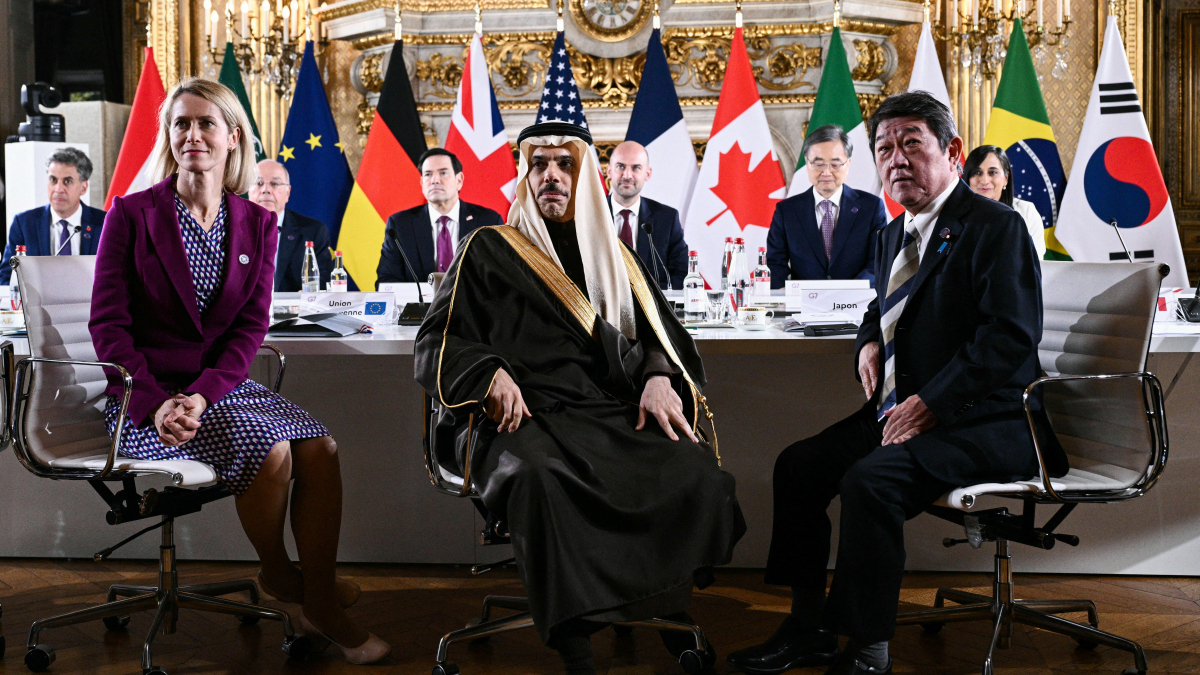
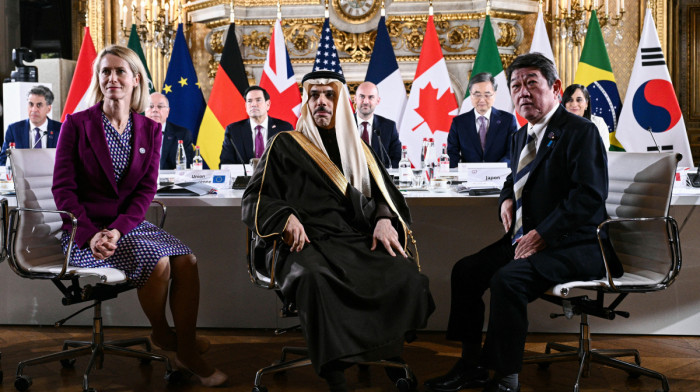
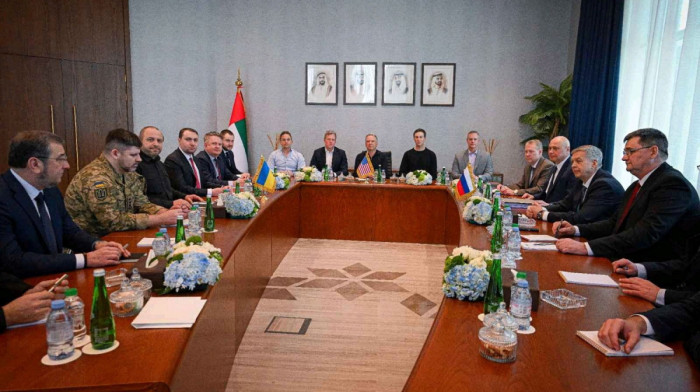
Kaja Kallas was speaking on the sidelines of a meeting of G7 foreign ministers in Paris. The meeting comes ahead of three-way talks between Ukraine, Russia and the U.S. in Abu Dhabi on Tuesday. Officials from France, Britain, Germany, NATO and the European Commission will also be in the Emirati capital.
“So far they have just been pretending that they negotiate because we haven’t seen any goodwill from the Russian side,” Kallas told Reuters in an interview.
“They are bombing Kyiv, they are bombing civilians. Ukrainians are making advances on the battlefield, so the Russian focus has been only on civilians to cause as much suffering before the hard winter is coming.”
Russia denies targeting civilians. However, it has intensified air attacks on Ukraine’s energy infrastructure and other key sites in recent months, as its ground advances in eastern Ukraine have stalled.
Ukraine has responded with drone strikes on Russian energy facilities, often far inside Russian territory.
Moscow has long accused European countries of ignoring its own security concerns, citing NATO’s expansion up to its borders.
“We already have a European security architecture”
Last week, Jared Kushner, one of the lead U.S. negotiators, said Washington was working on a “broader European security architecture”. The remark has unsettled some Europeans, who have repeatedly said they will not accept any arrangement they have not agreed to.
“The problem is that we already have a European security architecture in place that Russia has agreed to,” Kallas said.
She pointed to the 1994 Budapest Memorandum, under which Russia and other signatories pledged to respect Ukraine’s independence, sovereignty and existing borders.
“All this talk has to be about how we make sure that Russia actually respects the obligations that it has taken,” she said.
Divisions among Europeans have also come to the surface. On 5 November, Italian Prime Minister Giorgia Meloni warned that Europe risked becoming irrelevant to efforts to end the war if member states kept pursuing separate diplomatic tracks instead of agreeing on a common representative and strategy.
Kallas said future talks on European security should be led by the EU, in line with its treaties and institutions, rather than through ad hoc formats.
“It is clear that the big countries want to talk also to big countries,” she said. “But when it comes to European security issues, then the European Union has very clear lines in place. We have the treaties.”
The EU is negotiating its 22nd package of sanctions against Russia. Kallas said she hoped losses suffered by U.S. President Donald Trump’s Republicans in last week’s midterm elections would change Washington’s approach to Ukraine.
“We are hoping that there will be pressure on Russia to end this war and pressure (with) the (US) sanctions,” she said. “If we were to do this together with the Americans, it would really have an effect.”
France launches anti-drug port network
At the same meeting, France formally launched a new G7-backed network linking major ports, customs services and international organisations to improve intelligence sharing and coordination against drug trafficking routes.
The G7 comprises Britain, Canada, France, Germany, Italy, Japan and the U.S. Its foreign ministers are meeting in Paris on 9 and 10 November.
The network covers 14 ports. It brings together G7 countries, Brazil and South Korea, major international ports, and organisations including Interpol, the UN Office on Drugs and Crime, the International Maritime Organization and the World Customs Organization.
“Through this international dimension, we can bolster the substantial efforts already being led by the Ministry of the Interior—and other relevant ministries—to tackle a problem that inflicts such deep harm upon our society,” French Foreign Minister Jean-Noël Barrot told a news conference.
The network aims to strengthen cooperation against narcotics passing through major maritime hubs by tackling the entire supply chain, from production and transit countries to destination markets.
Its stated goals are:
- easier intelligence sharing
- operational cooperation between ports and customs authorities
- identifying trafficking routes
- better detection of containers used by criminal organisations
- coordination between maritime, customs and law enforcement agencies
According to a French government document, France has signed more than 20 bilateral cooperation agreements on drug trafficking since late 2025.
Over the past year, it has also increased its specialised anti-drug staff in Latin America and the Caribbean by more than 30 per cent.
France said cooperation with countries in North Africa and the Middle East had led to the extradition of more than 20 people in 2025.
Read more:








What is your opinion on this topic?
Leave the first comment