The FBI is investigating Nvidia CEO Jensen Huang's relationship with a Chinese businesswoman suspected of passing information to Beijing, U.S. President Donald Trump said on Monday, 9 November, as allegations of a possible intelligence operation intensified scrutiny of the world's top chipmaker.
The federal investigation comes as Nvidia's board conducts a separate independent inquiry into whether Huang was targeted by foreign intelligence.
The company announced its investigation on Sunday, following reports that U.S. authorities had identified the businesswoman as a suspected Chinese intelligence asset.
Nvidia shares closed more than 4 per cent lower on Monday, while shareholders filed a proposed class-action lawsuit accusing Huang and the company of concealing his alleged ties to the woman.
China has rejected the espionage accusations as groundless, and no evidence has been made public establishing that Huang knowingly participated in intelligence activities.
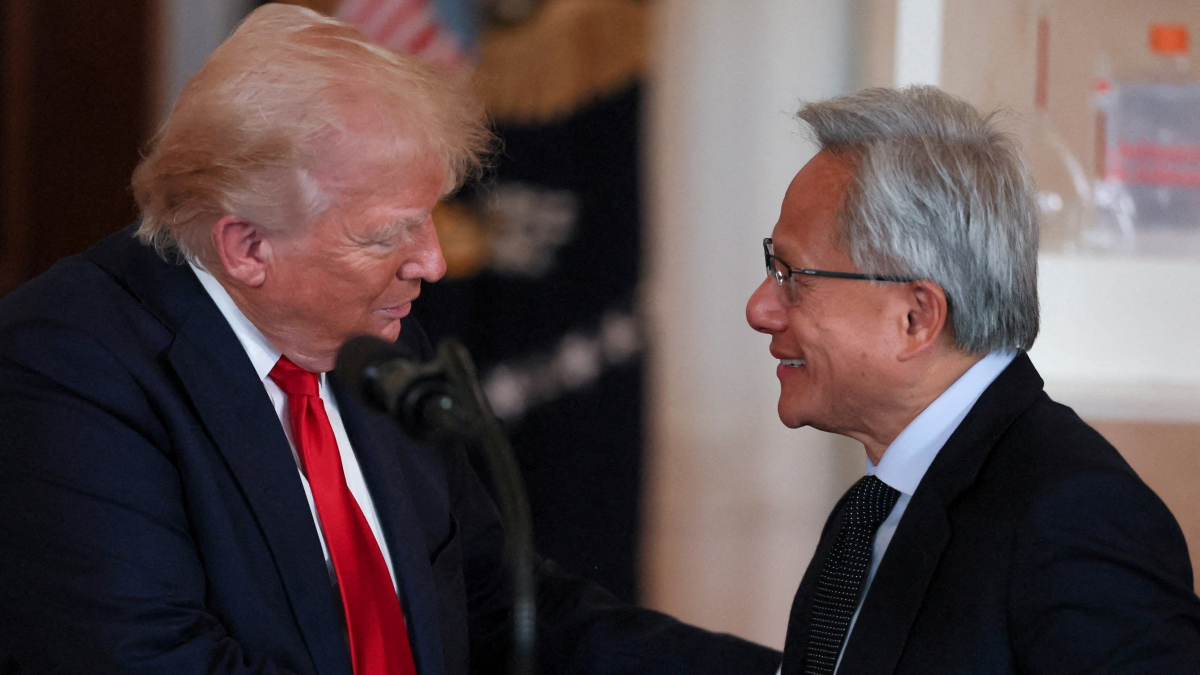
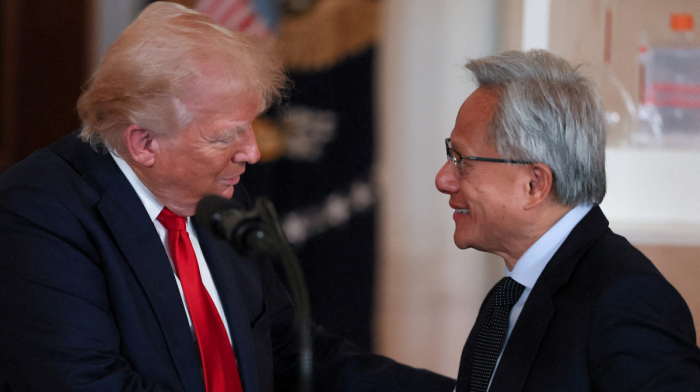
Trump confirmed the FBI's involvement during a White House briefing on Monday, saying he had spoken directly with Huang about the allegations.
The president said Huang denied knowing that the woman was allegedly working for Chinese intelligence.
“I asked him that question 'Did you have any idea that she was a spy?' He said 'I had no idea that she was a spy' and I really believe him,” Trump told reporters.
“I know the FBI is looking into it,” he added. “I think that he'll be in good shape.”
Trump said he was surprised by the allegations involving Huang, who has developed close ties with his administration.
The FBI has not publicly detailed the scope of its investigation in the reporting available, and it remains unclear whether Huang himself is a subject of the inquiry or whether investigators are examining a broader suspected intelligence operation.
Woman at the centre of the allegations?
The controversy follows an October report by The New York Times alleging that Huang had a relationship with Alice Huang, an unrelated former executive at Singapore-based technology company Megaspeed.
According to the newspaper, U.S. authorities investigated Alice Huang and concluded that she was a Chinese intelligence asset who had provided information to Beijing.
The New York Times also reported that Trump had previously been briefed about the relationship and the woman's alleged intelligence activities but had decided against taking action.
The allegations have raised questions about whether sensitive information could have been exposed, although no evidence establishing that Huang knowingly shared confidential information with Chinese intelligence has been made public.
Nvidia's board announced an independent investigation on Sunday, 8 November, into whether its chief executive had been targeted by a foreign intelligence operation.
Huang acknowledged in a message to employees that he had been unfaithful to his wife but did not disclose details of the relationship.
The 63-year-old executive apologised for his actions and their impact on his family and colleagues.
Nvidia has maintained that its board continues to have confidence in Huang and his leadership.
The company's internal inquiry is separate from the FBI investigation described by Trump.
The allegations have placed renewed attention on Huang's central role at Nvidia, which has become one of the most influential companies in the global artificial intelligence industry.
China dismisses spy allegations
China's Foreign Ministry rejected the accusations on Monday, describing claims of a Chinese intelligence operation as unfounded.
“The so-called Chinese spy narrative is purely a groundless accusation, slander, and a smear,” spokesperson Guo Jiakun told reporters in Beijing.
Beijing's response comes amid longstanding tensions with Washington over advanced semiconductor technology and restrictions on China's access to American AI chips.
Nvidia has been particularly affected by U.S. export controls, which limit the sale of certain advanced processors to Chinese customers.
The allegations have now brought the company's leadership into the wider debate over technology security and economic competition between the two countries.
Nvidia shares closed more than 4 per cent lower on Monday after the company's board announced its investigation.
The decline reflected growing investor uncertainty surrounding Huang's future and the potential consequences for Nvidia's leadership.
Shareholders also filed a proposed class-action lawsuit on Monday, accusing Huang and Nvidia of defrauding investors by concealing his alleged relationship with a suspected Chinese intelligence operative.
The accusations remain allegations and have not been established in court.
According to LSEG data, Huang is Nvidia's fifth-largest shareholder, with a stake of approximately 3.6 per cent.
Unlike some other major technology companies, Nvidia does not have a dual-class share structure that gives its co-founder majority voting control.
Huang nevertheless maintains significant influence over the company through a management structure in which dozens of executives report directly to him.
How the investigation affect Huang's leadership
The investigations have raised questions about succession planning at Nvidia, although most analysts on Monday did not expect Huang to step down.
Stacy Rasgon, an analyst at Bernstein, highlighted the executive's unusually influential role in the company.
“Nvidia is not an ordinary company and Jensen is not an ordinary CEO; he is Nvidia, clearly sets the long-term strategy and direction, and pulls most of the company's strings himself,” Rasgon said.
Huang co-founded Nvidia and has led it for more than three decades, overseeing its transformation from a graphics-chip manufacturer into a leading supplier of processors powering artificial intelligence systems.
His leadership has become closely associated with the global AI investment boom, making any uncertainty surrounding his position particularly significant for shareholders.
For now, Nvidia's board has publicly maintained its confidence in Huang, and no leadership change has been announced.

















What is your opinion on this topic?
Leave the first comment