Hundreds of thousands of deep-diving turtles, known as olive ridley sea turtles, have arrived on Mexico’s southern coast for one of nature’s most striking nesting events. But conservation officials warn that climate change is making it increasingly difficult for their eggs to hatch.
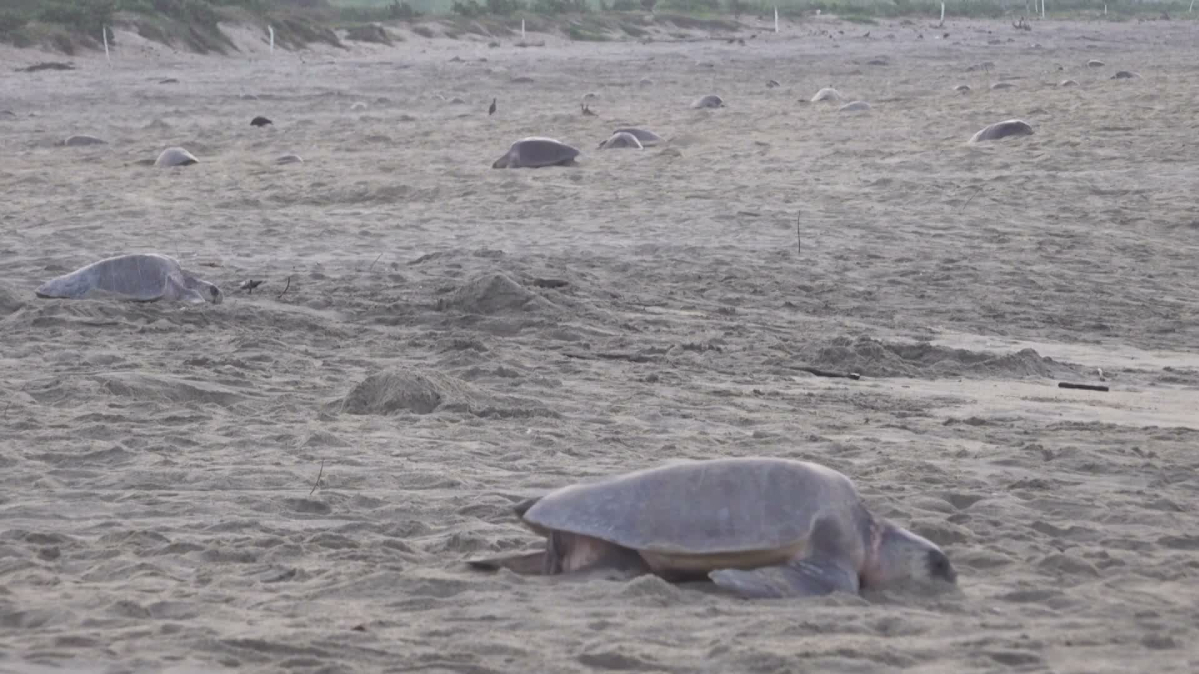
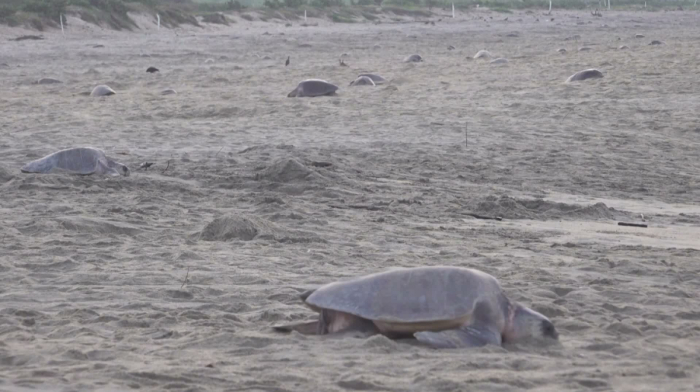
Thousands of turtles are covering the shores of La Escobilla in the southern Mexican state of Oaxaca as part of an “arribada”, a mass nesting event in which large numbers of female turtles come ashore at the same time to lay their eggs.
Officials at the Playa Escobilla Sanctuary say the latest arrival is the sixth such event since the nesting season began in March.
Around 300,300 turtles have been recorded during the season so far, according to Rafael Villanueva Alcazar, head of department at the sanctuary.
“Up to now, from the first arrival until now, the sixth one, we have an average of 300,300 turtles throughout this season,” Villanueva Alcazar said.
The large number of nesting turtles makes La Escobilla one of the most important nesting areas for the species.
However, officials say the conditions beneath the sand are becoming increasingly difficult for developing embryos.
Rising temperatures threaten hatchlings
Higher temperatures and reduced rainfall are leaving nests hotter and drier, threatening the development and survival of hatchlings.
Villanueva Alcazar said climate change had become one of the most significant threats facing the species.
“Rains are no longer occurring, temperatures are elevated, and consequently there is very low hatchling production,” he said.
He added that high beach temperatures and low levels of moisture in the sand were making it harder for young turtles to successfully emerge from their eggs.
Officials say the hatching rate at La Escobilla currently stands at about 40 per cent.
“Even though that sounds somewhat high, it's actually very low compared to other beaches that have a higher rate of hatchling production,” Villanueva Alcazar said.
Conservation challenge grows
Olive ridley turtles continue to return to La Escobilla in vast numbers each nesting season, but conservationists say the success of future generations will increasingly depend on environmental conditions at nesting sites.
Protecting nests from extreme heat and maintaining suitable levels of humidity are becoming more important as climate patterns shift.
While the mass arrivals remain an extraordinary natural spectacle, officials warn that the number of turtles reaching the beach does not necessarily guarantee that their offspring will survive.
For conservation teams at La Escobilla, ensuring that enough hatchlings successfully reach the sea is becoming an increasingly urgent challenge.
Read more from Mexico:























What is your opinion on this topic?
Leave the first comment