When Iran moved to shut the Strait of Hormuz this year, sending Middle East energy markets into turmoil, China had already spent the best part of a decade getting ready for exactly this kind of shock.
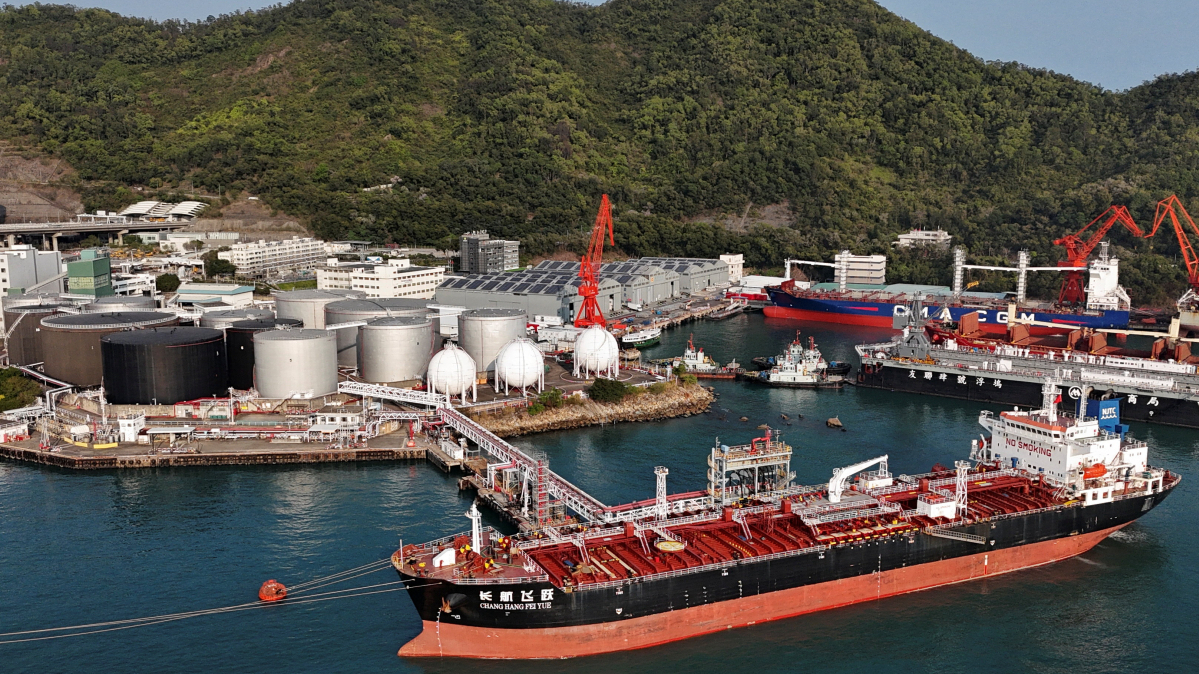
For years, its three state oil giants, PetroChina, Sinopec and CNOOC, have poured hundreds of billions of dollars into domestic wells, storage tanks and pipelines, often at real cost to their own profits.
That build-up is now cushioning the world's second-largest economy against a disruption that has hit its regional rivals far harder.
According to Reuters, the three companies have invested roughly 2.3 trillion yuan, or about $343 billion, in domestic oil and gas projects since 2018, against some $56 billion spent overseas.
The push began after Beijing launched a seven-year plan to reverse falling domestic output, and it has lifted crude production to around 4.3 million barrels a day, up from lows of about 3.8 million.
Domestic natural gas output has also climbed by roughly a third since 2020, according to the Austrian Institute for International Affairs (OIIP), easing pressure on imported liquified natural gas (LNG).
None of this has come cheap. Onshore fields run by PetroChina and Sinopec cost an estimated $55 a barrel to produce, against roughly $37 for U.S. shale, and Reuters reports that some fields have kept pumping at a loss simply to sustain output.
Filling the tanks
The other pillar of Beijing's preparations has been stockpiling. The U.S. Energy Information Administration (EIA) estimates China added an average of 1.1 million barrels a day to its strategic oil inventories in 2025, taking total holdings to almost 1.4 billion barrels by December, the largest reserve held by any country, ahead of the United States and Japan.
Roughly one billion barrels of that sits in commercial storage rather than the official state reserve, after Chinese authorities directed national oil firms from 2024 to treat commercial tanks as a second layer of strategic supply.
A new Energy Law, in force since January 2025, put that practice on a firmer footing. Toril Bosoni of the International Energy Agency has said the law effectively turned Chinese refiners into “long-term strategic storage partners for the government”, given the limited capacity of the country's official reserve.
Vortexa analyst Emma Li has tracked the resulting build-up closely, noting that the heaviest stockpiling began in April 2025, when falling prices and geopolitical uncertainty encouraged Chinese buyers to fill tanks that were then only around 60 per cent full.
The Atlantic Council think tank estimates that China's onshore crude stocks, at roughly 1.2 billion barrels in January, gave it, together with domestic output, enough cover to sustain around 108 days of imports, rising to 130 days if fuel exports were halted altogether. Beijing may also be able to draw on some 38 million barrels of floating Iranian crude held on tankers, the think tank says.
That compares with far thinner buffers in Japan, South Korea and Taiwan, which have almost no crude production of their own and were more exposed when roughly three-quarters of Middle Eastern crude bound for the region stopped moving through the Strait of Hormuz.
In March, the International Energy Agency co-ordinated an emergency release of stocks among its members, including the U.S., in response.
Spreading the risk
Beijing has also worked for years to avoid relying too heavily on any single supplier. OIIP research - or the total estimated volume of oil in a reservoir before production - finds China aims to keep no one country above 15 to 20 per cent of its oil or gas imports, balancing seaborne cargoes from the Gulf, Africa and Latin America against pipeline supplies from Russia and Central Asia.
Russia was China's largest crude supplier in 2025, at around 18 per cent of imports, ahead of Saudi Arabia on 14 per cent and Iraq on 11 per cent.
A costly insurance policy
That resilience has carried a commercial sting. As the Middle East crisis intensified, Beijing capped domestic fuel prices and briefly restricted exports in March, squeezing refiners even as global crude prices climbed.
Sinopec recorded an estimated refining loss of 1.8 billion yuan or $268 million in the second quarter, and while CNOOC and PetroChina posted record first-half profits, their gains lagged well behind those of Western rivals such as ExxonMobil and Chevron, which faced no such price controls.
That gap is the point, in a sense. As the Center for Strategic and International Studies has long argued, China's national oil companies are commercial enterprises, but they are also central actors in a state strategy that reaches well beyond ordinary business logic.
Reuters notes that their investment decisions are closely tied to Beijing's goal of stable supply, even when that comes at the expense of shareholder returns.
China still cannot produce enough oil to meet its own demand, and is unlikely ever to be fully insulated from a prolonged supply shock.
But years of expensive, unglamorous investment in wells, tanks and pipelines have bought Beijing something harder to price: time to manage a crisis without panic, which, analysts suggest, may be worth rather more than it cost to acquire.
Read more:











What is your opinion on this topic?
Leave the first comment