Food prices around the world rose sharply in August, reaching their highest level since late 2022 as extreme weather and disruptions caused by conflicts drove the surge according to the United Nations' Food and Agriculture Organization.
The FAO Food Price Index rose to 133.3 points from a revised 130.8 in July.
It was the highest reading since November 2022, although prices remained nearly 17 per cent below the record reached in March that year after Russia's invasion of Ukraine.
A combination of extreme heat and drought in Europe, concerns over a possible strong El Niño and disruptions to global trade have added pressure to agricultural markets.
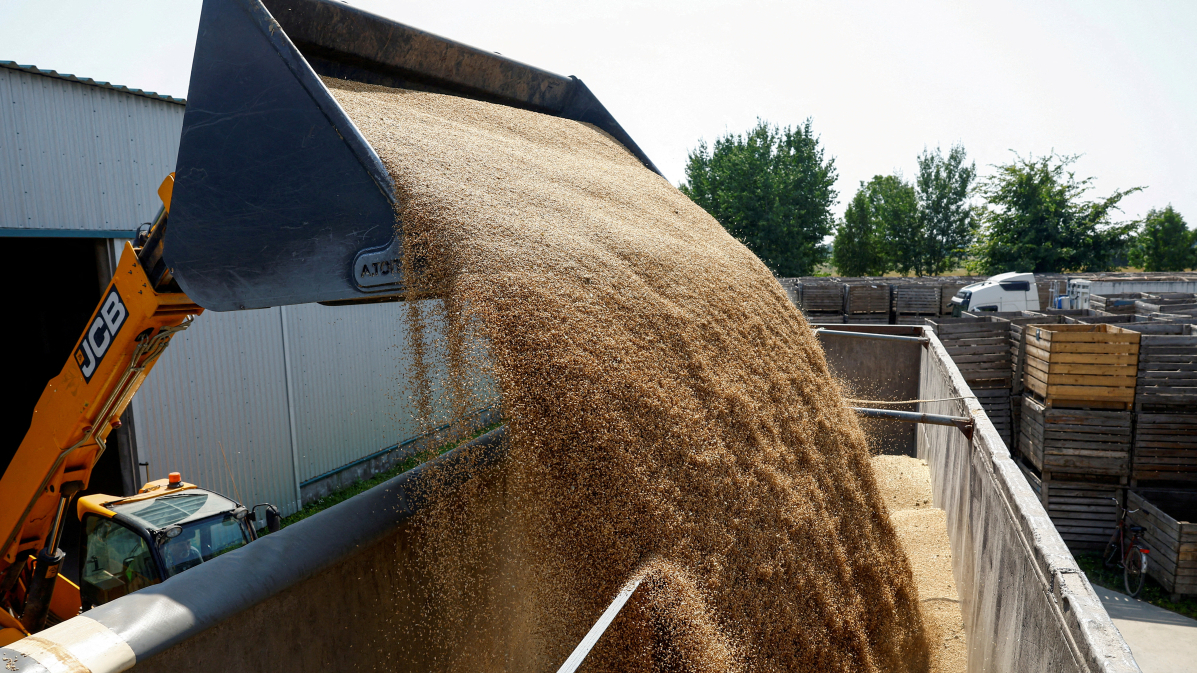
The effects are already being felt across several major food commodities. Grain prices climbed to their highest level in three years, while sugar reached a one-year peak.
“August’s increase in global food prices is a warning that the risk premium is returning to food markets,” FAO Chief Economist Maximo Torero said.
He pointed to climate shocks, geopolitical tensions and disruptions to trade routes as factors tightening expectations for global food supplies.
Prices for all five categories tracked by the FAO — cereals, vegetable oils, sugar, meat and dairy — increased during the month.
Sugar sees biggest jump
Sugar prices recorded the sharpest increase, with the FAO's sugar index jumping 11.9 per cent in August to its highest level since June 2025.
Lower production in Brazil's key centre-south region added to concerns about weather-related damage to crops in Europe and Asia, the FAO said.
The cereals index rose 2.2 per cent from July, reaching its highest level since May 2024. Vegetable oil prices also increased, rising 0.6 per cent to their highest level since June 2022.
Extreme weather in Europe has raised concerns over maize and sugar beet harvests, while also threatening livestock production. In Asia, the prospect of El Niño has increased worries about palm oil and sugar supplies.
Fighting around the Black Sea has disrupted grain shipments from Russia and Ukraine, two major suppliers to global agricultural markets.
The conflict has also affected expectations for cereal stocks. The FAO raised its forecast for Russian and Ukrainian wheat inventories, partly because shipping disruptions could leave more grain in those countries.
At the same time, the U.S.-Iran conflict has disrupted fertilizer flows, adding another concern for farmers heading into future growing seasons.
Global cereal production forecast cut
The FAO also lowered its forecast for global cereal production in 2026 by 3.4 million metric tons from its July estimate, putting expected output at 2.980 billion tons.
That would be 2.0 per cent lower than in 2025 and the biggest annual decline since 2018.
Even so, global cereal production would remain the second-highest on record.
The agency also cut its forecast for global cereal stocks at the end of the 2026/2027 season by 1.1 per cent to 947.2 million tons, leaving inventories only marginally above the previous season.
A reduction in expected coarse grain stocks outweighed an upward revision for wheat stocks, the FAO said.
With extreme weather, geopolitical tensions and disrupted trade all putting pressure on food supplies, the latest figures point to a more uncertain outlook for global food markets.
Read more:
















What is your opinion on this topic?
Leave the first comment