Venezuela’s interim President Delcy Rodriguez has hailed a sweeping energy agreement with the United States as an “historic” deal, saying it will run for 25 years and aim to lift crude production to more than 1.5 million barrels per day.
The agreement comes as Washington seeks greater control over Venezuela’s vast oil industry, while Caracas hopes U.S. investment, technology and expertise can help revive an industry battered by years of underinvestment and sanctions.
Expansion to develop 17 oilfields
Speaking on state broadcaster VTV late on Saturday, Rodriguez said the bilateral project would cover 17 strategic oilfields.
“This 25-year bilateral project envisages the development of 17 strategic oilfields with a production target of more than 1.5 million barrels per day,” she said.
She stressed that the 1.5 million bpd figure applied only to the U.S.-Venezuela agreement and represented an initial target. The wider plan also includes eight new oil blocks, she said, as part of a broader expansion of the country's energy sector.
Rodriguez said the agreement could generate around $209 billion in revenue for the Venezuelan state, based on an oil price of $65 a barrel.
Caracas insists sovereignty will remain
Despite the scale of the proposed U.S. role, Rodriguez sought to reassure Venezuelans. She said Venezuela would retain “ownership of and sovereignty” over its natural resources while using foreign capital and expertise to rebuild its oil industry.
The comments came after U.S. President Donald Trump said Washington would take partial control of Venezuela’s vast oil reserves, arguing that American companies could help restore production and increase supplies to the U.S.
Trump gave few details, but said the U.S. had secured majority control of more than 65 billion barrels of Venezuela's proven reserves through a partnership with private companies.
Damaged oil industry
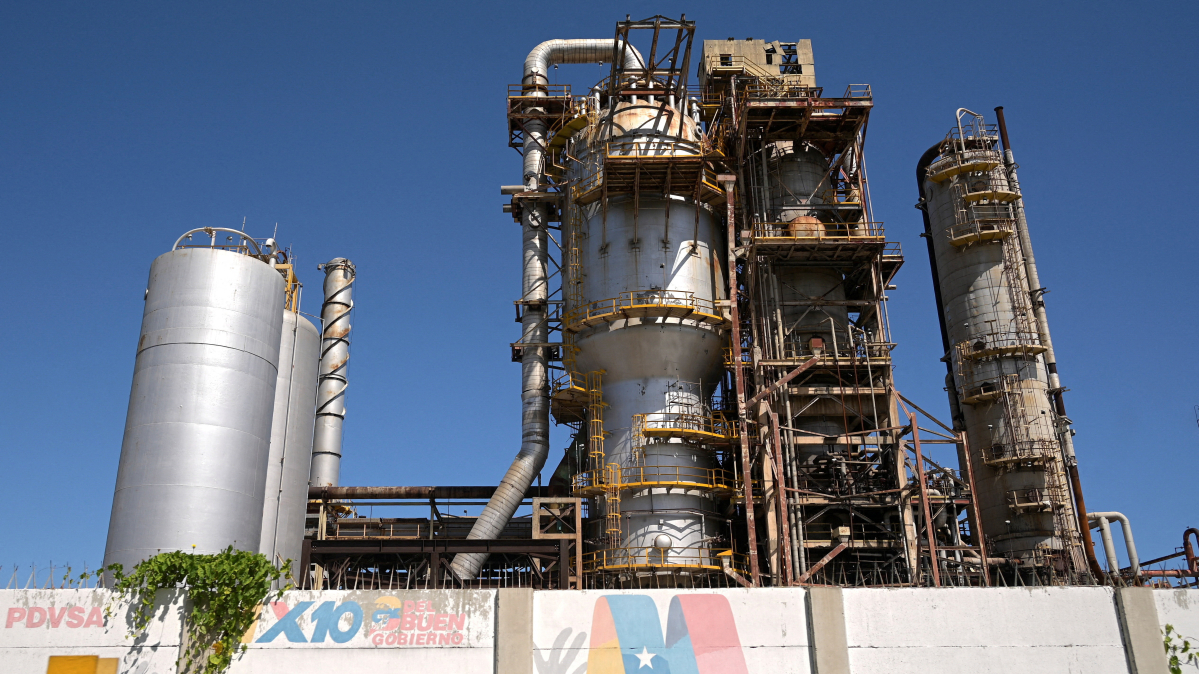
Venezuela has the world's largest proven oil reserves, but its production has fallen far short of its potential. The country currently produces about 1.25 million bpd after years of mismanagement, underinvestment and U.S. sanctions.
The proposed agreement therefore represents a major shift for an industry that has long been central to Venezuela's economy.
U.S. energy companies are expected to play a significant role. Venezuelan officials are preparing to grant new exploration and production rights to several companies next week, with sources close to the negotiations saying Chevron is among those expected to move its Venezuelan joint ventures into the new framework.
Deal faces political sensitivity
The agreement is likely to remain politically contentious inside Venezuela.
Earlier on Saturday (29 August), dozens of pro-government groups gathered in central Caracas to protest against the U.S. presence in the country, underscoring the tensions surrounding Washington's expanding role in Venezuela's oil sector.
For Rodriguez, however, the agreement is an opportunity to rebuild an industry that has struggled for years and provide much-needed revenue to the state.
She said the arrangement would allow Venezuela to combine its natural resources with foreign “capital, technology and operational expertise” to restore a strategic industry severely weakened by sanctions.
Read more about Venezuela:

















What is your opinion on this topic?
Leave the first comment