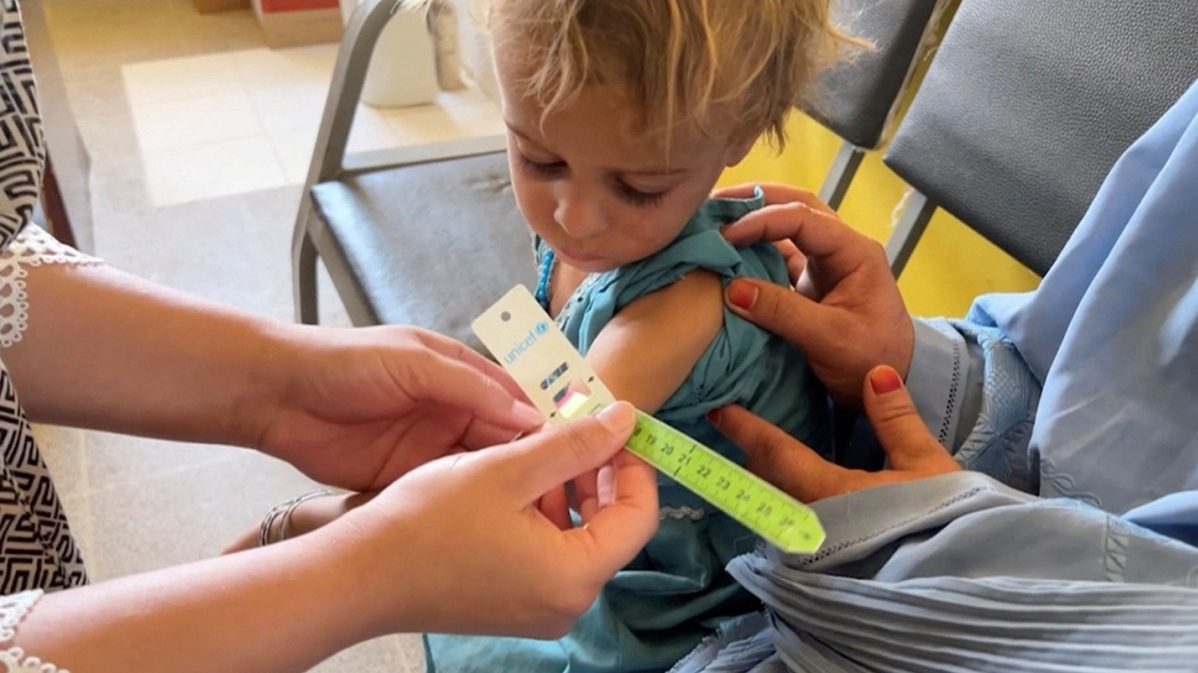
The UN Children’s Fund (UNICEF) says 3.7 million children across Afghanistan are suffering from acute wasting, a dangerous form of malnutrition, including around one million with severe acute malnutrition, as hospitals and aid services face rising demand and funding shortages.
Children under two account for 83 per cent of severe acute malnutrition cases, while nearly 40 percent of children hospitalised with severe wasting and medical complications are under six months old, according to UNICEF.
The organisation says children with wasting are too thin and their immune systems are weak, leaving them vulnerable to developmental delays, disease and death. Some also suffer from nutritional oedema, characterized by a swollen face, feet and limbs.
In parts of southern Afghanistan, hospitals are seeing three to four severely malnourished children for every available bed. Complicated severe acute malnutrition admissions rose from 6,000 in July 2025 to 8,000 in July 2026.
Hospitals under pressure
UNICEF says droughts, floods, regional instability and the return of more than six million people since 2023 have added pressure on jobs, housing and health services.
Funding cuts have also reduced treatment capacity. More than 100 sites treating severe wasting have closed this year compared with 2025, while UNICEF’s nutrition programme has received only 22 per cent of the $180 million it needs.
UNICEF's Representative in Afghanistan, Tajudeen Oyewale, says early intervention was critical.
“We should not wait until a child is dangerously thin and lying in a hospital bed before we intervene."
Calls for wider humanitarian support
The warning comes as Afghanistan’s Foreign Minister Amir Khan Muttaqi met with International Committee of the Red Cross (ICRC) Director of Operations Yasmine Praz Dessimoz to discuss humanitarian needs, healthcare and returning migrants.
“The two sides also discussed the importance of continuing and expanding the ICRC’s humanitarian assistance in various areas,” the Foreign Ministry said.
In a separate meeting on Wednesday, the Afghan Red Crescent Society (ARCS) called for expanded support for vulnerable families and health services.
“ICRC officials praised the humanitarian activities of the ARCS and reaffirmed their commitment to continued cooperation in addressing humanitarian challenges, strengthening healthcare services, and supporting vulnerable and needy families,” ARCS said.
Read more:
















What is your opinion on this topic?
Leave the first comment