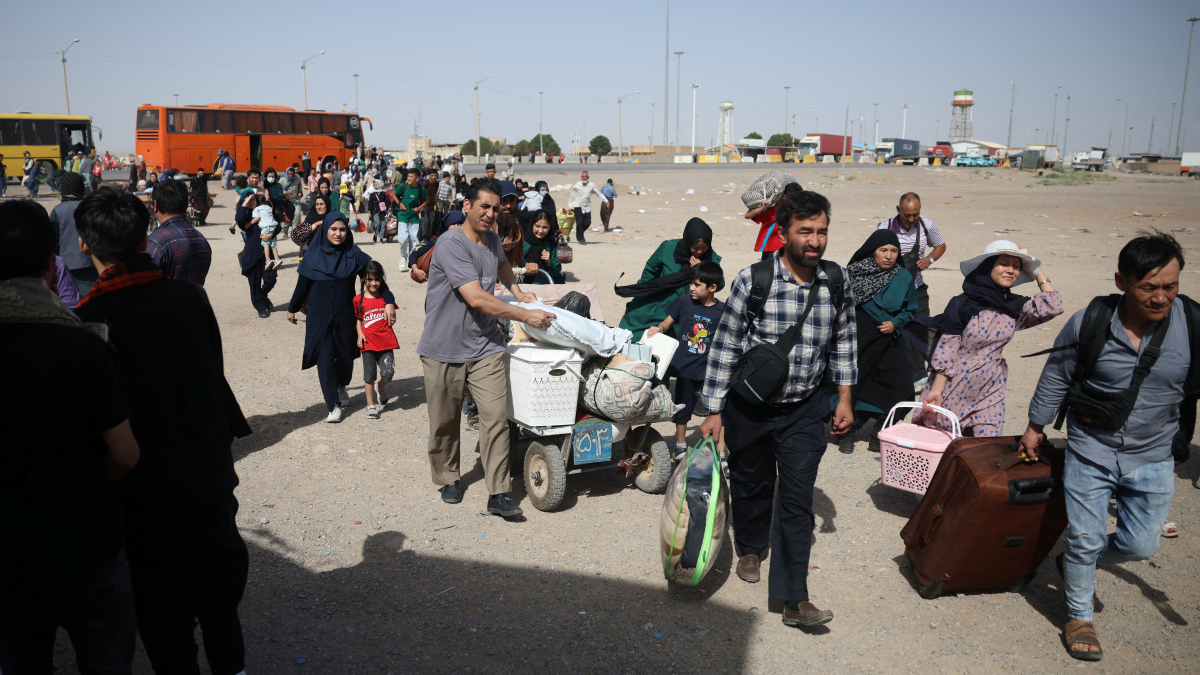
More than 100,000 people entered Afghanistan from Iran and Pakistan between 19 July and 1 August, increasing pressure on communities and humanitarian organisations already struggling with poverty, limited services and funding shortages.
The International Organization for Migration (IOM) recorded 100,368 arrivals during the two-week period, compared with 42,904 departures from Afghanistan.
Of those arriving, 55,631 entered from Pakistan and 44,737 from Iran, according to the report.
Deportations drive returns from Iran
Among people surveyed after entering from Iran, 63 per cent said deportation was their main reason for travelling to Afghanistan. Another 7 per cent said they had felt unsafe or under pressure to leave Iran.
The report also highlights the challenges facing many arrivals. Some 44 per cent of those surveyed at the Iranian border had no documentation, while 8 per cent reported having a chronic disease or special needs.
Among arrivals from Pakistan, 64 per cent said they felt unsafe or under pressure to leave. More than three-fifths travelled with their entire family, while 20 per cent had no documentation.
Communities and aid groups under pressure
The return of large families is placing further strain on housing, employment, healthcare and other basic services in communities that already have limited resources.
The United Nations warned in February that mass returns were pushing Afghanistan's humanitarian system towards the brink. The UN refugee agency said it needed USD 216 million to assist returnees in 2026 but had received only 8 per cent of the required funding at that time.
The IOM said its figures represent movements recorded at monitored border crossings rather than unique returnees. They may include deportees, people visiting relatives, students and circular travellers.
Afghan authorities have not publicly commented on the latest IOM report. However, they said this week that returnees were receiving cash, transport, food and healthcare assistance. The authorities also said land had been allocated to 65,155 returnee families across Afghanistan.














What is your opinion on this topic?
Leave the first comment