Around 70 bodies are expected to be buried as families continue to search for missing relatives.
The first of dozens of unidentified migrants who died during a mass crossing into the Spanish enclave of Ceuta were buried on Friday, three weeks after the deadly attempt to enter the territory from Morocco.
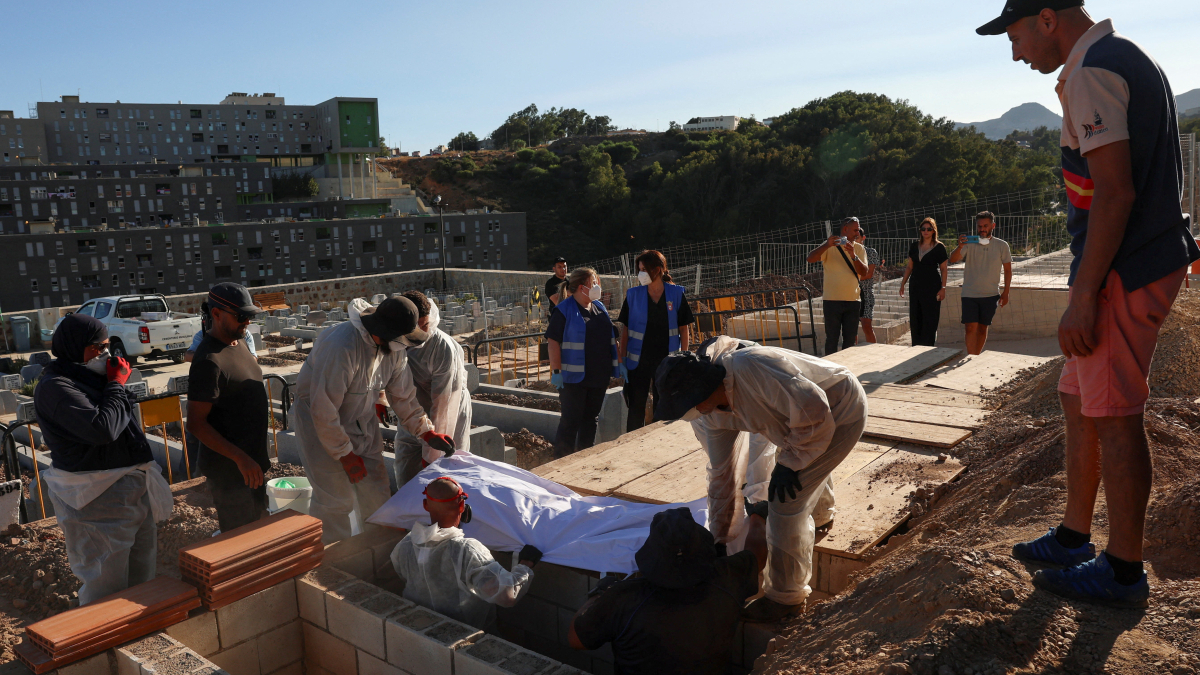
At Ceuta's Muslim cemetery, gravediggers wearing protective overalls and face masks lowered four bodies wrapped in white body bags into graves lined with cinder blocks. A Muslim cleric recited a brief prayer as hearses arrived with more bodies.
Said Mohammed, the cemetery's acting manager, said around 70 bodies would be buried over the coming days, with between 10 and 12 burials planned each day.
Most victims remain unidentified
About 95% of the bodies have not yet been identified, Mohammed said. Each grave has been marked with a numbered stone so the remains can be traced if the person is later identified and relatives arrange repatriation.
The migrants are being buried according to Muslim rites, with their bodies placed facing Mecca and covered with soil.
Authorities say between 5,000 and 8,000 migrants remain in Ceuta after at least 72,000 people crossed from Morocco on 30 July. The rush left 82 migrants dead on the Spanish side of the border, while Morocco confirmed another 14 deaths.
Families wait for news
Only six migrants have been identified so far, all adult Moroccan men, according to the latest figures from a Ceuta court.
For families in Morocco, the wait for news has been agonising. Relatives of missing migrants have been appealing for information on social media and pressing authorities to help locate their loved ones.
Spanish and Moroccan authorities have been comparing fingerprints with databases from both countries and collecting DNA samples from relatives who have come forward.
Lieutenant Colonel Carlos Atoche of Spain's Civil Guard, who heads its crime division, said identifying the victims had been made harder because Moroccan relatives had difficulty legally crossing into Ceuta to provide DNA samples.
As the burials continue, numbered stones now mark the graves of people whose families may still be waiting to learn what happened to them.
Read more:














What is your opinion on this topic?
Leave the first comment