A ransom payment estimated at $50 million for the release of a hostage held by al Qaeda-linked militants in Mali has significantly strengthened the group's operations across West Africa and provided funding to other branches of the global extremist network, according to a United Nations report.
The findings, presented to a UN sanctions committee last week, offer a rare glimpse into how a single hostage deal can reshape the finances and capabilities of militant organisations operating across multiple continents.
Although the report does not identify the hostage involved or reveal who paid the ransom, regional sources told Reuters that the United Arab Emirates was the country behind the payment. Those sources said an Emirati citizen and two other foreign nationals were freed following negotiations. Neither the UAE nor the governments of Pakistan and Iran, whose citizens were also reportedly released, publicly confirmed details of the arrangement.
Funds allegedly fuelled militant expansion
According to the UN monitoring team, most of the money was distributed among factions belonging to Jama'at Nusrat al-Islam wal-Muslimin (JNIM), the al-Qaeda-aligned coalition that has emerged as one of the most powerful militant organisations in the Sahel region.
The report states that the funds played a significant role in supporting JNIM's military operations in Mali, where the group has expanded its influence despite efforts by regional governments and their international partners to contain the insurgency.
UN experts estimate that JNIM has between 7,000 and 8,000 fighters across the Sahel, with roughly half operating in Mali. The organisation's reach extends beyond Mali into Burkina Faso, Niger, Benin and Togo, where extremist violence has increasingly spread in recent years.
Security analysts say such a large financial windfall would enable militants to purchase weapons, expand logistical networks, recruit fighters and sustain military campaigns over an extended period.
Money reportedly reached wider al Qaeda network
The UN report also suggests that the ransom's impact extended far beyond West Africa.
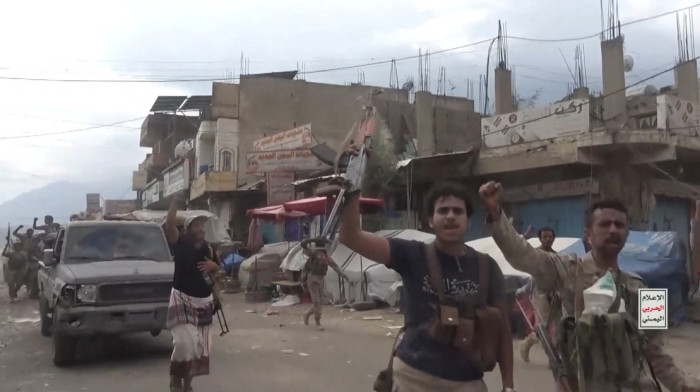
Investigators said a portion of the funds was channelled through al Qaeda in the Islamic Maghreb (AQIM), which then passed money to al Qaeda's core leadership and to al Qaeda in the Arabian Peninsula (AQAP), based in Yemen.
The findings highlight the interconnected nature of the modern al Qaeda network, which has evolved from a centrally controlled organisation into a more decentralised structure with increasingly influential regional branches.
Many counterterrorism experts now regard Africa, rather than the Middle East or South Asia, as the centre of gravity for al Qaeda's strongest affiliates.
Growing regional threat
The report comes at a time of worsening insecurity across the Sahel, a 5,000-kilometre belt of land below the Sahara Desert that stretches from Africa's Atlantic coast to the Red Sea.
JNIM has been responsible for a series of high-profile attacks in recent months. In April, fighters linked to the organisation and allied separatist groups launched coordinated attacks across Mali, including strikes that reached the capital and reportedly killed senior government figures.
The insurgency continues to challenge military-led governments in Mali, Burkina Faso and Niger, despite the deployment of Russian-backed security forces and other counterinsurgency efforts.
UN investigators said kidnapping remains one of the group's most effective tools, serving both as a major source of income and as a means of undermining confidence in state institutions.
Security officials noted that ransoms paid for foreign hostages have historically ranged between $4 million and $6 million. The reported $50 million payment would therefore represent one of the largest known hostage payments linked to militant groups in the region.
UAE rejects extremism
Responding to questions, a UAE official did not comment directly on the alleged ransom payment, but reiterated the country's opposition to terrorism and extremist financing.
The official said the UAE remains committed to international efforts aimed at combating terrorism, disrupting funding networks and countering extremist ideology.
The case is likely to reignite debate among policymakers and security experts over hostage negotiations, with critics arguing that large ransom payments can unintentionally strengthen militant organisations, while supporters contend that governments have a responsibility to secure the release of their citizens.
For the UN investigators, however, the report underscores a broader concern: how a single financial transaction can alter the balance of power across an already volatile region.















What is your opinion on this topic?
Leave the first comment