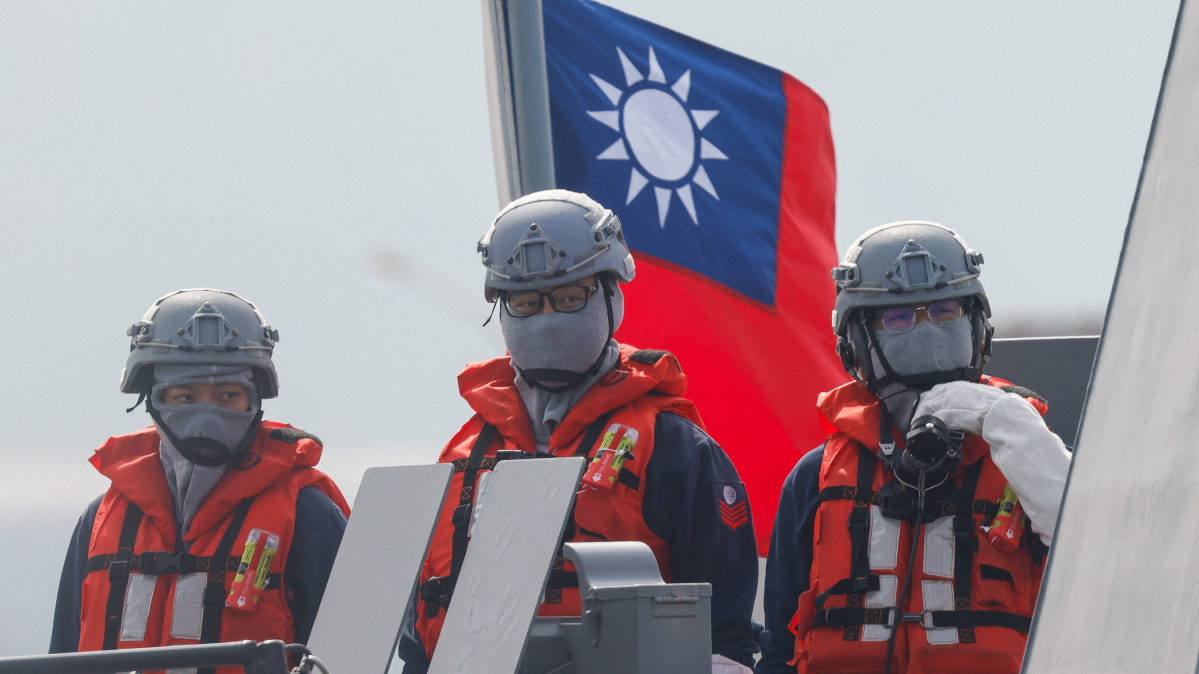
Taiwan has criticised a planned joint naval exercise involving China and Indonesia near its eastern waters, describing it as a politically charged move designed to strengthen Beijing's claims over areas surrounding the island.
The dispute centres on a Chinese announcement that its navy will conduct a navigation exercise with an Indonesian warship later this month in waters east of Taiwan.
While China characterised the activity as a routine maritime exercise, Taiwanese officials view it as part of a broader effort to expand Beijing's presence around the self-governing island and reshape international perceptions of who controls nearby waters.
The planned drill comes at a time of growing tensions across the Taiwan Strait and follows a series of Chinese maritime operations near Taiwan's east coast. In recent months, Beijing has increased its activities in the area, including coast guard patrols that Taipei says are aimed at extending China's influence beyond the Taiwan Strait itself.
Taiwan's Mainland Affairs Council, which oversees policy towards China, condemned the exercise and accused Beijing of using military activity to advance political objectives. Officials argued that China is attempting to create the impression that it exercises authority over waters east of Taiwan, despite the island's insistence that it maintains control over its own territory and surrounding areas.
Taipei said the drill should be viewed in the context of a wider pattern of Chinese actions that have included regular military operations around the island and increasingly frequent patrols by Chinese maritime forces.
Unusual involvement of Indonesia
China says the mid-August “navigation exercise” would be the first drill it has conducted with a foreign military in the area. Indonesia, however, has played down the activity, saying its warship I Gusti Ngurah Rai is returning from a visit to Russia and will conduct routine “passing exercises” with countries along its route, rather than taking part in war-fighting drills.
Wu Tien-jen, Taiwan’s assistant deputy chief of the general staff for intelligence, said the Indonesian vessel was around 70 to 80 nautical miles east of Taiwan and that the activity posed no direct military threat to the island, but carried “geopolitical significance”.
The planned exercise comes as Taiwan holds its annual Han Kuang war games and amid near-daily Chinese military activity around the island.
China frequently conducts military manoeuvres near Taiwan, but it rarely carries out exercises with foreign militaries in areas close to the island. That has led analysts to view the drill as symbolically significant, regardless of its operational scale.
Continuing pressure on Taiwan
China considers Taiwan part of its territory and has repeatedly stated that reunification remains a core national objective. Chinese military aircraft and naval vessels operate near the island almost daily, and Beijing has increased pressure on Taipei over recent years.
Taiwan's government rejects China's sovereignty claims and insists that only the people of Taiwan can determine the island's future.
Officials in Taipei have also warned that military activities in the region risk undermining stability and increasing the potential for miscalculation. The latest planned naval drill has added to those concerns, particularly because it would take place in an area that Taiwan regards as strategically important for its security.
Regional implications
The controversy highlights the growing geopolitical importance of the waters surrounding Taiwan.
For Taipei, the issue is not simply a single naval exercise, but what it sees as a gradual effort by Beijing to normalise a larger Chinese security presence around the island. Taiwanese officials fear such moves could eventually influence how other countries perceive the status of nearby waters and maritime access routes.
China, meanwhile, continues to argue that its military operations are legitimate activities within areas connected to its national interests.
With tensions between Beijing and Taipei showing little sign of easing, the upcoming exercise is likely to be closely watched by regional governments as well as Western countries that have expressed concern about stability in the Taiwan Strait.















What is your opinion on this topic?
Leave the first comment