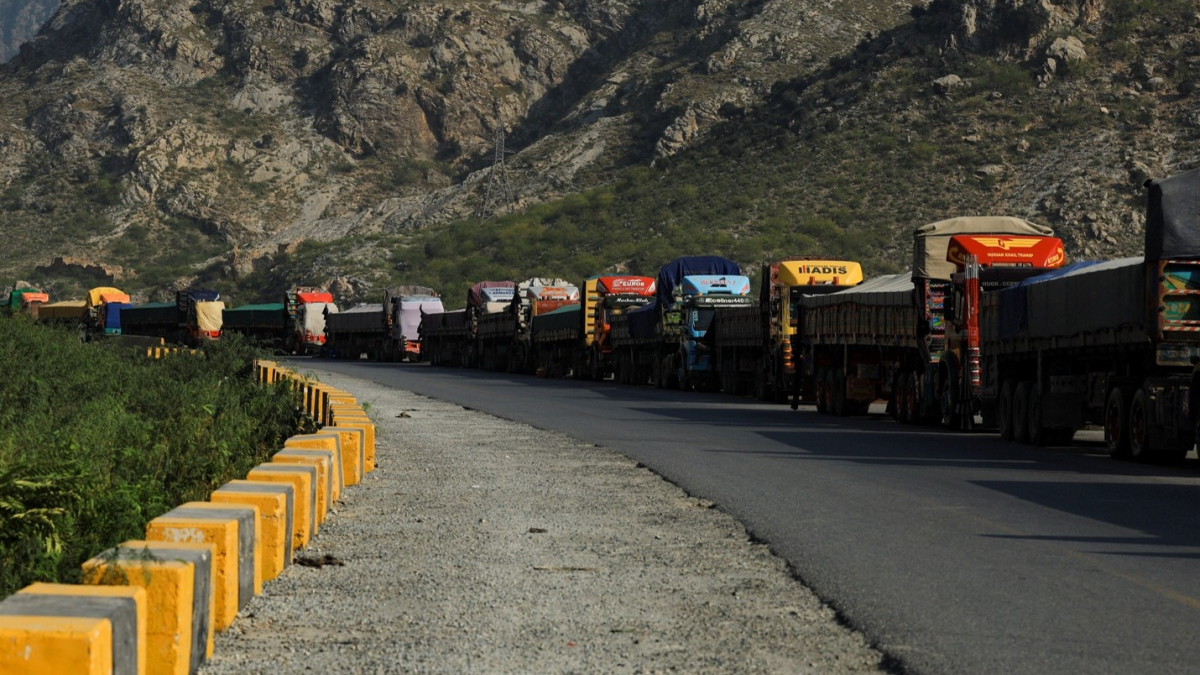
Afghan transit trade through Pakistan fell to 11,592 containers worth $367 million in fiscal year 2025-26 as Kabul redirected more commerce through Iran and Central Asia, while Pakistan tightened restrictions at key border crossings, according to Dawn.
The Pakistani newspaper reported that transit trade stood at nearly 89,000 containers worth $5 billion before the Taliban returned to power in 2021.
Trade later rose to 102,886 containers worth $6.7 billion in the 2022-23 fiscal year. However, it fell to 54,114 containers in 2023-24 and then to 42,959 containers worth $1.36 billion in 2024-25.
Trade decline began earlier
The decline had begun before Pakistan closed border crossings with Afghanistan in October 2025 over security concerns, the report said.
Reverse transit, which allows Afghan exports to reach third countries through the Wagah border crossing and the ports of Karachi, also fell sharply, from $454 million in 2024-25 to just $7 million in 2025-26.
The March 2026 edition of the World Bank's Afghanistan Economic Monitor said Afghanistan's imports reached $13.2 billion in FY2025, an increase of 15% compared with FY2024. Iran accounted for 31.3% of imports by origin, while goods imported directly from Iran or transported through Iranian corridors made up 48.6% of total imports.
Kabul seeks new markets
Shafi Azam, head of economic relations at Afghanistan's Ministry of Foreign Affairs, told AnewZ that Kabul is working to expand trade with regional and international markets.
“The Islamic Emirate aims to diversify Afghanistan’s trade and is exploring several opportunities in both regional and more distant markets. In recent years, our trade with regional countries, including Iran, Kazakhstan, Uzbekistan and India has increased significantly,” he said.
Azam said Afghanistan also wants to reduce its dependence on a limited number of markets.
“Afghanistan also aims to expand cross-border trade, strengthen domestic production and achieve greater economic self-reliance. Broadening our trade partnerships will help create new opportunities for Afghan businesses and reduce the country’s dependence on a limited number of markets,” he added.















What is your opinion on this topic?
Leave the first comment