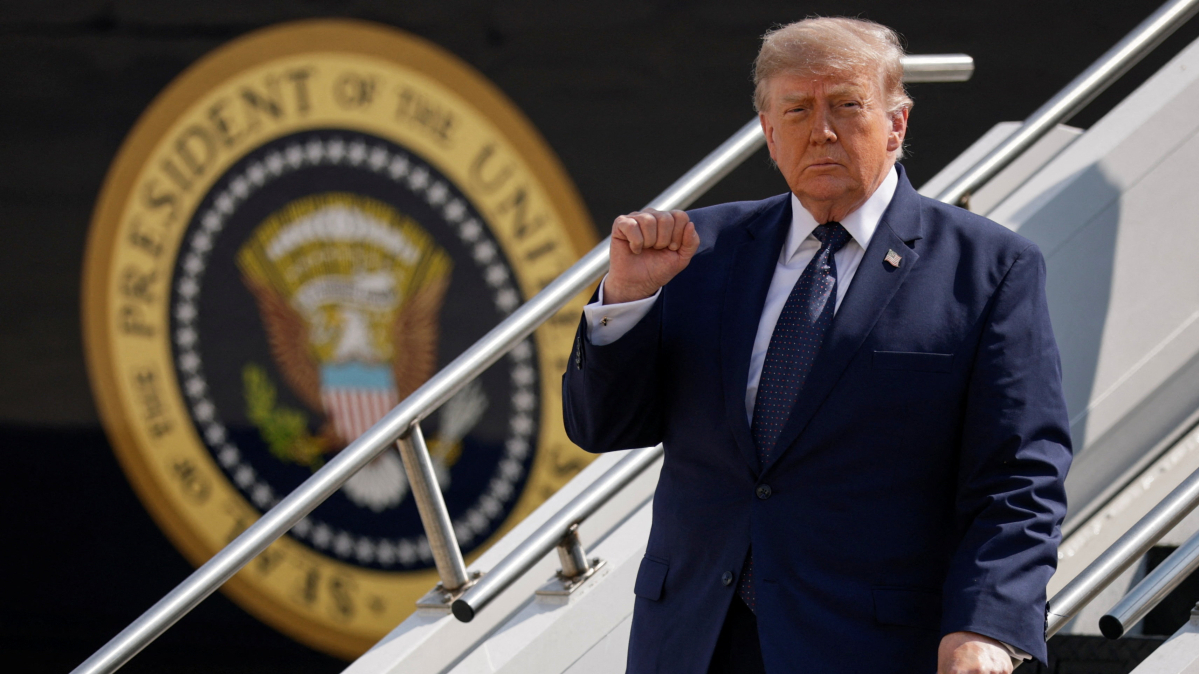
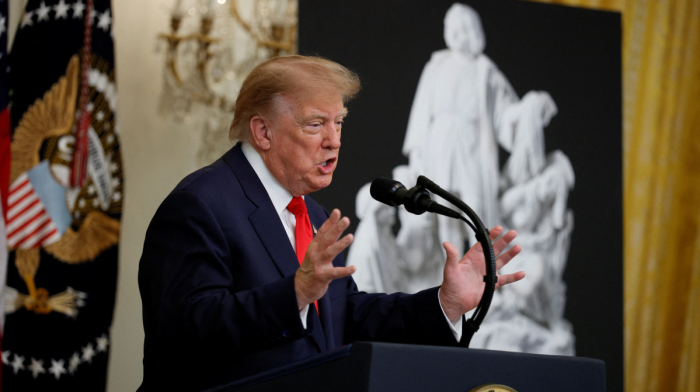
U.S. President Donald Trump has blamed Canada for the wildfire smoke drifting across large parts of the United States, saying the economic cost of the pollution will be added to existing tariffs on Canadian goods.
In a post on Truth Social on Friday, Trump accused Canada of failing to properly manage its forests as smoke from hundreds of wildfires spread across the U.S. Midwest and Northeast, prompting health authorities to advise residents to stay indoors due to poor air quality.
"We are holding Canada responsible for the fact that they are not properly maintaining their forests," Trump wrote, describing the smoke as "filthy, polluted, and unhealthy air." He also called the situation "wilful negligence" and said the financial burden of the pollution "must of necessity be added to the tariffs Canada is currently paying."
Trump said he planned to speak with Canadian Prime Minister Mark Carney about what Ottawa intended to do to address the issue.
Experts point to climate change
The comments come as relations between Washington and Ottawa remain strained. Since returning to office in 2025, Trump has imposed tariffs on several major Canadian imports, while repeatedly criticising Canada's trade policies.
Climate scientists, however, dispute Trump's claim that poor forest management is the main cause of the fires. Experts say rising global temperatures have created hotter, drier conditions that make forests more susceptible to large wildfires.
"As our climate warms, we're seeing more conducive hot, dry, windy, more extreme weather, and we're going to see more fire," said Mike Flannigan, a professor of wild land fire at Thompson Rivers University in British Columbia.
Prime Minister Carney's office did not immediately respond to Trump's remarks. On Thursday, Carney said the United States could do more to combat climate change, which he said is contributing to increasingly severe weather conditions.
Ontario battles another severe wildfire season
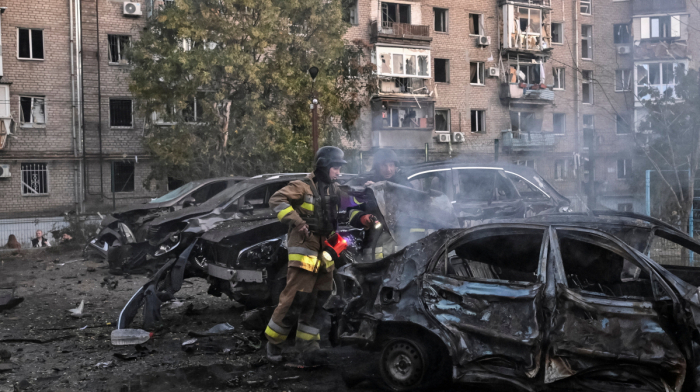
Canada is experiencing another intense wildfire season, with many of the largest blazes burning across northwestern Ontario. Around 650,000 acres (2,630 square kilometres) have burned in the province so far this year, slightly exceeding the area affected at the same point in 2025.
The fires have forced thousands of evacuations, particularly in remote Indigenous communities. Namaygoosisagagun First Nation, also known as Collins First Nation, was largely destroyed by wildfire, with community officials saying little remained after the blaze.
"There was nothing remaining," incident commander Matthew Hoppe told Reuters. "The membership is totally distraught, overwhelmed and lost."
The city of Thunder Bay, which has been housing evacuees from across northwestern Ontario, has reached shelter capacity, according to Mayor Ken Boshcoff.
Ontario announces new firefighting aircraft
Meanwhile Ontario Premier Doug Ford announced on Friday that the province would purchase 11 new aircraft to strengthen its wildfire response and rejected criticism from U.S. politicians that Canada was not doing enough to combat the fires.
The United States is also facing an active wildfire season. According to the National Interagency Fire Center, around 3.7 million acres have burned across the country so far in 2026, well above the 10-year average of 2.7 million acres.
Trump and Carney are expected to meet at the FIFA World Cup final in New Jersey on Sunday, where the wildfire dispute could become another point of discussion between the two leaders.














What is your opinion on this topic?
Leave the first comment