Start your day informed with the AnewZ Morning Brief. Here are the top stories for 11 July, covering the latest developments you need to know.
U.S. sanctions Iran-linked financier after renewed Strait of Hormuz tensions
The U.S. imposed new sanctions on an Iranian banker accused of financially supporting Tehran’s ruling elite and the Islamic Revolutionary Guard Corps. The Treasury Department also targeted 13 individuals and entities, including exchange houses and front companies allegedly used to move billions of dollars through illicit financial networks. The measures came after renewed attacks on oil tankers in the Strait of Hormuz and a week of escalating U.S.-Iran tensions.
North Korea slams NATO summit, vows to strengthen nuclear forces
North Korea criticised the NATO summit, accusing the alliance of increasing military tensions through higher defence spending and closer cooperation with Asia-Pacific partners. Pyongyang said NATO was focused on confrontation and argued that denuclearisation efforts should target South Korea, Japan and NATO nuclear-sharing arrangements instead. The country vowed to protect its security interests and strengthen its nuclear capabilities as leader Kim Jong Un pushes military modernisation.
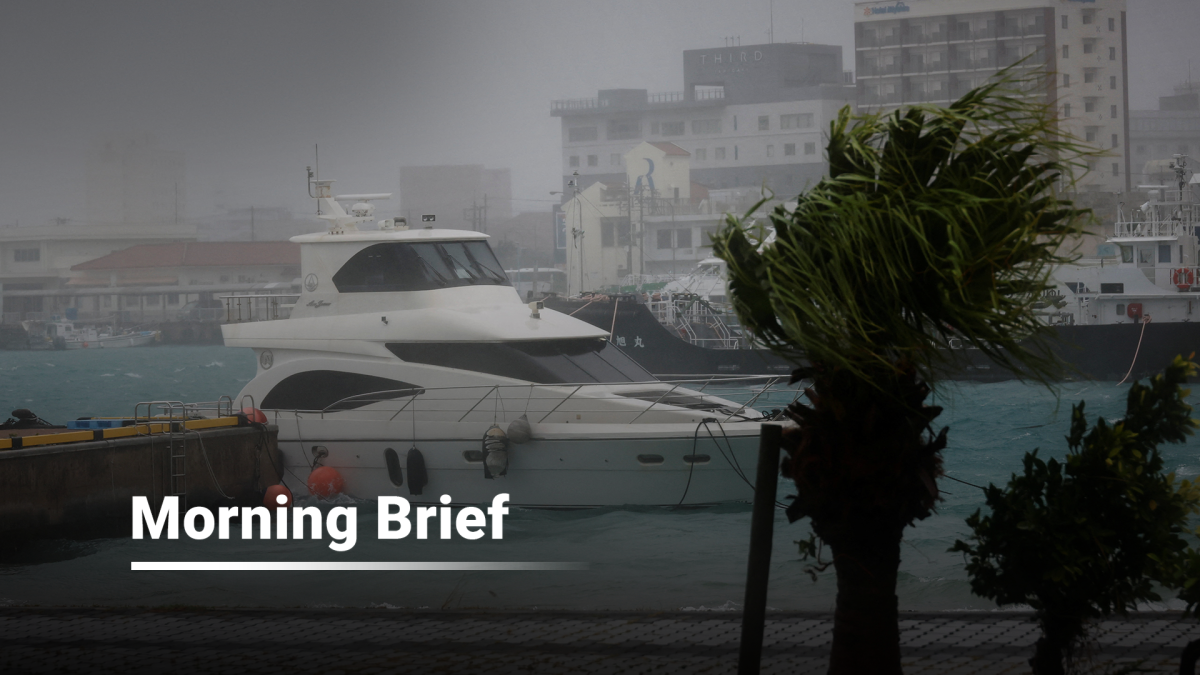
Typhoon Bavi hits Japan’s islands, heads toward Taiwan and China
Typhoon Bavi battered Japan’s southern Sakishima island chain with heavy rain and strong winds, disrupting transport and leaving thousands without power. Taiwan evacuated more than 14,000 people and cancelled hundreds of flights as the storm approached, despite forecasts that it would avoid a direct landfall. Authorities warned of possible floods and landslides due to heavy rainfall and strong gusts. Bavi is expected to reach China’s eastern city of Wenzhou on Sunday.
10 Srebrenica genocide victims laid to rest 31 years later
The remains of 10 victims of the 1995 Srebrenica genocide were carried to the Potočari Memorial Cemetery ahead of their burial during the 31st anniversary commemoration. The victims, whose identities were confirmed this year, include civilians aged between 20 and 56. The Srebrenica massacre, in which at least 8,372 Bosniak men and boys were killed by Bosnian Serb forces, remains one of the worst atrocities of the Bosnian War. More than 1,000 victims are still missing as forensic teams continue efforts to identify remains.
WHO warns Central Asia faces growing health risks from extreme heat
Temperatures above 40°C are sweeping parts of Central Asia, prompting the WHO to warn that extreme heat is becoming a growing public health threat. The agency said fewer than half of countries in the WHO European Region have national heat-health plans to protect vulnerable populations. Forecasts show temperatures could reach 45°C in parts of Kazakhstan, with more hot weather expected across the region.













What is your opinion on this topic?
Leave the first comment