North Korea has fired more than 10 short-range ballistic missiles after U.S. President Donald Trump reduced American participation in joint military exercises with South Korea in an effort to revive dialogue with Pyongyang.
The missile launches underline the fragility of regional security as Trump seeks renewed direct engagement with North Korean leader Kim Jong Un, while South Korea tries to balance deterrence with dialogue.
The latest tensions followed Washington's decision to reduce its participation in annual military exercises with South Korea, a move Trump described as part of a broader effort to revive communication with Pyongyang. Trump has repeatedly highlighted his personal relationship with Kim and recently indicated that he expects to meet the North Korean leader later this year.
South Korean President Lee Jae Myung welcomed the move, describing it as a meaningful attempt to create conditions for dialogue.
Lee said he recognised Trump's efforts to move beyond confrontation and create opportunities for peace on the Korean Peninsula. Pyongyang, however, quickly rejected that interpretation.
Kim Yo Jong, the influential sister of Kim Jong Un and one of North Korea's most powerful political figures, accused Seoul of offering what she described as contradictory and insincere reactions to the reduced exercises.
According to North Korean state media, she argued that the drills remained provocative regardless of their scaled-down format and suggested South Korea's response reflected discomfort rather than genuine support for improved relations.
Her comments reinforced Pyongyang's long-standing position that Washington and Seoul continue to pursue hostile policies despite occasional gestures aimed at reducing tensions.
Missile launch sends a message
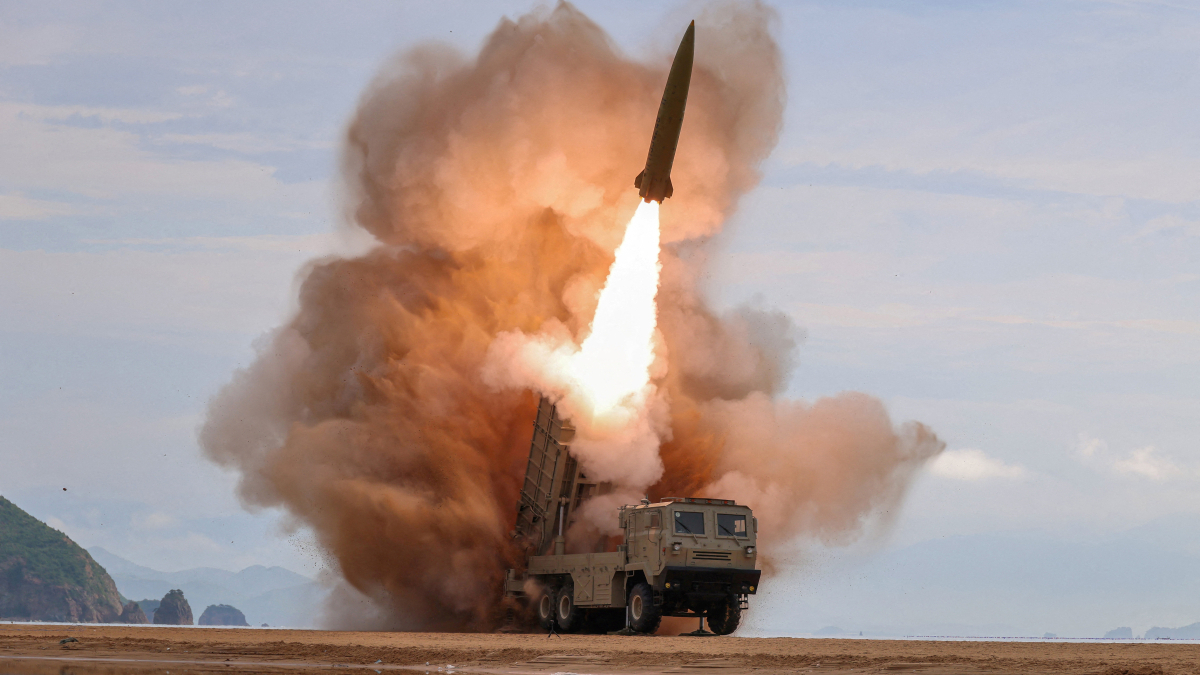
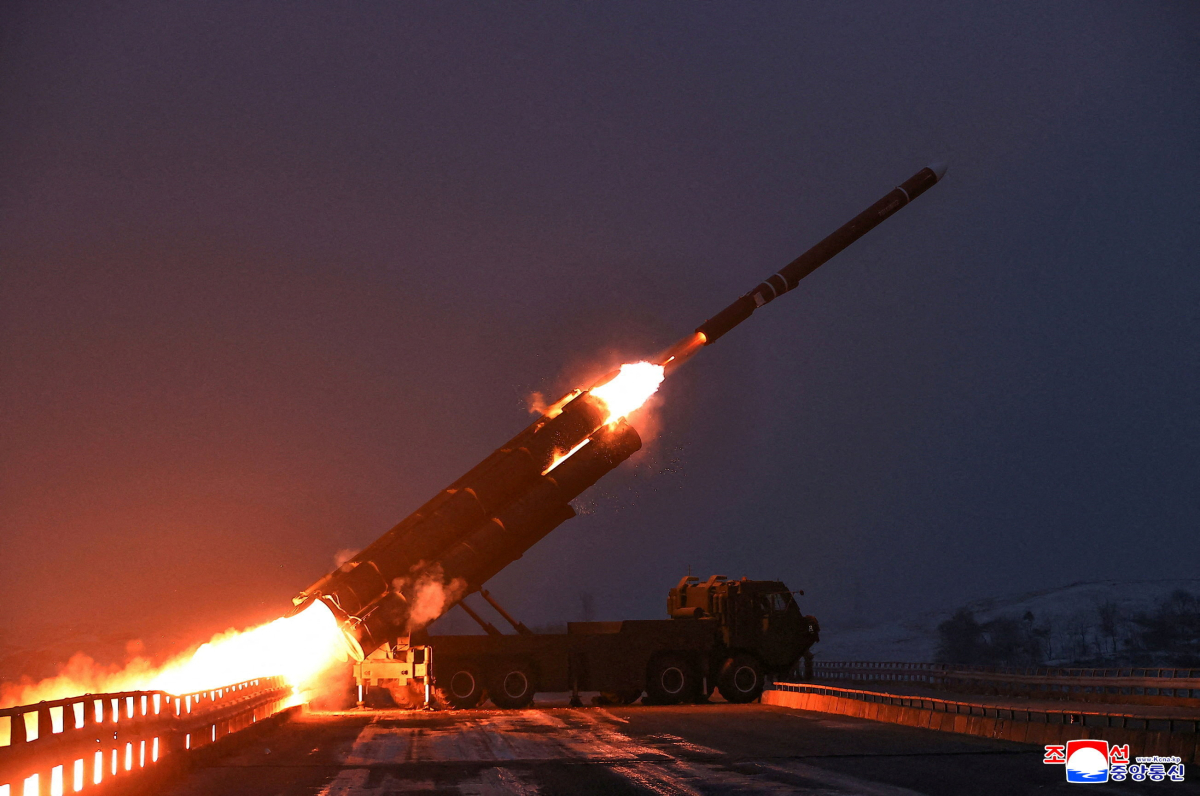
Within hours of the latest war of words, North Korea launched more than ten short-range ballistic missiles from an area near Pyongyang.
South Korea's military said the missiles travelled roughly 300 kilometres before landing in waters east of the Korean Peninsula. The launch triggered an emergency meeting of South Korea's National Security Council, with officials condemning the action as a violation of UN Security Council resolutions.
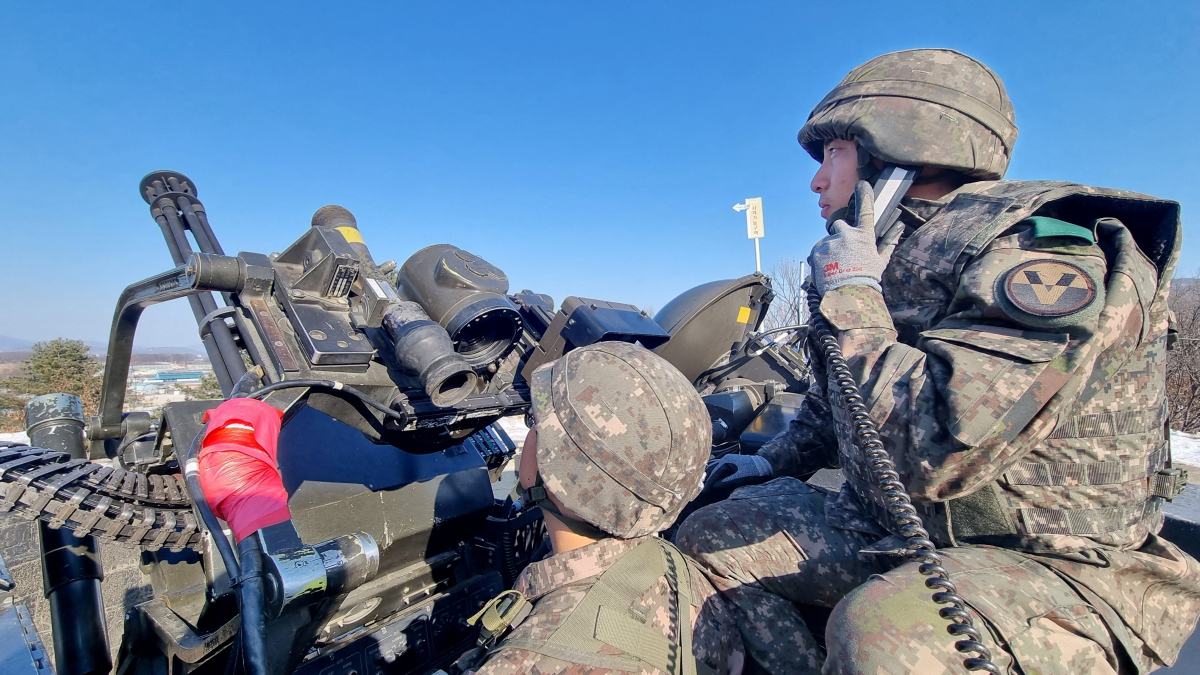
The presidential office called on Pyongyang to immediately halt further provocations and ordered the country's armed forces to remain fully prepared during the ongoing military exercises with the U.S.
South Korean Defence Minister Ahn Gyu-back told lawmakers that the projectiles were believed to be KN-25 systems, a large-calibre multiple-launch rocket platform that North Korea has previously claimed can carry tactical nuclear warheads.
Analysts said the launch was likely intended to reinforce Kim Yo Jong's earlier warning and remind regional actors that Pyongyang remains willing to demonstrate its military capabilities even as diplomatic discussions continue.
Yang Moo-jin, a professor at the University of North Korean Studies in Seoul, said the launch appeared designed to show that North Korea's statements were "not mere rhetoric."
Questions over North Korea's nuclear arsenal
The missile launches also renewed scrutiny of the size of North Korea's nuclear stockpile.
Speaking before parliament, South Korea's defence minister estimated that North Korea may possess between 80 and 120 nuclear warheads. While he cautioned that the exact number remains impossible to confirm, the estimate was significantly higher than Trump's recent claim that Pyongyang possesses 57 nuclear weapons.
The disparity highlights the uncertainty surrounding North Korea's nuclear programme, one of the world's most closely guarded military secrets.
South Korea continues to maintain its long-standing policy of refusing to recognise North Korea as a nuclear weapons state, despite widespread acknowledgement that Pyongyang has developed a substantial arsenal.
Ahn reiterated that Seoul remains committed to relying on the U.S. nuclear umbrella rather than pursuing its own nuclear weapons programme.
China enters the conversation
The latest developments came as Chinese Foreign Minister Wang Yi visited Seoul, adding another layer to the complex regional situation.
During meetings with South Korean officials, Wang urged Seoul not to choose between Beijing and Washington and argued that reducing tensions on the Korean Peninsula requires the United States to abandon what China views as a hostile approach towards North Korea.
"The fundamental solution to the tensions on the Korean Peninsula lies in addressing the root causes of the problem," Wang said, according to Chinese state media.
He also encouraged renewed dialogue between North and South Korea and expressed support for efforts to rebuild trust on the peninsula.
The visit comes as Beijing and Seoul seek to improve bilateral ties after several years of friction. Both sides have described recent relations as moving towards a full recovery, while discussing deeper trade and economic cooperation.
Diplomacy remains uncertain
Despite Trump's optimism about a future meeting with Kim, significant obstacles remain.
Earlier this week, Trump said he had received a response from the North Korean leader following the decision to reduce military exercises. Kim Yo Jong, however, later said she was unaware of any recent communications between the two leaders, casting doubt on the status of diplomatic contacts.
At the same time, North Korea continues to insist that Washington's broader policy towards the country has not fundamentally changed.
The situation reflects a familiar pattern on the Korean Peninsula, with diplomatic overtures unfolding alongside military demonstrations and political confrontation.
For now, regional governments face two competing realities: renewed discussion of engagement and possible high-level meetings on one side, and missile launches, military exercises and disagreements over North Korea's nuclear programme on the other.
Together, they continue to fuel mistrust and leave the prospects for renewed diplomacy uncertain.


















What is your opinion on this topic?
Leave the first comment