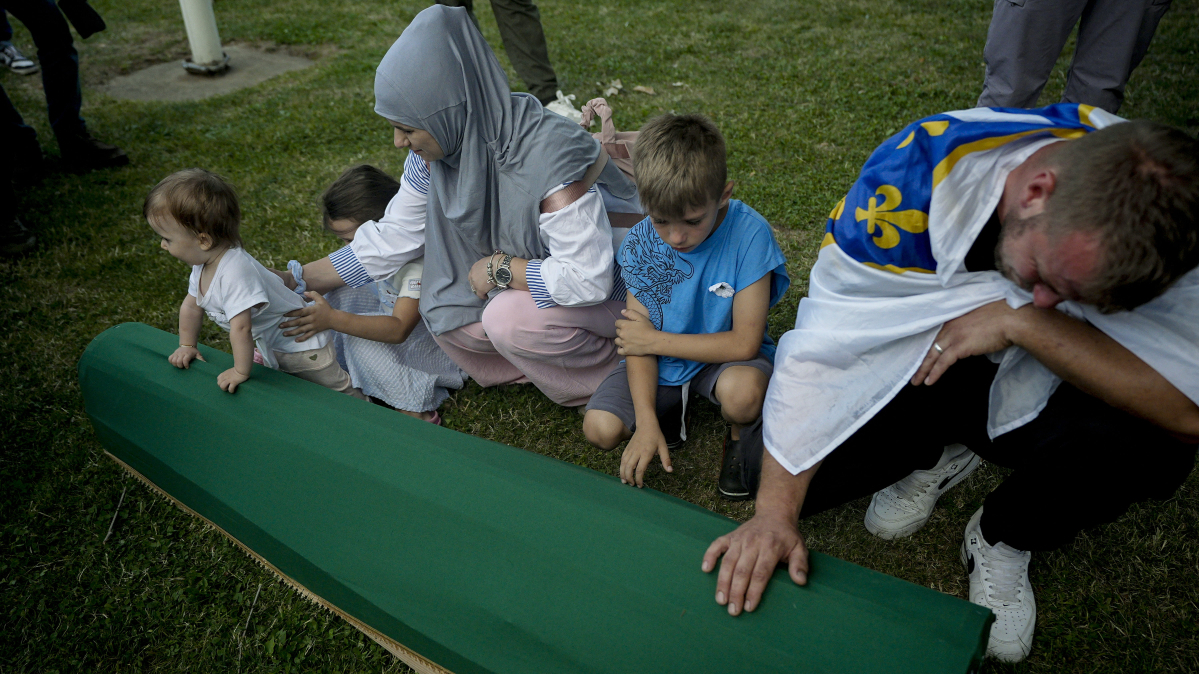
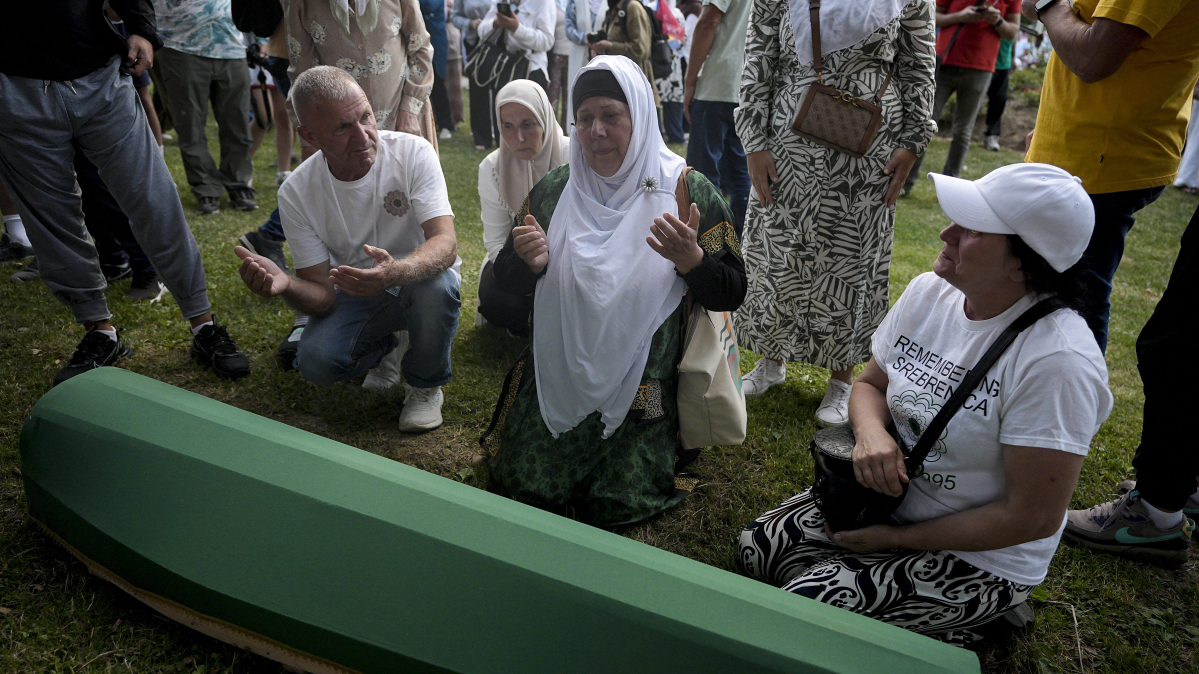
The remains of 10 victims of the 1995 Srebrenica genocide were carried to the Potočari Memorial Cemetery in eastern Bosnia and Herzegovina on Friday ahead of their burial during the 31st anniversary commemoration.
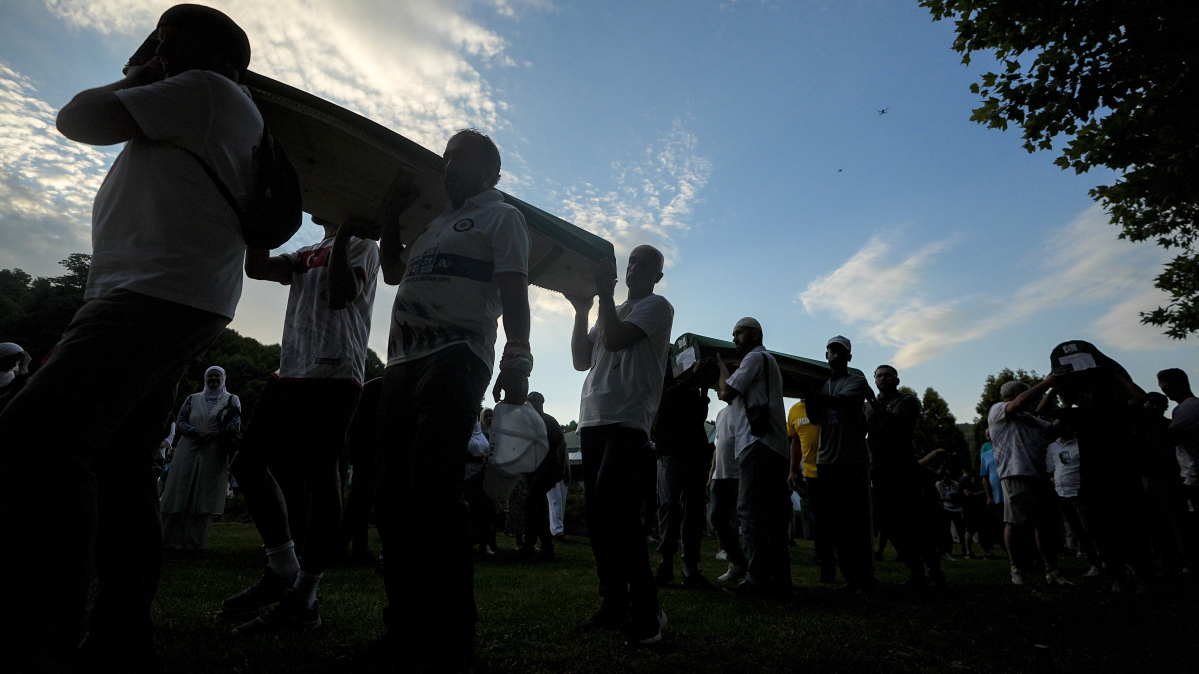
The coffins contain the remains of 10 Bosniak civilians whose identities were confirmed this year. Mourners carried them on their shoulders from the former battery factory, which served as a United Nations base during the Bosnian War, to the memorial cemetery.
The youngest victim to be buried is Senad Jusić, who was 20 when he was killed. The oldest is Ramo Dautović, who was 56.
The other victims are Muriz Baraković, Hamed Musić, Ramo Alić, Muhidin Osmanović, Huso Ćerimović, Nuko Nukić, Ahmet Gušter and Asim Kunić.
On 11 July 1995, Bosnian Serb forces led by convicted war criminal Ratko Mladić overran Srebrenica, which had been declared a UN “safe area” during the final stages of the Bosnian War.
Thousands of Bosniak civilians sought refuge at the UN base in Potočari, where they expected protection from Dutch peacekeepers. Men and boys were later separated from women and children and systematically executed at several locations.
At least 8,372 Bosniak men and boys were killed.
Many of the victims were buried in mass graves, some of which were later reopened and the remains moved to secondary sites in an attempt to conceal the crime. The dispersal of remains has made the identification process significantly more difficult.
Forensic teams have recovered remains from 150 locations, including 77 mass graves. DNA testing and forensic examination are used to identify victims before their remains are returned to their families.
Following this year’s burials, 6,782 victims will have been laid to rest at the Potočari Memorial Cemetery. Another 250 have been buried in local cemeteries at the request of their families.
The remains of more than 1,000 victims have still not been found.
Newly identified victims are buried each year on 11 July, sometimes with only partial remains recovered. Some families delay burial in the hope that more remains of their relatives will later be found.
The annual commemoration at Potočari serves both as a collective funeral and as a memorial to the victims of the genocide.












What is your opinion on this topic?
Leave the first comment