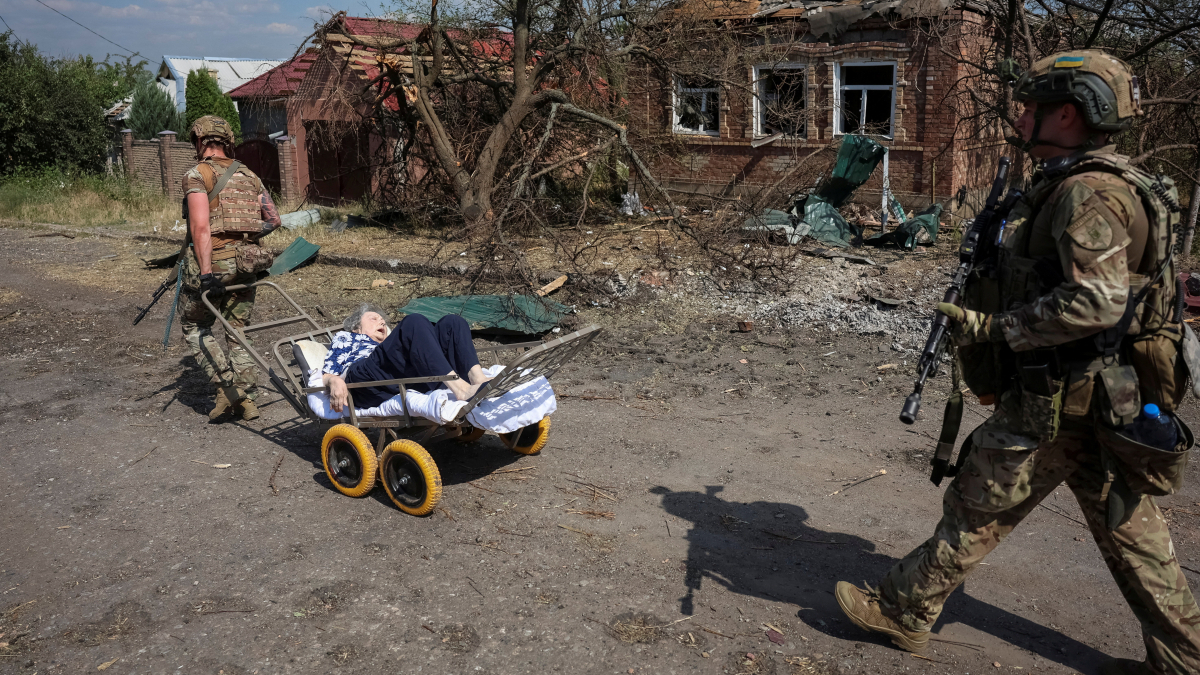
Russia's Defence Ministry has said its forces are clearing the town of Lyman in Donetsk of Ukrainian forces, Moscow's state news agency Tass reported. Meanwhile, Russian attacks killed at least six people across three Ukrainian regions on Friday, regional officials said.
Elsewhere, Ukrainian strikes on Russian energy infrastructure continued to add pressure to fuel supplies inside Russia.
The latest violence came as Kyiv observed a day of mourning after the deadliest Russian attack on the capital this year, which killed at least 30 people in a large-scale missile and drone assault.
Deadly attacks across Ukraine
In Ukraine’s southeastern Dnipropetrovsk region, more than 50 drone, artillery and aerial strikes killed three people and injured 12 others, according to regional governor Oleksandr Hanzha.
Two of those killed were near Nikopol, a city across the Dnipro River from the Russian-controlled Zaporizhzhia nuclear power plant. The area has been repeatedly hit during the war.
Further south, two people were killed and 17 were injured in an attack on the city of Zaporizhzhia, regional governor Ivan Fedorov said. The city has faced increased Russian strikes in recent weeks.
In the northeastern border region of Sumy, one person was killed by Russian glide bombs, officials said.
Prosecutors also reported that a separate overnight drone attack on a house in northern Sumy region killed four people. It was not immediately clear whether those deaths were included in Friday’s regional toll.
Reuters could not independently verify the battlefield reports.
Ukraine targets Russia’s energy sector
While Russia continued attacks on Ukrainian cities, Ukraine pressed ahead with its campaign against Russian oil infrastructure and fuel supply networks.
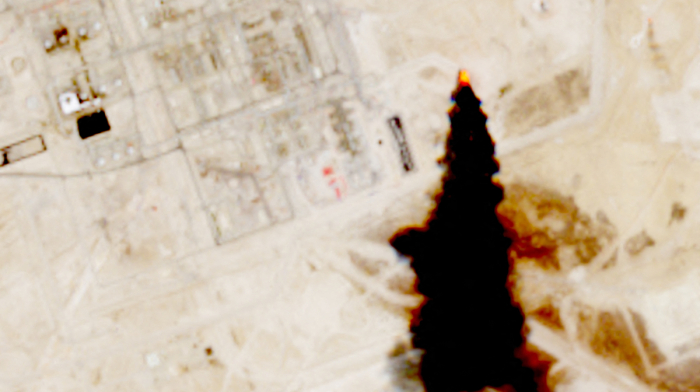
The latest reported strike hit NORSI, Russia’s fourth-largest oil refinery and the country’s second-largest gasoline producer.
According to two industry sources, the refinery suspended crude oil processing after a Ukrainian drone attack damaged a major refining unit capable of processing around 190,000 barrels per day. The affected unit accounts for more than half of the facility’s total capacity.
The strike forms part of a broader Ukrainian strategy aimed at disrupting Russia’s logistics and war economy by targeting refineries, fuel depots and transport infrastructure far from the front line.
Ukraine targets Russia's energy sector
While Russia continued attacks on Ukrainian cities, Ukraine pressed ahead with its campaign against Russia's oil infrastructure and fuel supply network.
The latest reported strike hit NORSI, Russia's fourth-largest oil refinery and the country's second-largest gasoline producer.
According to two industry sources, the refinery suspended crude oil processing after a Ukrainian drone attack damaged a major refining unit capable of processing around 190,000 barrels per day. The affected unit accounts for more than half of the facility's total capacity.
The strike forms part of a broader Ukrainian strategy aimed at disrupting Russia's logistics and war economy by targeting refineries, fuel depots and transportation infrastructure located far from the front lines.
Fuel shortages spark public frustration
The attacks have contributed to fuel shortages in parts of Russia, with long queues reported at petrol stations and restrictions imposed in several regions.
In the Black Sea resort city of Anapa, authorities deployed Cossacks to help manage crowds at filling stations as motorists queued for fuel.
Local officials said the Cossacks were regulating traffic, preventing disputes and enforcing limits on fuel purchases. Authorities in the region have restricted motorists to 20 litres of petrol per vehicle.
Elsewhere, Communist Party lawmaker Vyacheslav Markhayev criticised the government’s handling of the crisis, saying residents in the far eastern Zabaikalsky region had been forced to queue for up to 36 hours for limited fuel supplies.
“These aren’t just supply disruptions; this is a failure of state governance,” he said.
Another Communist deputy, Nina Ostanina, questioned official assurances that supplies remained adequate, arguing that a significant share of Russia’s refining capacity was no longer operating.
Kremlin seeks to contain crisis
Putin has acknowledged fuel shortages and said a government task force was working to maintain supplies across the country.
Russian authorities have introduced emergency measures aimed at easing the pressure, including temporarily allowing fuel with higher sulphur content to be produced and distributed.
Police in the Krasnodar region also reported detaining two people suspected of stockpiling and reselling fuel at inflated prices after officers discovered 1,000 litres of gasoline in their vehicle.
Diplomatic tensions continue
Amid the continuing fighting, Ukrainian Foreign Minister Andrii Sybiha held talks with Polish Foreign Minister Radoslaw Sikorski in an effort to ease recent tensions between the two countries over historical issues.
Sybiha said Ukraine had proposed further consultations aimed at improving relations and preventing divisions that could benefit Moscow.
“We possess enough wisdom, lessons from our shared history, and political will to put an end to the applause in Moscow,” he said after the meeting.
Despite repeated Ukrainian proposals for peace talks, fighting shows little sign of easing. With Russia continuing attacks on Ukrainian cities and Ukraine escalating strikes on Russian infrastructure, both sides remain locked in a war increasingly defined not only by battlefield clashes, but also by efforts to weaken each other’s economic and logistical capacity.












What is your opinion on this topic?
Leave the first comment