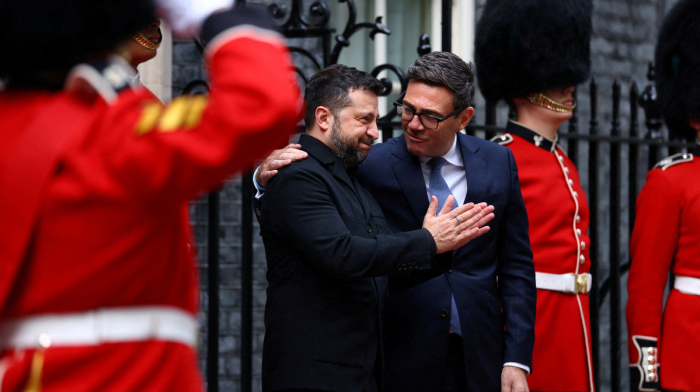
UN General Assembly enters fourth day
World leaders return to the United Nations headquarters in New York on Friday...
The Council of the European Union has formally adopted two regulations implementing tariff commitments agreed in the 2025 EU-U.S. Joint Statement, removing the remaining customs duties on American industrial goods and completing the legislative process.
The move marks the latest step in strengthening the transatlantic trade relationship between the European Union and the United States.
The regulations remove EU customs duties on U.S. industrial imports, introduce tariff-rate quotas and reduce tariffs on certain American seafood and non-sensitive agricultural products. They also extend the suspension of duties on lobster imports, including processed lobster.
Michael Damianos said the measures strike a balance between open trade and protecting European businesses and workers.
The package also includes stronger safeguard mechanisms, allowing the European Commission to act quickly if imports surge or if Washington fails to uphold its side of the agreement.
Ursula von der Leyen said the changes would bring “greater choice and better prices” for businesses and consumers, calling it a reinforcement of the world’s most valuable transatlantic economic relationship.
The main regulation will remain in force until the end of 2029, when the European Commission will assess its economic impact and decide whether to extend it.
The suspension of lobster tariffs applies retroactively from 1 August 2025 and will remain in effect until July 2030.
EU-U.S. trade in goods and services exceeded €1.7 trillion in 2025, accounting for nearly 30% of global trade and 43% of global GDP.
Shipping traffic through the Strait of Hormuz remained low on Thursday, as Iran reiterated that it will neither enter into new negotiations with the United States nor re-open the Strait as long as its conditions are not met, despite recent indirect talks in New York mediated by Qatar.
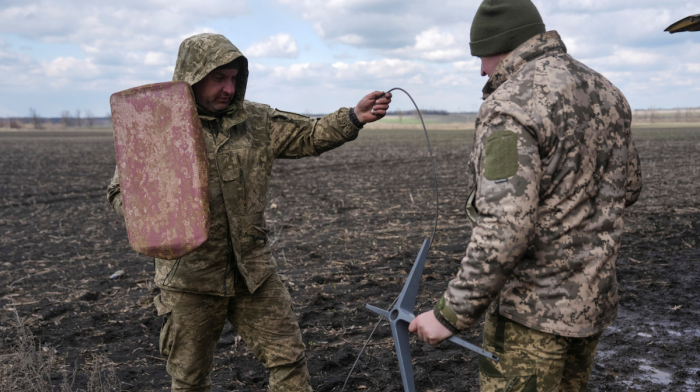
As the Ukraine war is highlighted by some leaders during the United Nations' 81st General Assembly meeting in New York, Russian forces attacked the Ukrainian capital Kyiv early on Thursday with ballistic missiles, killing two people and injuring six, Mayor Vitali Klitschko said.
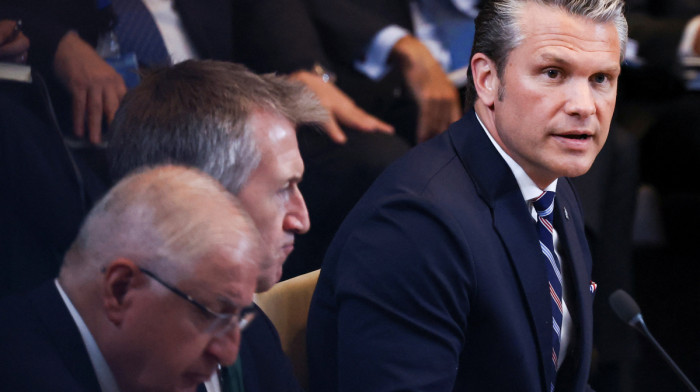
The 81st UN General Assembly continues in New York on Wednesday, with another day of high-level speeches and diplomatic meetings. The wars in the Middle East and Ukraine, global security and international cooperation remain at the centre of discussions.
The 81st UN General Assembly has wrapped up its third day in New York on Thursday, with world leaders delivering high-level speeches and holding diplomatic meetings.
Saudi Arabia, Türkiye and Pakistan will hold an urgent high-level meeting under a joint defence pact to discuss ways to support the kingdom amid attacks by Yemen's Iran-aligned Houthis. The meeting comes as Tehran seeks to distance itself from the rapid advance of its Houthi allies.
World leaders return to the United Nations headquarters in New York on Friday for the fourth day of the high-level General Debate, with speeches and diplomatic meetings continuing throughout the day.
Pope Leo XIV arrived in France on Friday for a four-day visit focused on artificial intelligence, the future of Europe, peace and the Catholic Church's response to its abuse crisis.
Ukrainian soldier’s daughter asks when he is coming home as war keeps families apart.
Finland and Sweden deployed fighter aircraft on Thursday after a group of Russian military planes was detected over the Gulf of Finland, the Finnish Air Force reported on Friday (25 September).
The Middle East arrived at the United Nations this week with the consequences of a war that is no longer contained to one front. From Israel and Iran to Syria and Yemen, leaders have used the General Assembly to set out competing positions on the situation in the region.
You can download the AnewZ application from Play Store and the App Store.
What is your opinion on this topic?
Leave the first comment