Chinese manufacturers are working at full capacity as two very different global pressures fuel demand. Europe's record heatwave has triggered a rush for air conditioners, while U.S. retailers are accelerating imports to beat looming tariff increases.
Europe's heatwave fuels air conditioner boom
Chinese manufacturers are having an unusually busy summer, driven by two very different forces. In Europe, a brutal heatwave has sent consumers scrambling for anything that can cool a room.
Both stories begin in Chinese factories working flat out to keep pace with demand.
Europe has been gripped by an intense June heatwave, with temperatures in France, Germany, Spain and other countries soaring to between 39 and 41 degrees Celsius, and in some places even higher, breaking multiple June records.
In a region where air conditioning has historically been uncommon, with only around 20 per cent of European households owning an air conditioning unit, many buildings were designed to retain heat during cold winters rather than provide relief in summer. The result has been a genuine scramble for cooling equipment.
Retailers and e-commerce platforms across several countries have reported empty shelves and waiting lists, with some units reportedly being resold for nearly €5,000, far above typical retail prices of between €749 and €849.
Exports of portable air conditioners from China to Western Europe surged by more than 70 per cent in the first five months of 2026. Exports to France, the Netherlands and Belgium more than doubled compared with a year earlier, while shipments to Spain, Portugal and Germany recorded strong double-digit growth.
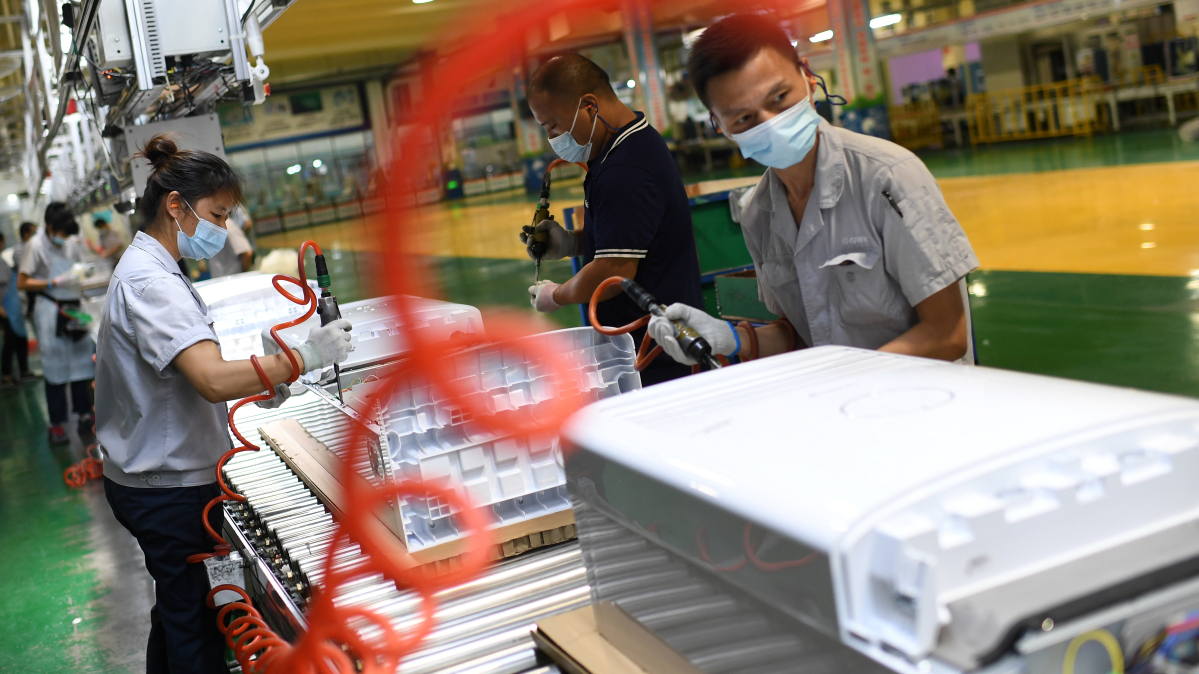
Chinese household appliance maker Midea has become an unlikely star of the European summer. Its plant in Guangdong province is operating around the clock to increase production of its PortaSplit portable units, which are being rushed to Europe by China-Europe freight trains to capture what remains of the peak summer season.
Midea said sales in markets with relatively low air conditioning penetration, including France, Spain, Germany and the UK, all recorded year-on-year growth of more than 70 per cent. Rival manufacturer Gree reported sales growth of more than 40 per cent over the same period, while TCL said some of its models have already sold out.
Tariffs bring forward U.S. imports
Across the Pacific, a different kind of urgency is driving a separate surge in Chinese exports, this time towards U.S. shores. Rather than weather, the catalyst is trade policy. U.S. retailers have raised their forecast for June imports, with the traditional peak shipping season arriving earlier than usual as importers accelerate shipments of autumn and holiday merchandise ahead of expected tariff increases.
The June import forecast has been revised upwards to 2.25 million twenty-foot equivalent units (TEUs), compared with an earlier estimate of 2.13 million.
Shipping data reflect the rush. Booking activity for Chinese imports to the U.S. has climbed steadily, with a tracking index reaching a 2026 high during the week ending 11 May. That surge in demand has pushed freight costs sharply higher.
Rate increases that took effect on 1 June sent prices on the Asia to U.S. West Coast route up 51 per cent in a single week to around US$4,836 per 40-foot container, while rates to the U.S. East Coast rose 25 per cent to US$6,336.
Analysts said the trans-Pacific peak shipping season is already well under way, with front-loading ahead of an approaching tariff deadline identified as one of the main drivers.
The motivation is straightforward. U.S. importers want their holiday inventory in warehouses before any new tariffs take effect, rather than paying higher duties on shipments that arrive later in the year.
Contract shippers are also reportedly bringing shipments forward ahead of an expected 80 per cent increase in fuel surcharges due in July, when shipping lines update their quarterly fuel adjustment factors.
Retail analysts have been blunt about what this means for shoppers. Tariffs introduced this year are expected to be felt more sharply in 2026, as retailers placing purchase orders under the new tariff structure begin passing those additional costs on through higher shelf prices.
A global economy under pressure
What connects these two stories, beyond Chinese factories working overtime to supply both markets, is how exposed global trade has become to sudden shocks, whether climatic or political. A heatwave in Europe and a tariff deadline in the U.S. appear unrelated on the surface.
Yet both have sent the same signal halfway around the world: Chinese manufacturing capacity, and the freight networks that move its goods, continue to act as the shock absorber for an increasingly volatile global economy, whether the disruption comes from extreme weather or changing trade policy.
Read more:




















What is your opinion on this topic?
Leave the first comment