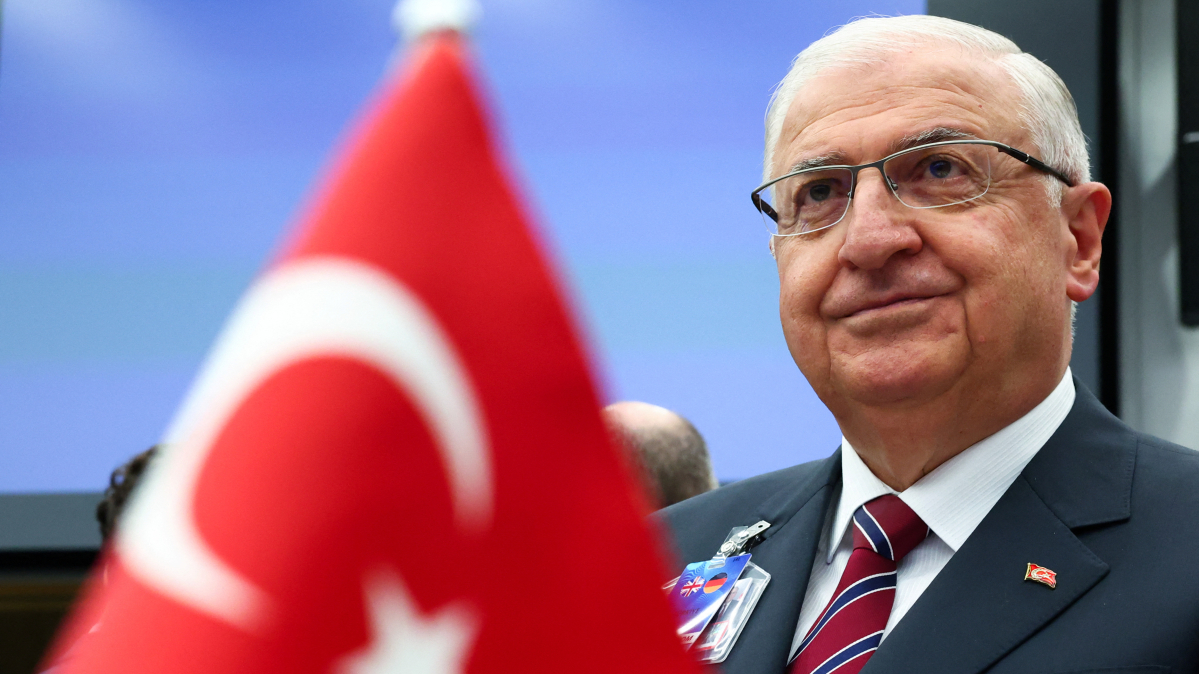
NATO is adjusting to a shifting global security environment and the United States is not seeking to leave the alliance, Turkish Defence Minister Yaşar Güler told Reuters ahead of next week’s NATO summit in Ankara.
Türkiye will host 32 NATO leaders, along with officials from the Gulf and Asia-Pacific region, on 7–8 July for a summit it says will highlight alliance unity and strengthen deterrence.
U.S. commitment to NATO remains central
Güler dismissed concerns about Washington’s long-term commitment to the alliance, despite political tensions and repeated statements by U.S. President Donald Trump threatening to reconsider America’s role in NATO.
In written responses, he said the United States had “no intention of withdrawing” from the alliance, but was instead seeking to shift more responsibility for European security onto NATO’s European members and Canada.
He added that NATO should not view the current period as a crisis, but rather as an adjustment to a changing security environment.
“NATO continues to be an unparalleled and fundamental platform for Euro-Atlantic security and defence,” Güler said.
Summit priorities: defence spending and unity
According to Güler, key priorities for the Ankara summit will include increasing defence spending among allies, strengthening the transatlantic defence industry, reinforcing unity within NATO, and expanding support for Ukraine.
He said efforts to develop a concrete roadmap for a stronger European defence pillar were expected to intensify during the meeting.
Washington’s role in NATO remains “strategically essential”, he added, particularly through extended deterrence and nuclear sharing arrangements.
Burden-sharing tensions continue
The summit comes amid ongoing disputes between allies over defence spending and burden-sharing, with the United States pressing European partners to increase their military contributions.
Last year, NATO members agreed on a long-term defence spending target of 5 per cent of GDP by 2035. Güler said Türkiye was committed to the goal and was gradually increasing its own spending, with plans to meet capability targets by 2029.
He said priorities include drones, air defence systems, missile defence, naval platforms, cyber capabilities, and unmanned systems, adding that Türkiye’s “Steel Dome” integrated air defence project would be completed “as soon as possible”.
Europe’s defence initiatives and Türkiye’s role
Güler also criticised European defence initiatives that he said excluded Türkiye, arguing that such an approach weakened overall security cooperation.
While Ankara supports efforts to strengthen European defence capabilities, he said these initiatives would be more effective if they included Türkiye’s industrial and military capacity.
“We believe excluding such an important capacity from Europe’s defence initiatives is a strategically inaccurate approach,” he said.
Air defence procurement and cooperation
Air defence remains a key priority for Türkiye, which lacks a fully independent missile defence system and relies partly on NATO infrastructure.
Güler said Ankara is evaluating “all options” to meet its needs, including potential purchases of U.S. Patriot systems or Franco-Italian SAMP-T systems, alongside joint production and technology-sharing arrangements.
He added that discussions with relevant partners are ongoing on an intermittent basis, as Türkiye seeks solutions aligned with both national security needs and alliance cooperation.
Read more:












What is your opinion on this topic?
Leave the first comment