Washington and Tehran accuse each other of breaching last week’s ceasefire as tensions rise around the key shipping route.
The U.S. military has carried out strikes on Iran in response to what Washington said was an Iranian drone attack on a cargo ship near the Strait of Hormuz.
Both countries accused each other of violating the terms of a ceasefire agreed last week.
U.S. Central Command said its aircraft targeted missile and drone storage sites, as well as coastal radar locations. It later released a grainy black-and-white video showing an explosion, which it labelled “unclassified”.
A U.S. official said the operation had ended.
Iran claimed a projectile struck an area near a pier in Sirik, in southern Iran. It said Iranian naval forces responded by striking U.S. military targets in the region, but did not provide details of what may have been hit.
Ceasefire under pressure
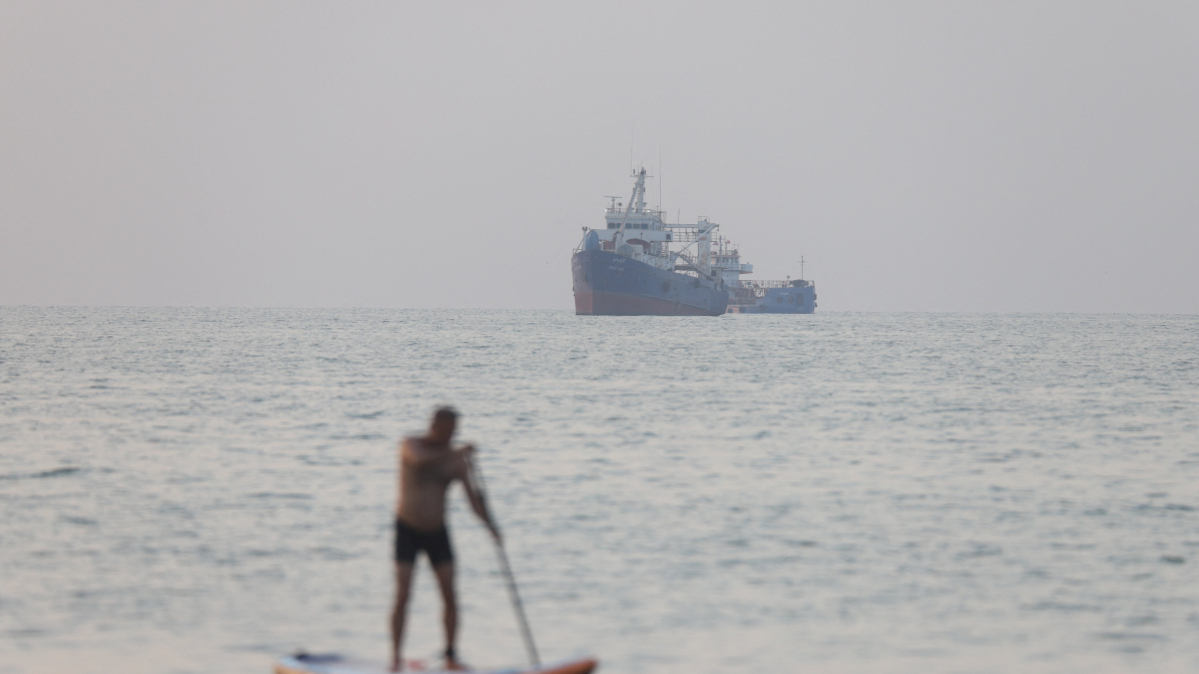
The latest escalation follows an attack on a cargo ship travelling near Oman’s coast on Thursday.
President Donald Trump blamed Iran for the attack and said it violated last week’s interim agreement.
“The unwarranted aggression against commercial shipping by Iranian forces clearly violated the ceasefire,” U.S. Central Command mentioned.
It described the U.S. strikes as “a powerful response” to the attack on a commercial vessel transiting the Strait of Hormuz.
The U.S. military said it would continue to provide “safe passage coordination and support” to commercial vessels passing through the strait.
Vice President JD Vance said Washington had honoured the ceasefire, also referred to as a memorandum of understanding.
“Iran signed a ceasefire agreement. We have honoured it. If they have disagreements about how the MOU is being applied, they can pick up the phone. But violence will be met with violence,” he wrote on X.
Iran reports strike near Sirik
Iranian state media, citing an unnamed military source, said an explosion had been heard at the port of Sirik.
The source said several warning shots had earlier been fired from Sirik towards vessels accused of violating Strait of Hormuz regulations. Two warning missiles were also launched from the nearby Karpan area towards the waterway, the source added.
On Saturday, Iran’s Mehr news agency cited the head of ports in eastern Hormozgan province as saying there had been no damage to the port of Sirik after the U.S. attack.
The official said the port was operating normally and that no damage had been reported to facilities or equipment.
Iran’s Revolutionary Guards said their navy had responded by striking locations where U.S. forces were stationed in the region.
They warned that any further U.S. attacks would be met with a broader response, according to a statement carried by state media.
The Guards also said the ceasefire agreement gave Iran control over ship traffic in the strait.
Regional diplomacy continues
Despite the escalation, there were signs of diplomatic movement elsewhere in the region.
Israel and Lebanon signed an agreement aimed at ending fighting between Israel and Iran-backed Hezbollah.
Both sides described the deal as an initial step requiring Hezbollah to disarm and Israel to withdraw troops from Lebanon. However, it remained unclear how the agreement would be enforced.
Hezbollah said it would not cooperate.
Oil markets and shipping
The United States did not immediately respond to Iran’s claim that it had struck American targets.
Ebrahim Azizi, head of the Iranian parliament’s national security committee, said Trump had failed to show commitment to negotiation or the ceasefire.
Before the latest violence, oil prices had fallen about 3% on Friday and were heading for steep weekly losses.
The drop came as oil tankers resumed movement through the Strait of Hormuz, a route that carries about one-fifth of global oil and LNG supplies.
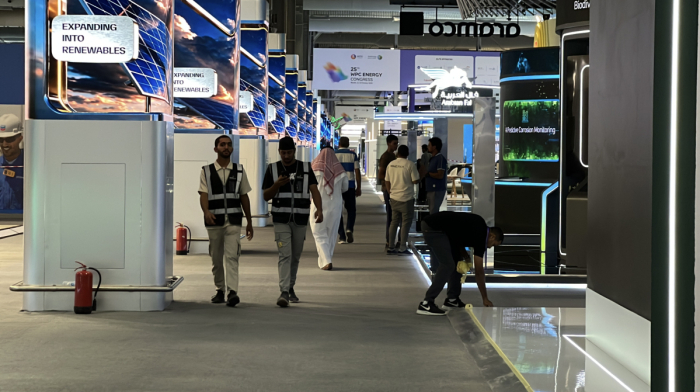
Saudi Aramco resumed crude loadings at its Ras Tanura terminal in the Gulf, the world’s biggest oil port, after a nearly four-month halt, shipping data showed.
Fertiliser shipments through the strait have also increased, easing concerns about a possible rise in global food prices.
Gulf allies call for free navigation
U.S. Secretary of State Marco Rubio, who was concluding a Gulf tour aimed at reassuring regional allies about the interim pact, issued a joint statement with the Gulf Cooperation Council.
The statement called for “free, unconditional, and unrestricted navigation” in the Strait of Hormuz, without tolls or attempts to assert control.
Iran’s foreign ministry said the strait should be governed by Iran and Oman. Ali Akbar Velayati, a senior adviser to Iran’s supreme leader, warned that Washington’s Gulf allies depended on Tehran’s tolerance for their survival.
Read more:














What is your opinion on this topic?
Leave the first comment