One month after Ebola cases were confirmed in eastern Democratic Republic of the Congo, health officials and aid organisations say the true extent of the outbreak remains unclear because of major gaps in testing, reporting and disease surveillance.
The three affected provinces have officially recorded 782 confirmed cases and 181 deaths, making it the third-deadliest Ebola outbreak on record.
However, medical charity Médecins Sans Frontières (MSF) has warned that the official figures are likely to underestimate the true toll.
"No one knows the true scale or exactly where the disease is spreading in DRC," said Kate White, MSF's emergency medical coordinator overseeing operations in the outbreak zone.
Testing and reporting challenges hinder response
MSF described testing as one of the weakest aspects of the response effort.
Many communities, particularly those affected by ongoing armed violence, lack access to testing kits, while treatment centres often face delays in receiving laboratory results.
A senior Congolese public health official told Reuters that the challenges extend beyond testing. Data collected from laboratories, hospitals, treatment centres and surveillance teams is difficult to reconcile, leading to inconsistencies in official reporting.
Patients who move between health zones can be counted more than once, while others die in remote communities without ever being identified by health authorities.
The official said he believes the virus may have been circulating as early as February, months before the outbreak was formally recognised.
Local figures highlight reporting discrepancies
Differences between local and national data have raised further concerns about the accuracy of outbreak reporting.
In the Nizi health zone in Ituri Province, local officials reported 19 confirmed cases and 17 deaths since the outbreak was declared.
However, the latest national situation report recorded only 11 cases and one death in the same area.
Dieudonné Mwamba said national figures are updated regularly as new information becomes available.
Violence and mistrust hamper containment efforts
Beyond logistical challenges, health workers continue to face community resistance and security threats.
On Sunday, security forces fired warning shots and tear gas during a funeral in Mongbwalu after a crowd attempted to seize the body of a suspected Ebola victim, according to officials and verified footage.
The World Health Organization (WHO) warned that such incidents are becoming a serious obstacle to controlling the outbreak.
The agency also cited an attack on a burial team in South Kivu two weeks earlier that forced health workers to abandon a body before completing safety procedures.
Patients have also fled treatment and isolation centres, with at least four such incidents reported during the first week of June.
MSF said mistrust of health authorities remains widespread across affected communities.
To improve cooperation, Congolese health authorities said family members will now be included in preparations for safe burials whenever possible.
Treatment facilities overwhelmed
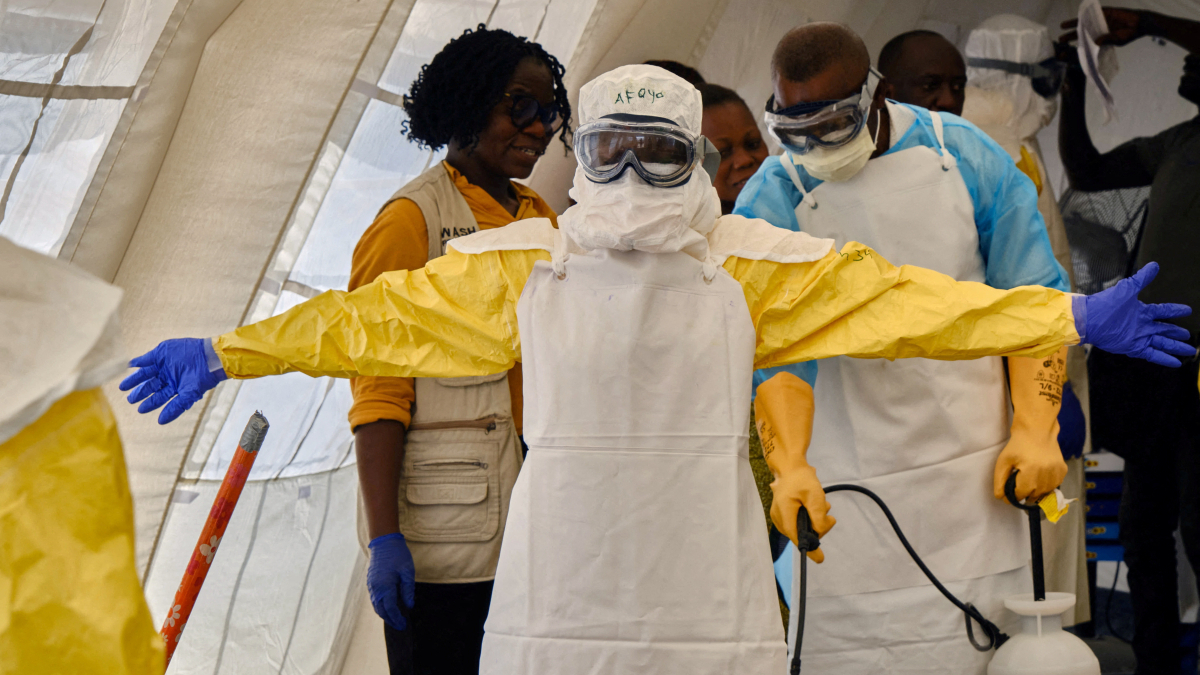
The WHO warned that the region lacks sufficient capacity to isolate and treat Ebola patients.
Only 14 treatment and isolation facilities are operating across nine health zones in the provinces of Ituri, North Kivu and South Kivu.
Yet the outbreak has already spread to 31 health zones across the three provinces.
In Nizi, there is no dedicated treatment or isolation facility, forcing many infected patients to return home, where they often die within their communities, according to local health officials.
Narrowing window to contain the outbreak
Aid organisations warn that the opportunity to bring the outbreak under control is shrinking rapidly.
The deadliest Ebola outbreak occurred in West Africa between 2014 and 2016, killing more than 11,000 people.
"Diagnostics, surveillance, access to care, and community engagement must be urgently strengthened," said Frederic Lai Manantsoa, MSF's emergency coordinator in Congo.
He urged authorities and international partners to ensure health workers and medical supplies can reach affected communities and that the response is scaled up to match the severity of the crisis.
With cases continuing to spread, gaps in data and persistent community mistrust are emerging as some of the biggest challenges facing efforts to contain the outbreak.











What is your opinion on this topic?
Leave the first comment