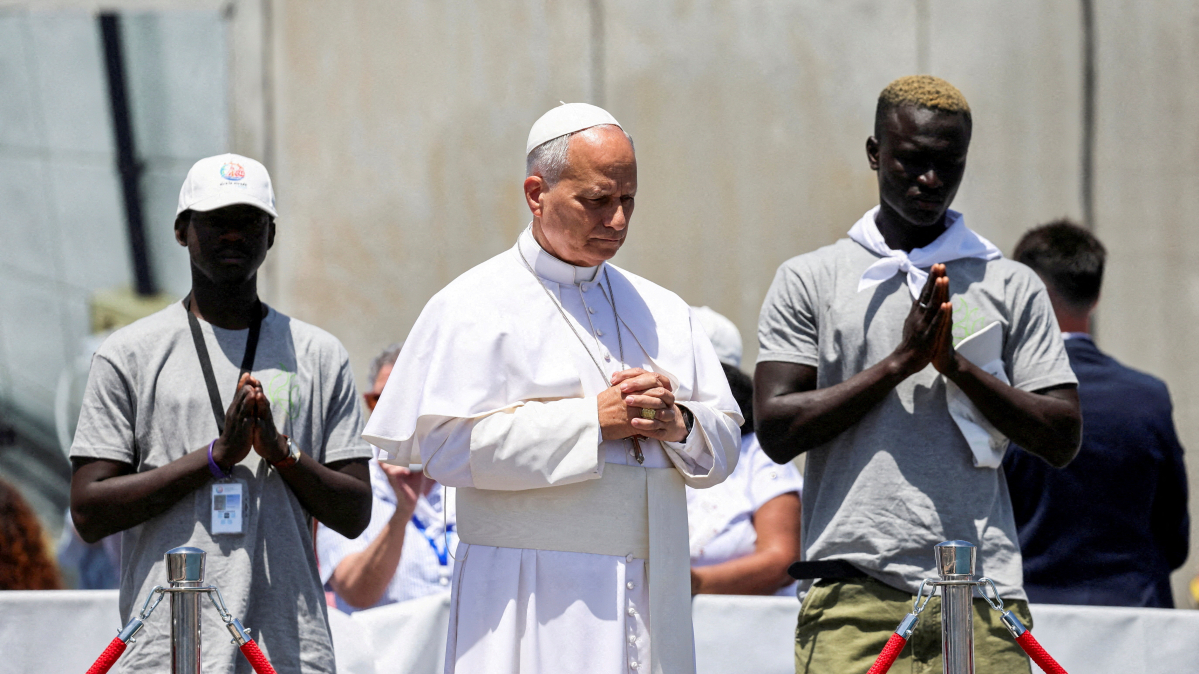
Pope Leo has arrived in the Canary Islands for the final leg of his visit to Spain, where he is set to meet migrants who survived dangerous Atlantic crossings and renew his call for greater global compassion towards people on the move.
The visit to the Spanish archipelago off the west coast of Africa is a central moment in the Pope’s week-long tour of Spain, during which he has repeatedly warned that escalating conflicts and inequality are deepening a wider humanitarian crisis.
On Thursday (11 June), the Pope landed on Gran Canaria, where he is expected to meet aid organisations and migrant support groups before laying flowers at a memorial dedicated to those who have died attempting the Atlantic crossing.
Meeting with migrants
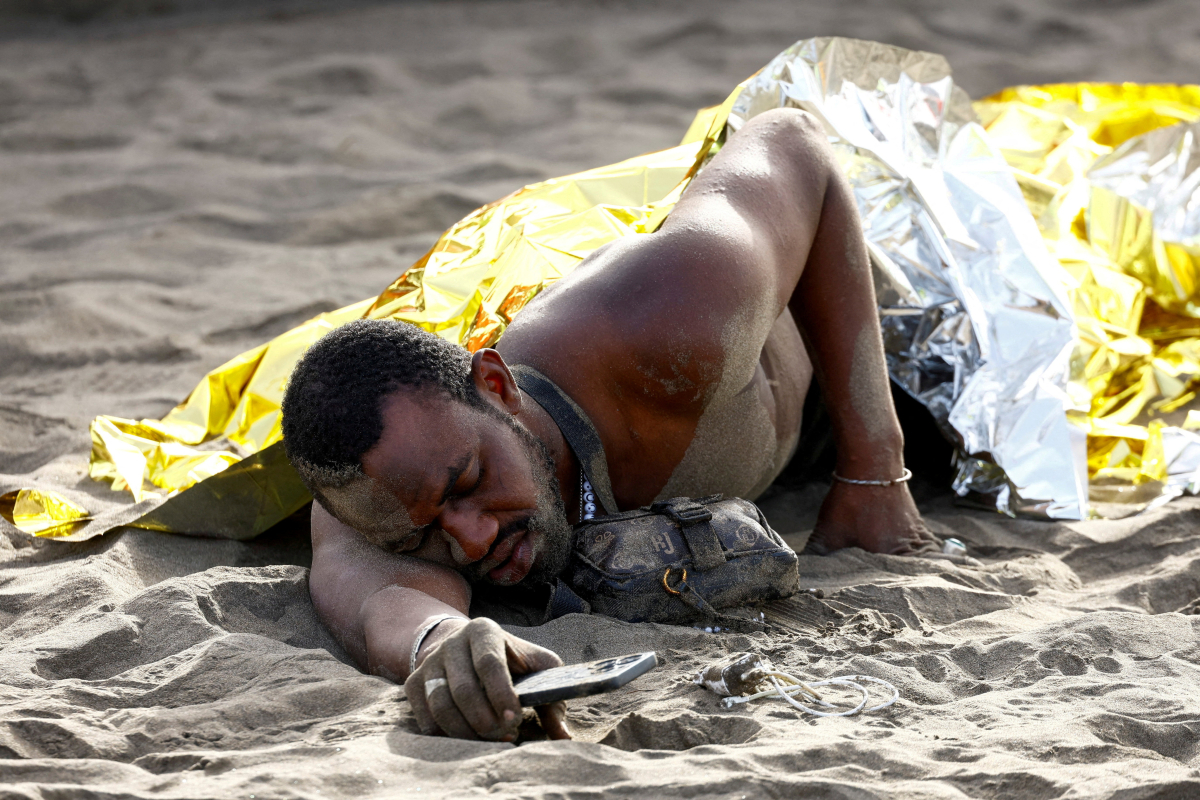
On Friday, Pope Leo is expected to meet around 1,000 migrants who have arrived in the islands after undertaking perilous journeys across the Atlantic Ocean, one of the world’s deadliest migration routes.
The visit comes amid growing concern over rising deaths along migration routes from West Africa to Spain. According to the NGO Caminando Fronteras, more than 3,000 people died in 2025 while attempting to reach the Canary Islands.
The organisation said a further 1,317 migrants died in the first five months of 2026 alone, including women and children, while dozens of boats reportedly disappeared during the crossing.
The Canary Islands lie roughly 100km from the West African coast, making them one of the closest European entry points for migrants travelling from countries including Mauritania and Morocco.
'Test of global conscience'
Pope Leo has used his visit to Spain to criticise the international response to migration, warning that the treatment of migrants is challenging “the ethical foundation of the international order”.
Juan Carlos Lorenzo, coordinator of the Spanish Commission for Refugees in the Canary Islands, described the visit as a “significant milestone”, saying it sends a strong message about human dignity and rights.
“It will serve as a strong affirmation of the defence of human rights, respect, and the dignity that all people deserve, regardless of their origin,” he said.
The Pope’s intervention comes as migration routes across the Atlantic become increasingly dangerous, with rights groups warning that tighter enforcement measures in parts of West Africa have pushed migrants towards longer and riskier sea crossings.
Policy under scrutiny
Spain has adopted a comparatively more open approach to migration than many European countries, introducing measures aimed at granting residency to hundreds of thousands of undocumented migrants.
However, the policy has faced political backlash from far-right parties and criticism over delays in processing legal status applications, leaving many migrants in prolonged uncertainty.
As European governments continue to debate border enforcement and asylum policy, the Canary Islands have emerged as a key focal point in an increasingly deadly migration route linking West Africa and Europe.












What is your opinion on this topic?
Leave the first comment