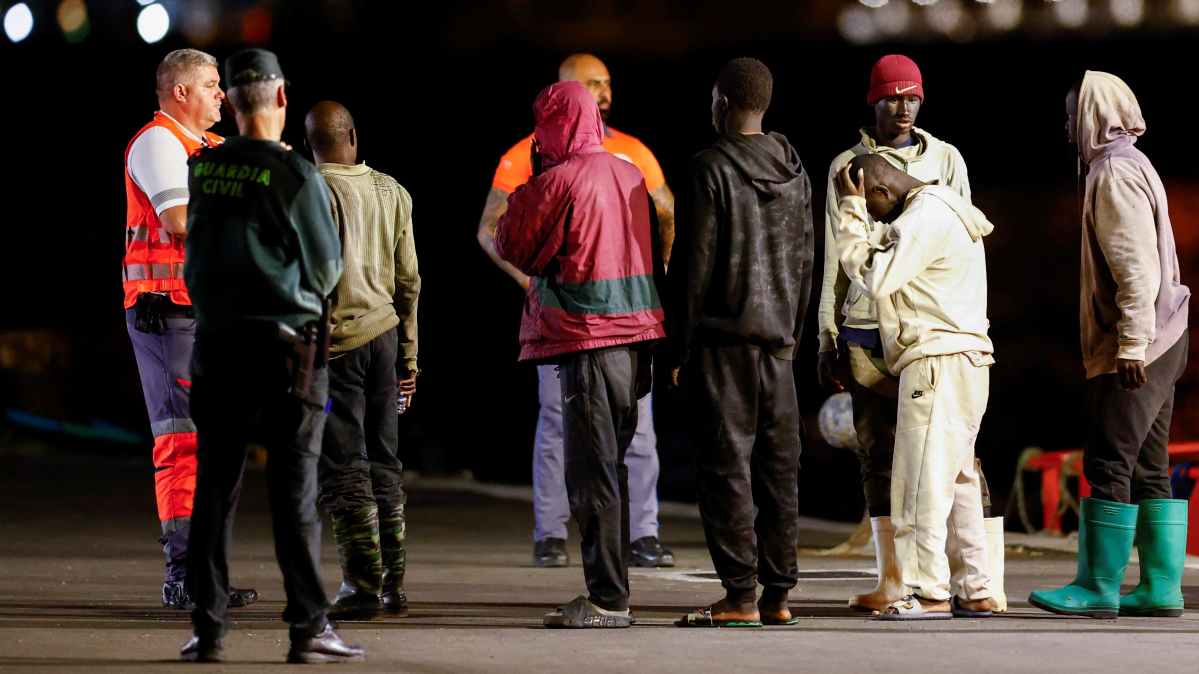
More than 1,300 migrants died or went missing while attempting to reach Spain between January and May 2026, according to Spanish NGO Caminando Fronteras, highlighting the continuing dangers of one of the world's deadliest migration corridors.
Figures nearing last year's pace
The figures are based on the organisation's monitoring of journeys from West Africa to the Canary Islands and mainland Spain, routes that have become increasingly significant as enforcement has tightened along other sections of the European Union's external border.
For the whole of 2025, Caminando Fronteras recorded 3,090 migrant deaths or disappearances. The figure was widely cited by international media and broadly aligned with wider migration monitoring trends reported by the United Nations system.
The 2026 total already represents around 42% of the deaths and disappearances recorded during all of 2025, suggesting the annual toll is tracking at a similar pace.
If current trends continue, the number of fatalities in 2026 could approach or exceed last year's total, depending on seasonal migration patterns, particularly during the summer Atlantic crossing period.
The deadliest corridor
Most fatalities continue to occur on the Atlantic route linking West Africa and the Canary Islands, widely regarded as one of the world's most dangerous migration journeys because of its vast distances, unpredictable ocean currents and the use of overcrowded, unseaworthy vessels.
The route has seen growing use in recent years as border enforcement has intensified in countries such as Mauritania, pushing migration flows further south and forcing migrants to undertake longer and riskier journeys across the open ocean.
Crossings from Morocco to mainland Spain remain less common but continue to claim lives despite their shorter distance, largely because of strong surveillance measures and maritime interception operations.
Disappearances at sea
Caminando Fronteras also reported that dozens of boats vanished entirely during the first months of 2026, with all passengers presumed dead or missing.
The incidents highlight one of the defining features of Atlantic migration routes: the difficulty of tracing vessels that sink or drift off course far from search-and-rescue infrastructure.
The organisation's findings broadly align with data from the International Organization for Migration's Missing Migrants Project, which consistently identifies the western Mediterranean and Atlantic approaches to Spain among the deadliest migration routes in the world.
Fatalities despite shifting flows
Although the 3,090 deaths or disappearances recorded in 2025 marked a sharp decline from the estimated toll reported by the same NGO in 2024, experts caution that annual fluctuations often reflect shifts in migration routes rather than lasting improvements in safety.
The latest figures indicate that, despite changes in enforcement policies and evolving migration patterns, the underlying risks of Atlantic crossings remain persistently high, particularly for those departing from West African coastal states bound for the Canary Islands.



















What is your opinion on this topic?
Leave the first comment