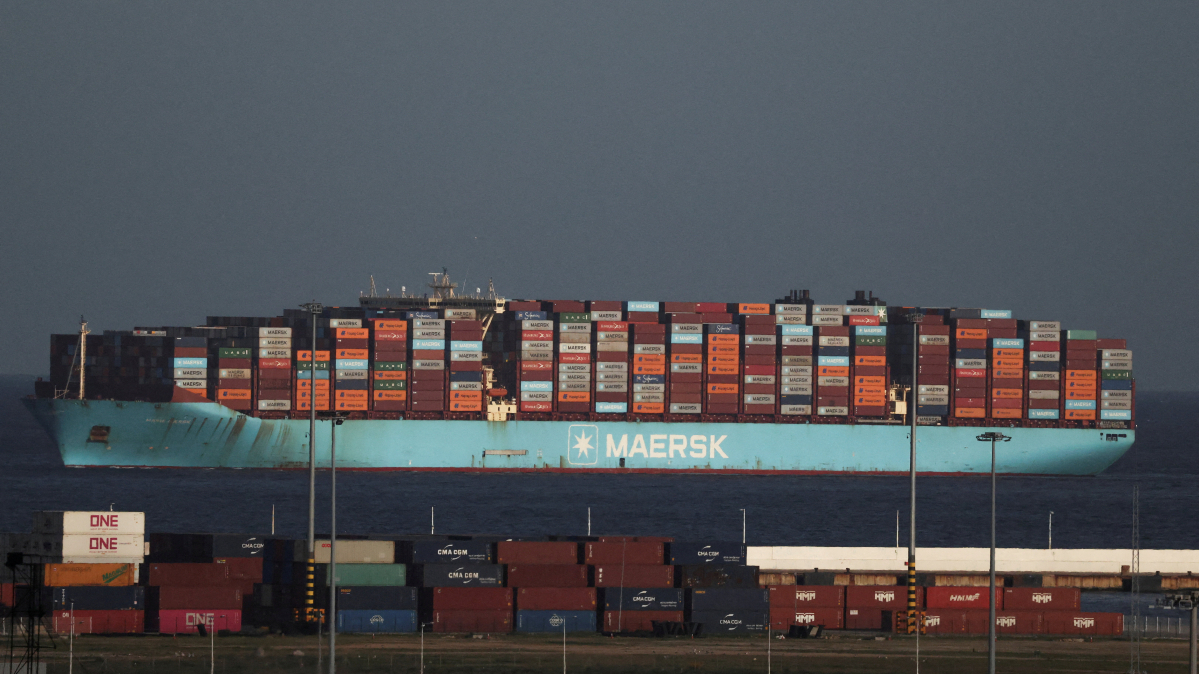
Shipping group Maersk beat first-quarter profit forecasts on Thursday but warned that the Iran war had pushed its fuel costs up by around $500 million a month, adding that the energy crisis would persist even if a peace deal were reached.
Shares in Maersk fell 6.5% at 1100 GMT after the results, underperforming a broadly flat Copenhagen benchmark index amid concerns that high fuel prices could erode profits.
Maersk chief executive Vincent Clerc said the war had added roughly 3 billion Danish crowns ($472.7 million) to the company’s monthly costs, as bunker fuel prices surged from around $600 to just under $1,000 per metric tonne.
Clerc said Maersk had so far managed to recover those costs in full through contract renegotiations and spot rate increases, but cautioned that the energy crisis showed no sign of easing.
He added that passing on higher costs to customers had been challenging, but that Maersk had managed it so far. “They can understand, even if they don’t like it, why we have to do it,” he said. “It is not something we can just absorb.”
Profit down but beats forecast
Maersk’s earnings before interest, taxes, depreciation and amortisation (EBITDA) for the January to March period stood at $1.73 billion, above a median forecast of $1.66 billion in a poll of 10 analysts.
However, the figure was significantly lower than the $2.71 billion reported for the same period last year.
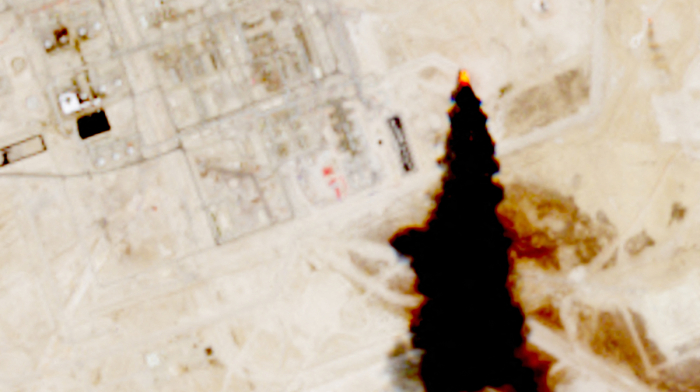
The first quarter does not capture the full impact of the Iran war on global supply chains, as it began on 28 February when the U.S. and Israel launched coordinated strikes on Iran.
Shipping disruption and rising risks
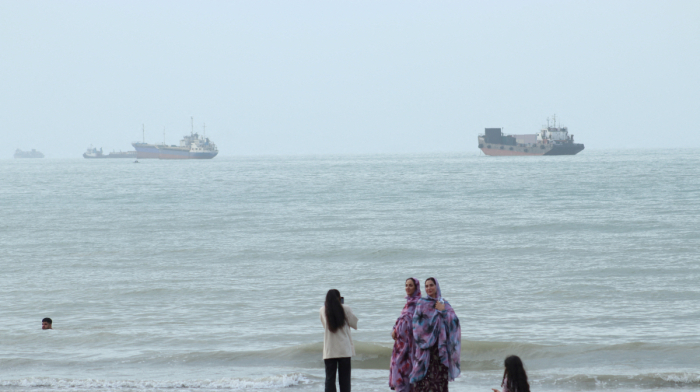
The war has disrupted shipping routes after Iran closed the Strait of Hormuz to commercial traffic. The company has six ships stranded in the Gulf, a spokesperson said.
Clerc noted that only 2% to 3% of global container trade flows to and from the Gulf, giving the industry sufficient resilience to cope with the closure.
The greater risk, he said, would arise if sustained high energy prices triggered widespread inflation, leading to recession and a drop in demand. He described a scenario of high costs, weak demand and overcapacity as “a dangerous cocktail.”
The Middle East situation is also affecting shipping in the Red Sea, forcing Maersk to continue rerouting vessels around Africa, away from the Suez Canal and the Bab el-Mandeb Strait.
Maersk is currently assessing whether conditions in the Red Sea may soon be safe enough to resume some sailings through Suez, which would significantly reduce fuel costs and transit times on the critical Asia–Europe corridor, Clerc said.


















What is your opinion on this topic?
Leave the first comment