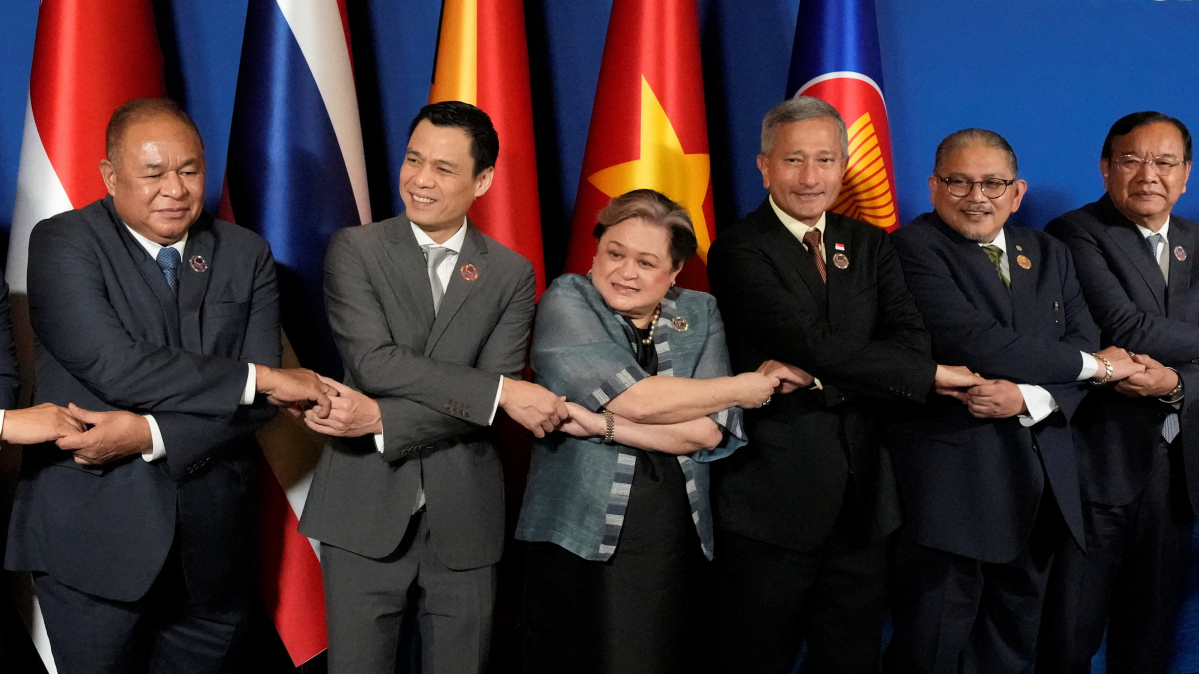
Conflicts well beyond Southeast Asia are set to dominate talks as leaders from the Association of Southeast Asian Nations (ASEAN) regional bloc gather in the Philippines, with the crisis in the Middle East looming large over fuel‑import‑dependent economies.
Meetings on Thursday and Friday on the island of Cebu will bring together leaders, as well as foreign and economic ministers, from the 11‑member group. Energy and food security are high on the agenda for the region, home to nearly 700 million people.
The war in the Middle East has scrambled global energy markets, leaving many Asian economies searching for alternative oil supplies. In response, ASEAN ministers have held special meetings ahead of the summit, while the Philippines is pushing for the ratification of an oil‑sharing framework agreement.
“This ongoing crisis in the Middle East, and its far‑reaching repercussions, including disruptions to energy flows, trade routes and food supply chains, remind us that events beyond our region can have immediate and profound effects on ASEAN,” the Philippines’ Foreign Secretary Ma. Theresa Lazaro said as she opened talks among her counterparts. She added that the bloc needed to strengthen crisis coordination and institutional readiness.
Action beyond rhetoric
Diplomats and analysts say the challenge will test the Philippines’ chairmanship, forcing it to balance a coordinated regional response to global shocks with long‑standing internal problems. These include Myanmar’s civil war and lingering tensions from a deadly, unresolved border dispute between Thailand and Cambodia.
A geopolitical analyst in Manila said efforts to cushion the economic fallout from global instability could overshadow other urgent regional issues, though Myanmar and the South China Sea would remain on the agenda without expectations of major breakthroughs.
ASEAN, with a combined GDP of about $3.8tn, has long struggled to respond decisively to crises, often producing statements of cooperation without clear strategies or binding commitments. However, Former Philippine diplomat Laura del Rosario said the scale of the energy shock could push the bloc beyond rhetoric, as no member state could insulate itself from the disruption.
Wider strategic tensions
The conflict has also sharpened rivalry between the United States and China in Southeast Asia, analysts say. With Washington focused on wars elsewhere, Beijing has sought to position itself as a more reliable partner.
A regional security expert in Singapore said the United States risked being seen as destabilising, while China was casting itself as a stabilising force. As a major supplier of energy‑related inputs and raw materials, China holds significant leverage over regional economies.
Myanmar and the South China Sea
Myanmar’s crisis is also expected to feature prominently. The country’s new, nominally civilian government has sought to re‑engage with ASEAN following elections dominated by a military‑backed party. The bloc has not recognised the vote or signalled when Myanmar’s leadership might return to its summits after years of isolation.
ASEAN leaders are also likely to renew calls for progress on a long‑delayed code of conduct with China over the South China Sea. A target of 2026 remains in place, though competing claims and concerns over economic ties with Beijing continue to complicate talks.
China, which claims much of the strategically vital waterway, is not attending the summit but remains one of ASEAN’s most important external partners.
















What is your opinion on this topic?
Leave the first comment