Ted Turner, the CNN founder who pioneered the 24-hour news cycle, has died aged 87, the network reported on Wednesday (6 May), citing a Turner Enterprises press release. He died surrounded by family.
The Ohio-born billionaire raced yachts, owned a professional sports team and donated $1 billion to United Nations causes, including founding the United Nations Foundation.
Nicknamed ‘The Mouth of the South’ for his outspoken nature, Turner became one of the most powerful figures in U.S. media and entertainment, with networks specialising in news, sport, re-runs and classic films.
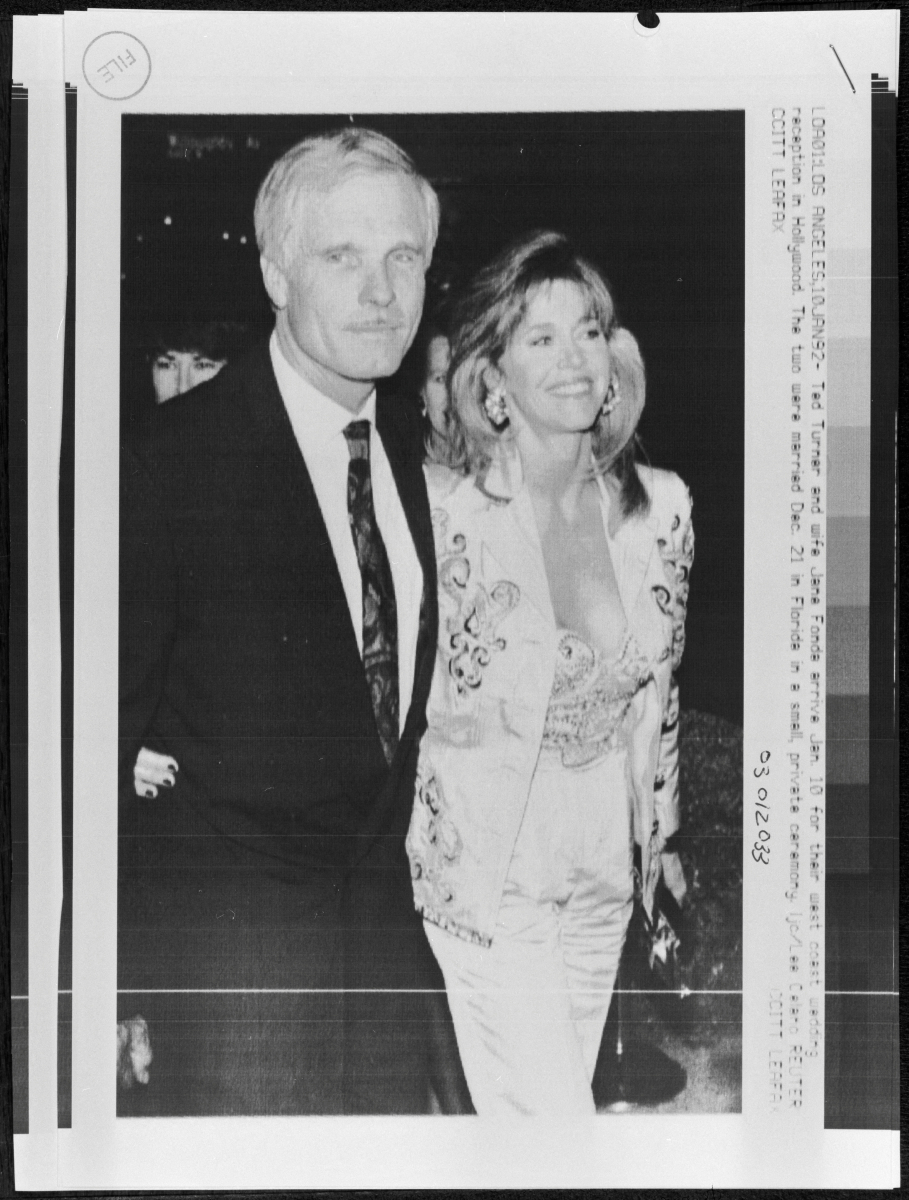
Turner was famously married to Oscar-winning actress Jane Fonda and was a committed environmentalist who played a key role in reintroducing bison to the American West.
Billionaire, philanthropist, activist
In 1986, he launched the Goodwill Games, an Olympic-style competition, and two years later bought a wrestling organisation to expand his television output. His concerns about nuclear war led him to co-found the Nuclear Threat Initiative in 2001.
American business magazine Forbes estimated Turner’s fortune at $2.8 billion.
"If I only had a little humility, I'd be perfect," he once said.
In September 2018, he revealed he had Lewy body dementia, a degenerative neurological disease.
Turner's early life
Born Robert Edward Turner III in Cincinnati on 19 November 1938, he moved to the South with his family at the age of nine.
He attended military schools, where he became a champion debater and yachtsman.
Turner enrolled at Brown University in Rhode Island and angered his father by studying classics rather than business. He got into trouble for having a girlfriend in his room, among other offences, and never graduated.
He joined his family’s advertising company in Savannah, Georgia, selling billboard space. At 24, he was left in charge after his father died by suicide.
The business was sold to pay debts, but after a family dispute in which Turner prevailed, he repurchased the firm and made it successful. In 1970, against the advice of advisers, he bought a failing Atlanta UHF television station, later known as WTBS, for $2.5 million.
During his ownership of the Atlanta Braves baseball team, Turner appointed himself manager and directed the team for one game - a 2–1 loss to Pittsburgh - in 1977. Baseball officials later ordered him to relinquish the role.
Turner was married and divorced three times and had five children. His third marriage, to Fonda, lasted 10 years and ended in 2001.
After a rocky start, he made the station profitable with low-cost, 24-hour programming. Its fortunes rose in 1976 after a federal ruling allowed cable systems to use satellite signals. Turner’s early adoption helped WTBS become the first “superstation”, carried nationwide.
CNN and global influence
In 1980, Turner launched CNN in Atlanta, saying it would counter “sleazy” coverage by major networks CBS, NBC and ABC. Offering low pay but the promise of adventure, he recruited journalists and technical staff despite scepticism that the “Chicken Noodle Network” would fail.
Instead, as the first 24-hour news outlet, it set the template for global coverage of wars, trials, revolutions, and man-made and natural disasters.
"Barring satellite problems, we won't be signing off until the world ends," Turner said in a 2013 CNN interview.
In 2018, during President Donald Trump’s first term, Turner said he rarely watched the network he had founded, arguing it focused too heavily on politics.
Turner was named Man of the Year in 1991 by Time magazine for “influencing the dynamic of events and turning viewers in 150 countries into instant witnesses of history”.
In 1996, Time Warner acquired Turner Broadcasting System for $7.5 billion, creating what was then the world’s largest communications company, with assets including HBO, Warner Bros., Time, CNN, Cartoon Network and Turner Classic Movies.
Personal and professional troubles
In 2001, Time Warner merged with online provider AOL in a $99 billion deal that Turner supported. In the subsequent restructuring, he lost oversight of the cable networks he had built and suffered major financial losses as the company’s share price fell.
He stepped down as vice-chairman in 2003 and later resigned as a Time Warner director.
Turner battled depression and spoke openly about suicidal thoughts, according to his biographer.
In his early career, he developed a reputation as a hard-drinking, outspoken figure.
"I don't have any idea what I'm going to say," he once told The New Yorker. "I say what comes to my mind."
He angered the Catholic Church after calling some employees “Jesus freaks” over Ash Wednesday markings and once told a group of Germans they could recover from past wars, drawing comparisons with his struggling Braves team.
Feud with Rupert Murdoch
Turner had a long-running feud with fellow media mogul Rupert Murdoch, beginning in 1983 when a Murdoch-sponsored yacht collided with Turner’s boat during an Australian race. Turner reportedly challenged him to a fistfight.
Their rivalry intensified in 1996 when Murdoch launched Fox News as a conservative competitor to CNN. Turner later called him a warmonger and likened him to Adolf Hitler.


















What is your opinion on this topic?
Leave the first comment