live Iran says it has no trust in U.S. as nuclear tensions and talks continue- Middle East conflict
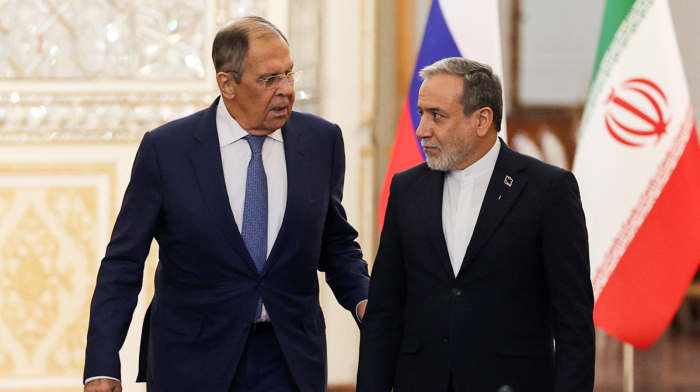
Iran’s Foreign Minister Abbas Araghchi said Tehran has “no trust” in the United States and will only consider negotiations if Was...
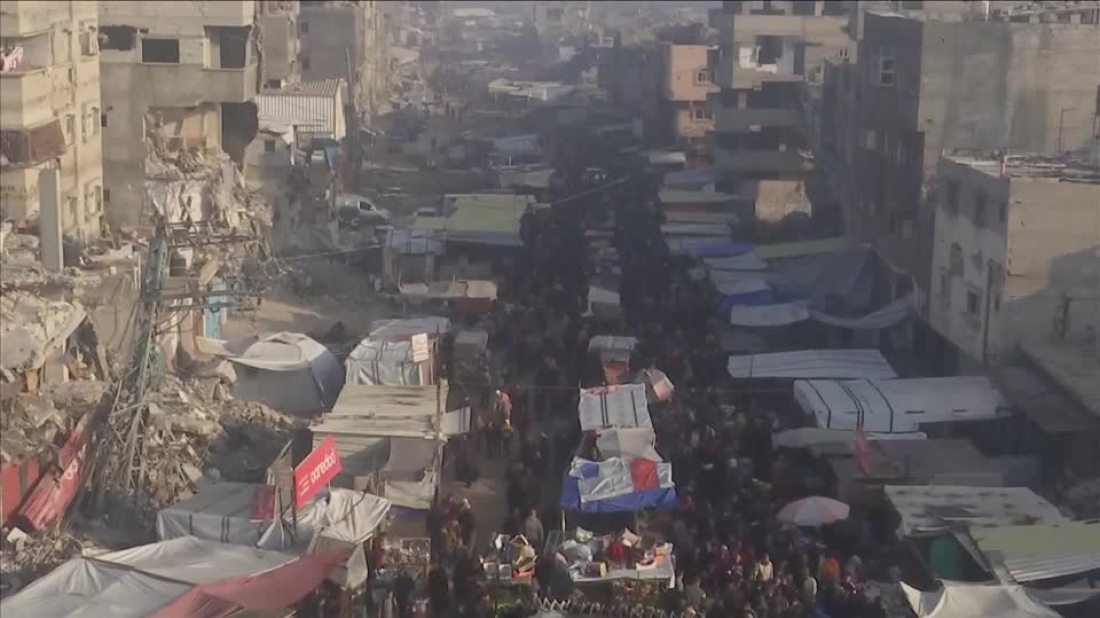
Shoppers in Khan Younis marketplace as Israel's cabinet prepares to approve a ceasefire deal with Hamas. The agreement includes a six-week truce, Israeli troop withdrawal, prisoner exchanges, and increased aid to Gaza, where millions face a humanitarian crisis.
Shoppers were seen in a marketplace in Khan Younis, Gaza, as Israel's cabinet is set to approve a ceasefire agreement with Hamas. The deal, reached on Wednesday following mediation by Qatar, Egypt, and the United States, outlines a six-week initial ceasefire and the gradual withdrawal of Israeli forces from Gaza.
The agreement also includes the release of Israeli captives in exchange for hundreds of Palestinian prisoners detained in Israel. It also paves the way for a surge in humanitarian aid to Gaza, where the majority of the population has been displaced and is enduring hunger, illness, and cold.
If successful, the ceasefire would halt the fighting that has devastated much of Gaza. According to Gaza authorities, more than 46,000 people have been killed by Israeli airstrikes, and the vast majority of the enclave’s pre-war population of 2.3 million has been displaced. The accord marks a crucial step towards addressing the severe humanitarian crisis in the region.

The U.S.-Israeli war with Iran loomed over U.S. President Donald Trump's visit to China, as signs emerged that the conflict is causing a shift in alliances across the Middle East.
Iran’s Foreign Minister Abbas Araghchi said Tehran has “no trust” in the United States and will only consider negotiations if Washington shows seriousness. His remarks came as talks on Iran’s nuclear programme continued, with Trump and Xi also opposing Iran acquiring nuclear weapons.
When Donald Trump boarded Air Force One for Beijing on Tuesday, he brought two cabinet members whose presence in China would have seemed unlikely a year ago, highlighting an unusual moment in U.S.–China relations.
A new trilateral energy partnership involving Uzbekneftegaz, Azerbaijan’s state oil company SOCAR and BP has been announced during Uzbekistan Energy Week 2026 in Tashkent.
The Eurovision Song Contest opened in Vienna on Tuesday amid heightened political tensions, as Israel competed in the first semi-final despite a boycott by five European broadcasters over the war in Gaza.
China has launched the world’s first experiment to study how artificial human embryos develop in space, marking a major step in understanding whether humans could one day reproduce beyond Earth.
Every day, an elderly woman in China’s Shandong province looks forward to a video call from her son. He asks about her health, tells her he has been busy with work, and promises he will come home once he has saved enough money. She tells him she misses him. He tells her to take care of herself.
Deep in the ancient forests of southern China, researchers have discovered a small, shy snake with an extraordinary survival trick: when threatened, it creates the illusion that it has two heads.
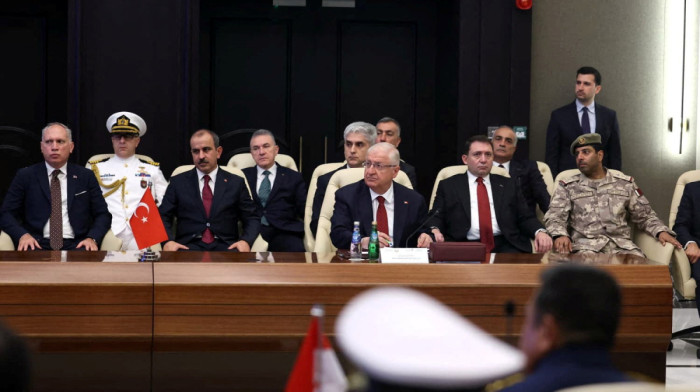
Turkish President Recep Tayyip Erdoğan has called for deeper solidarity among Turkic states amid rising geopolitical tensions and rapid technological change.
A U.S. Department of Justice official said Washington was preparing to indict former Cuban president Raúl Castro in connection with the 1996 downing of aircraft operated by "Brothers to the Rescue", a Miami-based exile group that conducted search-and-rescue flights for Cuban migrants.
You can download the AnewZ application from Play Store and the App Store.
What is your opinion on this topic?
Leave the first comment