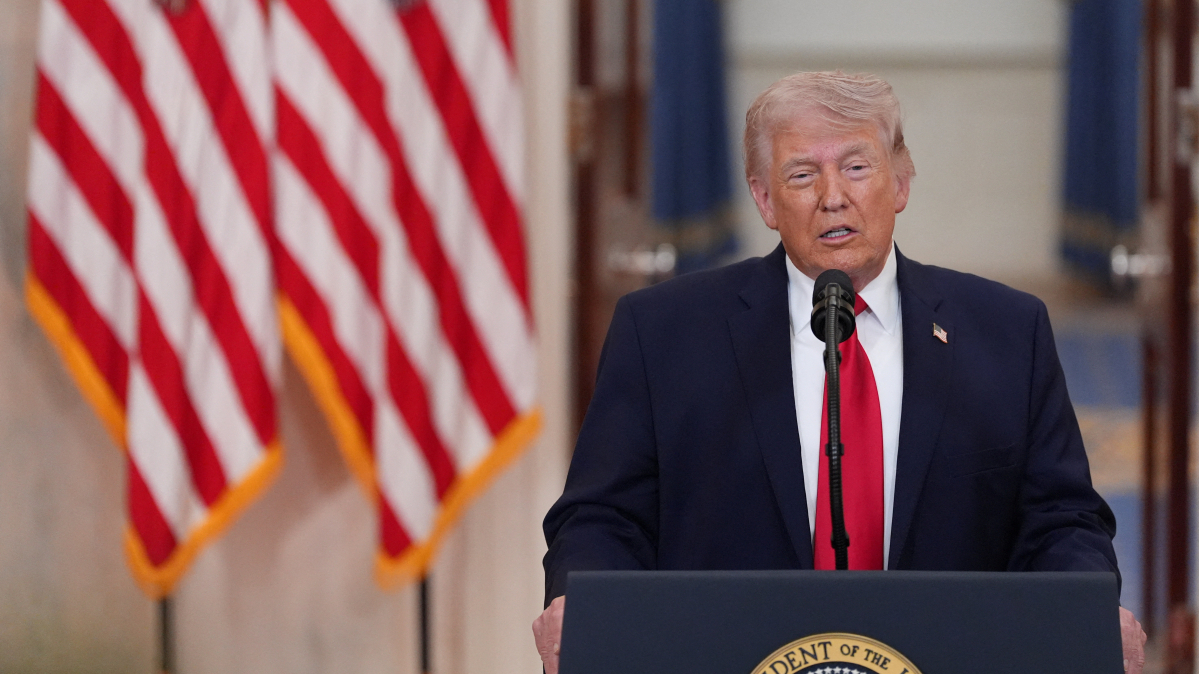
American President Donald Trump threatened on Wednesday to pull the United States out of NATO after European nations refused to join a U.S.-led naval mission to unblock the Strait of Hormuz.
It remains unclear whether Trump could act unilaterally to withdraw from the 77-year-old transatlantic alliance. However, he has frequently taken major decisions without congressional approval, some of which have been upheld by U.S. courts.
What does the U.S. Constitution say?
Under the U.S. Constitution, the President has the power to make treaties with the advice and consent of the Senate, provided two-thirds of the 100-member chamber agree.
However, the Constitution does not specify who holds the authority to withdraw from a treaty or how such agreements should be terminated.
Has the U.S. left treaties before?
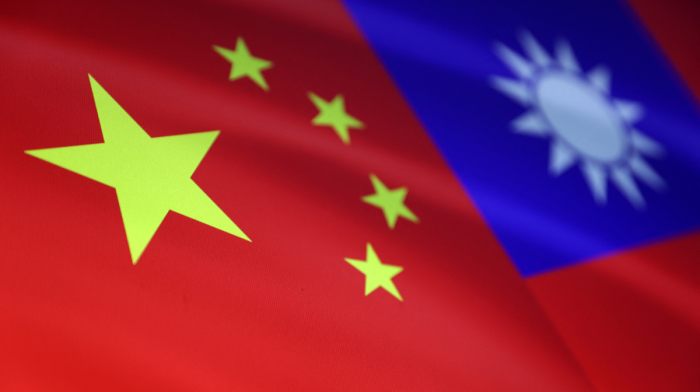
Yes. In most cases, Presidents have decided to withdraw from treaties independently. In 1979, U.S. President Jimmy Carter terminated a defence treaty with Taiwan that was intended to protect the island from invasion by China.
Members of Congress challenged the decision in court, arguing that Senate approval was required. The Supreme Court ruled that the issue was political in nature and dismissed the case.
In 2002, President George W. Bush withdrew the U.S. from the Anti-Ballistic Missile Treaty with Russia without seeking congressional approval.
Donald Trump himself has withdrawn the U.S. from several international agreements, including the Paris Climate Agreement, which was later rejoined by President Joe Biden.
What does the NATO treaty say?
NATO, which includes most European countries, the United States and Canada, was established in 1949 to counter the threat of the Soviet Union and has since remained central to Western security.
Article 13 of the NATO treaty states that any member may withdraw by giving one year’s notice to the U.S. government, which then notifies the other member states of the “notice of denunciation”.
If the U.S. were to withdraw, the State Department would issue and record its own notice before informing other nations.
No NATO member has ever withdrawn from the alliance.
Will U.S. law pose an obstacle?
While Presidents have previously withdrawn from treaties independently, legislation passed in 2023 may complicate any attempt to leave NATO.
The measure was introduced as an amendment to the 2024 National Defense Authorization Act (NDAA), an annual bill that sets Pentagon policy. It was sponsored by Democratic Senator Tim Kaine and Republican Senator Marco Rubio.
Rubio, now serving as both Trump’s Secretary of State and National Security Adviser, said on Tuesday (31 March) that Washington would need to reassess its relationship with NATO following the Iran war, which began on 28 February with U.S. and Israeli air strikes.
The NDAA amendment also said that no U.S. funds could be spent on a withdrawal from NATO.
How serious are Trump’s threats?
Trump has long been critical of NATO. During his first presidential campaign, he described the alliance as “obsolete” and said it was “costing a fortune for the U.S.”.
However, he moderated his stance after entering the White House in 2017, later stating alongside then NATO Secretary General Jens Stoltenberg that the alliance was “no longer obsolete”.
Since the outbreak of the Iran war, Trump has renewed his criticism of European allies over their refusal to participate. “Why would we be there for them if they’re not there for us?” he said at a Miami Beach investment conference in late March.
On Wednesday (1 April), Trump escalated his rhetoric, telling Reuters he was “absolutely” considering withdrawing from NATO, citing his “disgust with NATO”.
His comments came hours after Defence Secretary Pete Hegseth declined to reaffirm the U.S. commitment to NATO’s collective defence principle.
Experts say the real concern lies not in legal barriers, but in political will.
"If the President and the military are not committed to NATO and European security, then I don't think there's much Congress can actually do to hold that back," said Max Bergmann, a former State Department official now serving as director of the Europe, Russia and Eurasia Programme at the Center for Strategic and International Studies.














What is your opinion on this topic?
Leave the first comment