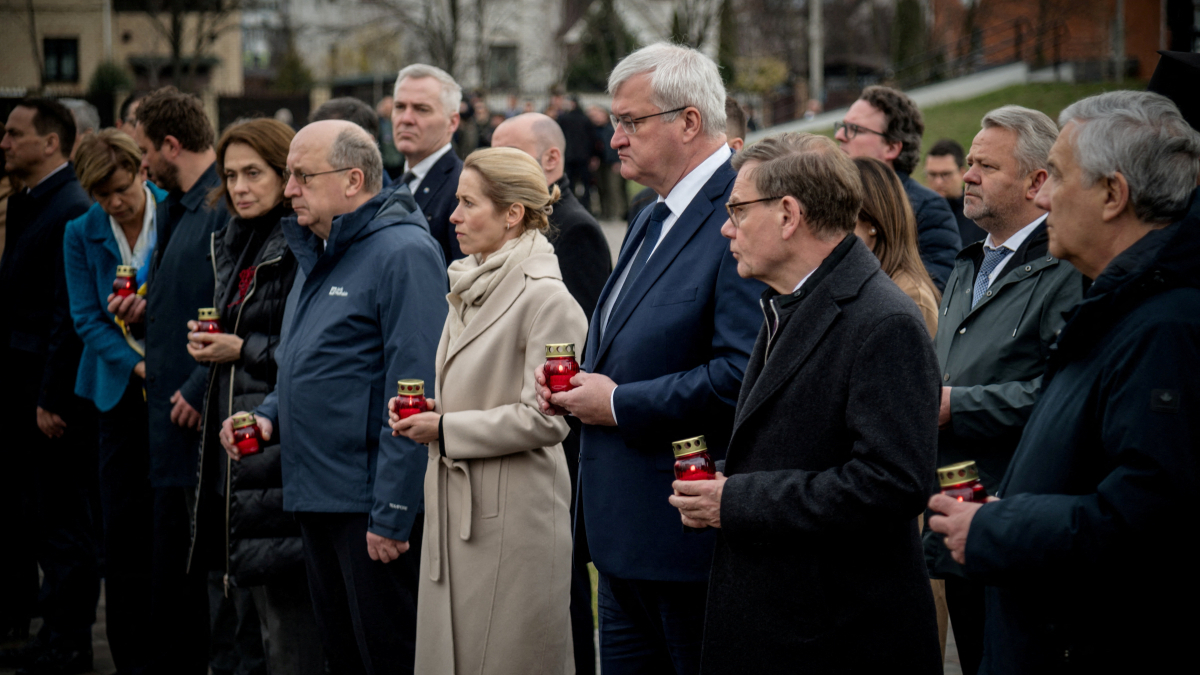
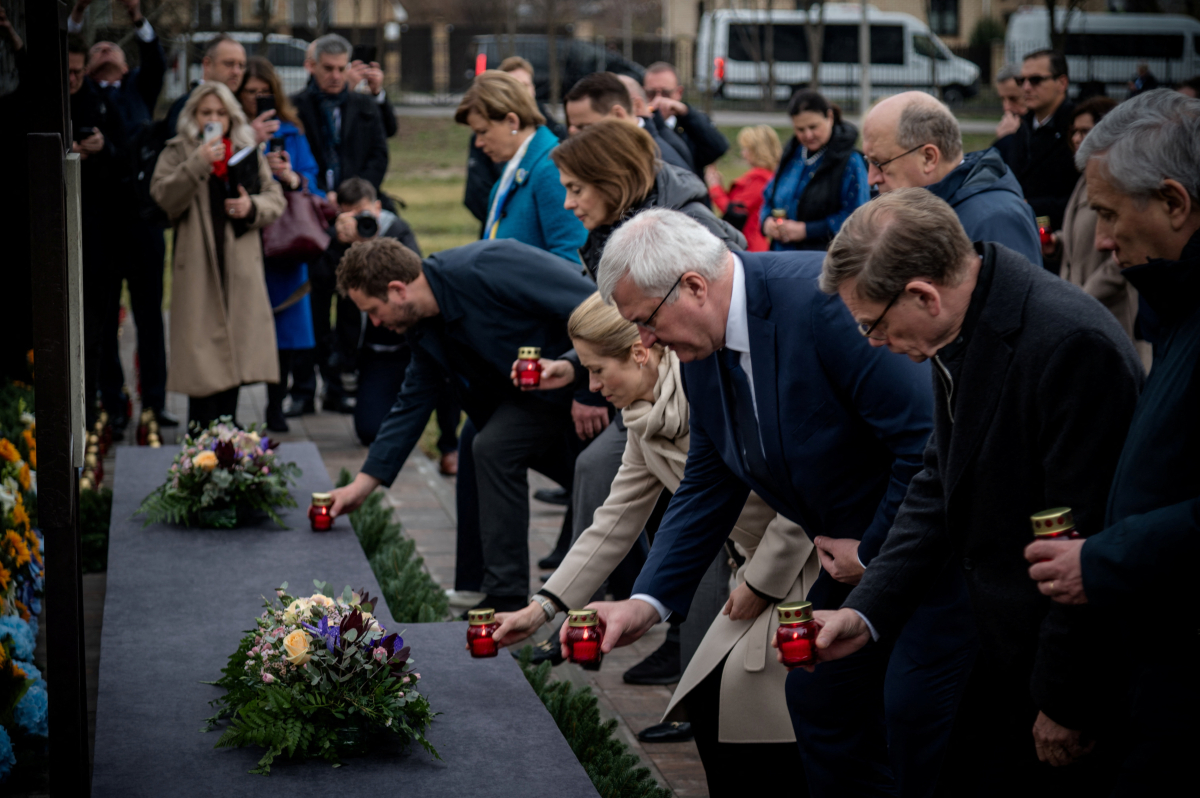
The European Union's top diplomat Kaja Kallas and several EU foreign ministers voiced their support for Ukraine's demand for accountability over Russian atrocities committed in Bucha, as they visited the small town on Tuesday (31 March) on the fourth anniversary of a massacre there.
Ukrainian officials say Russian forces killed several hundred people in Bucha shortly after the start of the invasion in 2022. Kallas and around a dozen EU foreign ministers and other senior European officials made the trip there, amid tensions within the bloc over EU aid for Ukraine.
"This morning in Bucha we were reminded of what is at stake," Kallas said in Kyiv after the trip.
"There is no starker example of Russia's brutality than what happened there."
Zelenskyy called on partners to remain focused on the war in Ukraine despite the widening impact of the U.S.-Israeli war with Iran.
"You know, images from Bucha are very often compared to the horrific scenes of the Second World War, but there is a major difference," he said.
"Right now, that difference does not reflect well on today’s world leaders, because Nazism was punished for its crimes, rather than receiving a partial easing of sanctions," he added, an apparent reference to a U.S. waiver for some sanctions on Russian oil in the wake of the Iran war.
Peace talks to end the war in Ukraine have been suspended due to the Middle East conflict, and officials in Kyiv have expressed concerns that weapons supplies could be diverted away from Ukraine as Western military resources are stretched.
Europe to stand by Ukraine
Europe is now the main backer for Ukraine as it fights on against a bigger and better-equipped Russian army along a frontline more than 1,200 kilometres (746 miles) long.
However, a €90 billion ($103 billion) EU loan for Ukraine has been blocked by Hungarian Prime Minister Viktor Orban due to a dispute over Russian oil transit via Ukraine's Druzhba oil pipeline. Hungary is also blocking progress on talks about Ukraine's accession to the EU.
Kallas said European ministers should work for Europe and not Russia in response to a leaked phone call which appeared to show Hungary's and Russia's foreign ministers discussing EU sanctions in 2024, 2-1/2 years after Russia invaded Ukraine.
"We must confront Russia, not bankroll it," she said.
Ukrainian officials plan to use the visit of the senior EU officials to focus on increasing accountability for war crimes. Ahead of the meeting, Sybiha said eight countries confirmed their readiness to join the enlarged partial agreement for a Special Tribunal for the Crime of Aggression against Ukraine - a planned, ad hoc European international criminal tribunal. He said he hoped that number would grow.
"Perhaps more than anywhere else, it is here in Bucha that we feel the future of Europe and Europe's security are being decided right here – in Ukraine," Sybiha said. "The current frontline is also a line of international law and the shared values we uphold."
Moscow has said it will refuse to recognise the special tribunal and will view any country joining it as a hostile act.













What is your opinion on this topic?
Leave the first comment