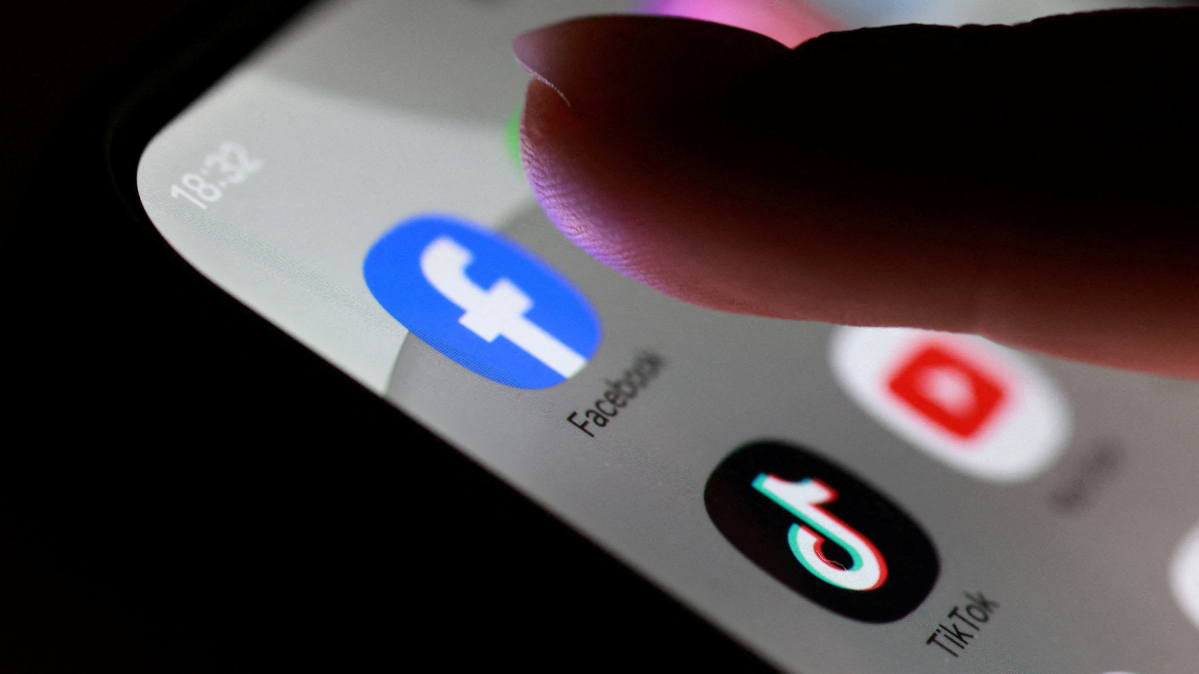
Sweden should introduce a minimum age of 15 for social media use, a government-appointed commission recommended on Tuesday (2 June), adding to a growing movement across Europe to restrict children's access to digital platforms.
Sweden proposes raising social media age threshold
The proposal would raise the current age threshold below which children require parental consent to create social media accounts, which is currently set at 13 in Sweden.
"The reasons for introducing an age limit nevertheless outweigh the benefits of continued free access to this type of media," investigator Lisa Englund Krafft told a press conference, adding that social media companies could be made responsible for verifying users' ages.
Sweden's Minister for Social Affairs and Public Health, Jakob Forssmed, said excessive screen use had become a major challenge for young people.
"We are losing an entire generation to endless scrolling," he said.
Poland introduces restrictions
Meanwhile, Poland announced plans to ban mobile phone use by children aged seven to 15 in primary schools from 1 September and to introduce stricter age-verification requirements for access to online pornography.
Prime Minister Donald Tusk said the proposed legislation would prohibit phone use during lessons and breaks, while allowing schools to establish secure storage systems for devices.
"We have a civilizational problem of addiction of virtually everyone, especially the youngest, to platforms, games, etc.," Tusk said.
A separate government proposal would require websites offering adult content to implement stronger age-verification measures while complying with privacy and data-protection rules.
Earlier this year, Poland's education ministry also outlined plans to prohibit children under 15 from using social media platforms.
Growing European trend
The measures reflect a broader trend across Europe as governments seek to address concerns about the impact of social media and smartphones on children's mental health, concentration and behaviour.
Countries including the Netherlands, South Korea and Italy have already introduced restrictions on smartphone use in schools, while Australia became the first country to approve a nationwide ban on social media access for children under 16.
In neighbouring Norway, the government has said it plans to submit legislation banning social media use by under-16s before the end of the year.
Technology companies have generally opposed blanket restrictions, arguing that parental controls, digital-literacy programmes and targeted safeguards are more effective than outright bans.











What is your opinion on this topic?
Leave the first comment