Australia and the European Union signed a trade deal on Tuesday that was eight years in the making, removing tariffs for almost all European goods and for nearly all exports of Australian critical minerals.
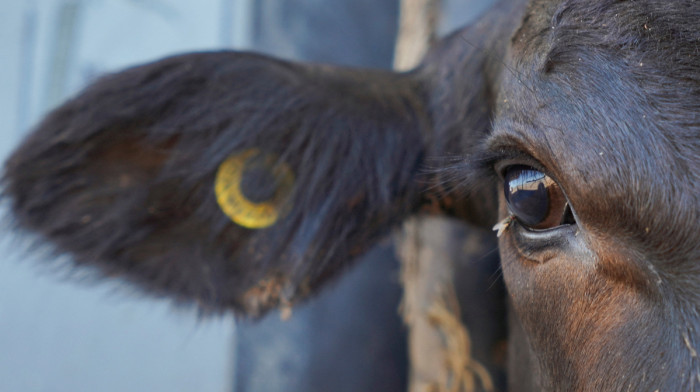
But some Australian agricultural products such as beef and sheep meat, for example, will be subject to export quotas, and Australian farmers sharply criticised the pact for delivering "subpar" access to the bloc.
The agreement comes after both sides stepped up talks in the wake of significantly higher U.S. tariffs under the Trump administration and more angst in the West over China's dominant position in the supply of rare earths and other critical minerals. The two sides also signed an agreement to boost security and defence ties.
"The EU and Australia may be geographically far apart but we couldn't be closer in terms of how we see the world," European Commission President Ursula von der Leyen said in a statement.
"With these dynamic new partnerships on security and defence, as well as trade, we are moving even closer together."
The agreement will remove more than 99% of tariffs on EU goods exports to Australia, cutting €1 billion ($1.2 billion) a year in duties for companies. EU exports to Australia are now expected to grow by up to 33% over the next decade.
Australian Prime Minister Anthony Albanese told a news conference that the agreement would be worth about A$10 billion ($7 billion) annually to the Australian economy, adding that the removal of almost all import tariffs on Australian critical minerals into the European Union will help stabilise global supply chains.
"For both Europe and Australia, getting China right is a strategic imperative, and this is why bringing to life our critical minerals partnership will be crucial to our success," von der Leyen told Australia's parliament.
"We cannot be over-dependent on any supplier for such crucial ingredients, and that is precisely why we need each other."
The deal also signals Europe's growing engagement in the Indo-Pacific, after striking trade accords with Indonesia in September and India in January.
Australia agrees to Beef quotas
Australian tariffs will drop to zero for European wine, sparkling wine, fruit and vegetables and chocolates from day one and for cheeses over three years.
The EU will remove tariffs for many agricultural products but some key exports will have quotas. For beef - one of the biggest sticking points that sank the previous talks in 2023 - the EU will open two tariff rate quotas of a total of 30,600 metric tons, with about 55% of the volume to enter duty-free.
"Australian farmers are extremely disappointed that negotiations for a free trade deal with the European Union (EU) have concluded without commercially meaningful agricultural market access gains since Australia last walked away from negotiations," Hamish McIntyre, president of the National Farmers Federation in Australia, said in a statement.
Under the agreement, some EU 'geographical indications' names for products such as Pecorino Romano or Ouzo, will be fully protected after a relatively short phasing-out period. But some producers of goods such as feta will be able to continue to use those names, provided there is clear labelling of the product's origin.
Australia also agreed to lift the luxury car tax threshold for EU electric vehicles (EVs) to A$120,000 ($83,600), meaning about 75% of EVs from the region will be exempted from the tax.
Trade between the two sides is substantial, with EU firms exporting to Australia €37 billion of goods in 2025 and €28 billion of services in 2023.
As a bloc, the EU was Australia's third-largest two-way trading partner in 2024 as well as the sixth-largest export destination, official data showed. The bloc was Australia's second-largest source of foreign investment in 2024.








What is your opinion on this topic?
Leave the first comment