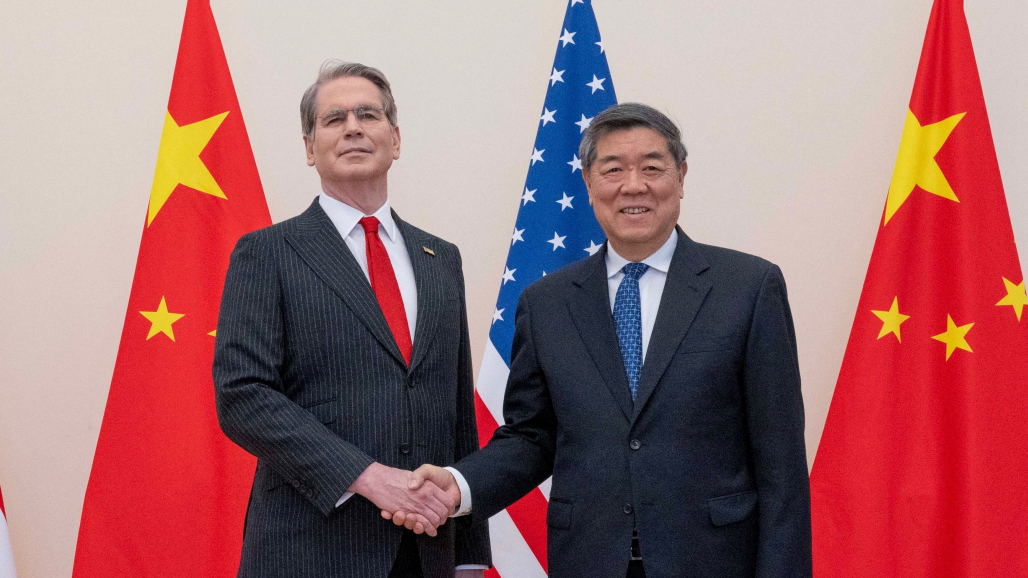
China’s international trade representative has said Beijing and Washington have reached a “preliminary consensus” on some key issues following their latest round of talks in Paris, offering a cautious sign of progress in a relationship long marked by tension and uncertainty.
Speaking after the meetings, Chinese Vice Premier He Lifeng said the discussions with U.S. officials, led by Treasury Secretary Scott Bessent, were “constructive” and had helped narrow differences in certain areas. While no major deal was announced, both sides appear to have made limited headway on practical issues such as trade flows, market access and economic coordination.
The phrase “preliminary consensus” suggests that, while disagreements remain, negotiators have found some common ground - a notable development given the years of strained ties between the world’s two largest economies. Officials on both sides have stressed that the talks form part of an ongoing process, with further rounds likely before any formal agreements are reached.
Stronger links with Europe
Against this cautious progress with the United States, China has also been strengthening its economic ties with Europe. During the same visit to Paris, Chinese officials held separate meetings with French counterparts, where both sides pledged to deepen cooperation in trade, finance and investment.
China and France agreed to expand collaboration in areas such as green finance, industrial investment and financial market access, reflecting a shared interest in maintaining stable economic ties despite broader global uncertainties. French officials have also signalled openness to increased Chinese investment, while emphasising the importance of balanced and reciprocal trade.
The parallel tracks of managing competition with the United States while building closer partnerships with European economies show China’s strategy of stabilising its external economic environment. By easing tensions with Washington, even modestly, and strengthening ties with countries such as France, Beijing appears to be seeking both stability and diversification in its global economic relationships.
French President Emmanuel Macron has in recent years promoted deeper engagement with China, particularly in areas such as climate cooperation and finance, while also maintaining alignment with broader European Union policies. The latest discussions suggest that economic pragmatism continues to guide the relationship.
Analysts say the combination of incremental progress in U.S.–China talks and expanding China–Europe cooperation could help reduce pressure on global markets, which have been sensitive to geopolitical tensions and trade uncertainty.
For now, the outcomes remain limited but meaningful. A “preliminary consensus” between China and the United States may not resolve long-standing disputes, but it signals that both sides remain willing to negotiate. At the same time, China’s engagement with France highlights its efforts to sustain key economic partnerships, even as global dynamics grow more complex.
















What is your opinion on this topic?
Leave the first comment