UK government weighs removing Andrew from royal succession line
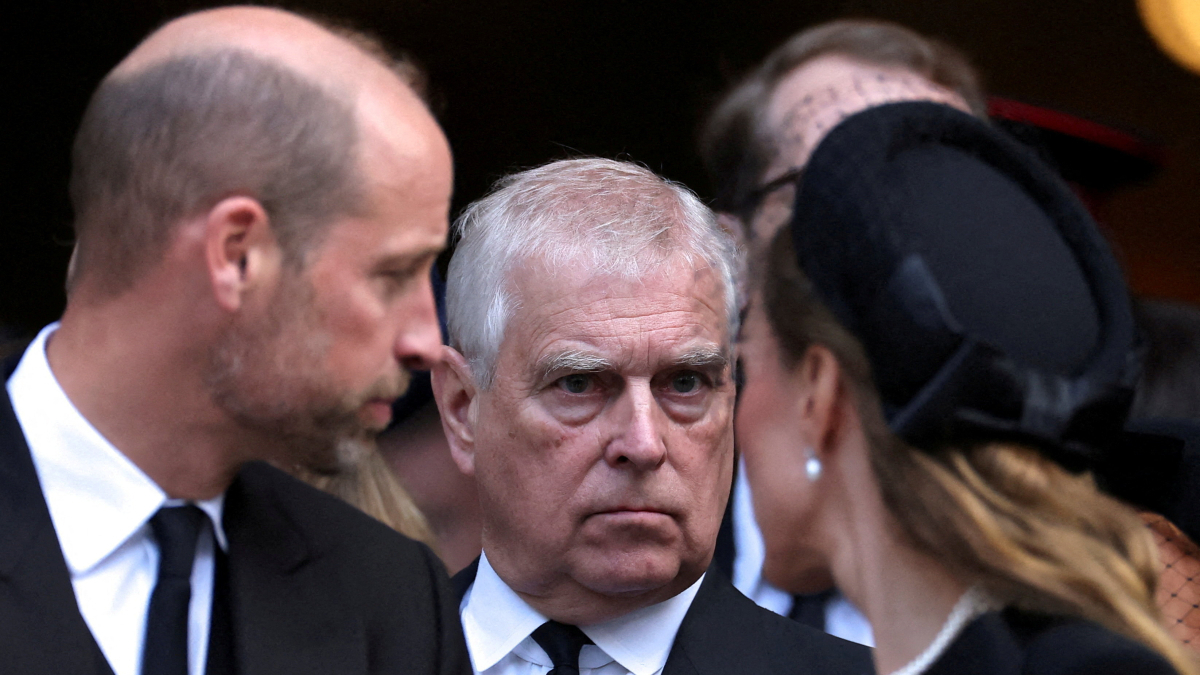
Prince Andrew stands beside Prince William and Catherine, Princess of Wales, after the Requiem Mass for Katharine, Duchess of Kent, in London on 16 September, 2025.
UK politicians have renewed calls for Andrew Mountbatten-Windsor, formerly Prince Andrew, to be removed from the line of succession following his arrest on suspicion of misconduct in public office and revelations over his links to convicted U.S. sex offender Jeffrey Epstein.
Mountbatten-Windsor, 66, who is eighth in line to the throne, was arrested on Thursday by Thames Valley Police on suspicion of misconduct in public office and released later the same day under investigation.
Assistant Chief Constable Oliver Wright confirmed that an inquiry has been opened into the allegations. Police searches are ongoing at his Windsor home, Royal Lodge, and are expected to continue until Monday.
At one point more than 20 vehicles were seen at the property, although it is unclear if all were related to the investigation.
Officers have asked Mountbatten-Windsor’s former protection officers to review any information that could assist the investigation.
The arrest follows the January release of U.S. court files on convicted sex offender Epstein, which highlighted Mountbatten‑Windsor’s communications with Epstein.
The documents indicate that in 2010, while serving as the UK trade envoy to Asia, he sent Epstein details of official trips to Singapore, Vietnam, Shenzhen in China, and Hong Kong, and appeared to forward official reports of those trips.
Mountbatten‑Windsor has denied any wrongdoing.
He stepped back from royal duties in 2019 following criticism of his BBC Newsnight interview regarding Epstein.
Several UK politicians have called for consideration of removing Mountbatten-Windsor from the line of succession once police investigations conclude.
Liberal Democrat leader Ed Davey said: “Clearly this is an issue that parliament is going to have to consider when the time is right, naturally the monarchy will want to ensure he can never become king.”
Stephen Flynn, Westminster leader of the Scottish National Party, told British media: “The public would be rightly angry that a man who lied about being friends with Epstein could still be on course to be head of state.”
Conservative shadow Scotland secretary Andrew Bowie said: “If he’s found guilty of this, I think parliament would be well within its rights to act to remove him from the line of succession.” Conservative Party leader Kemi Badenoch emphasised that the investigation must proceed without interference.
A YouGov poll released on Friday suggested that 82% of British adults believe Mountbatten-Windsor should be removed from the royal line of succession, compared with 6% who think he should remain.
Mountbatten-Windsor relinquished his royal titles, including “prince,” in October 2025, but remains eighth in line to the throne and retains the role of counsellor of state, allowing adult royals to act on behalf of the monarch if necessary.
Removing him from the line of succession would require an Act of Parliament and consultation with the 14 Commonwealth realms where King Charles III is head of state, including Canada, Australia, Jamaica, and New Zealand.
Any change would take effect only after royal assent. The last removal from succession occurred in 1936 after King Edward VIII’s abdication, and the most recent change to succession law was in 2013, restoring rights for individuals previously excluded for marrying Catholics.
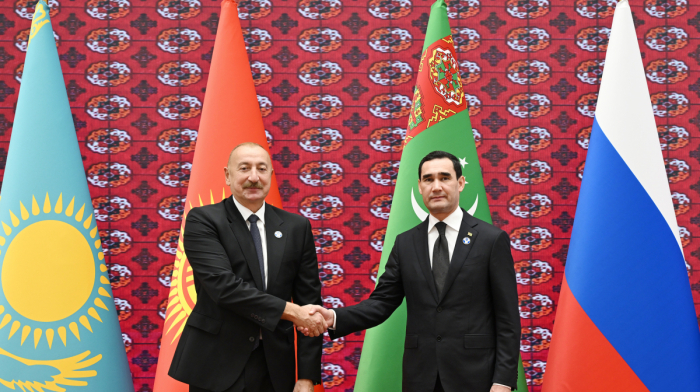
Leaders of countries from the Commonwealth of Independent States (CIS) have agreed to hold coordinated population censuses around 2030. They took the decision at the CIS Council of Heads of State meeting in Awaza, Turkmenistan on Friday, media reported.
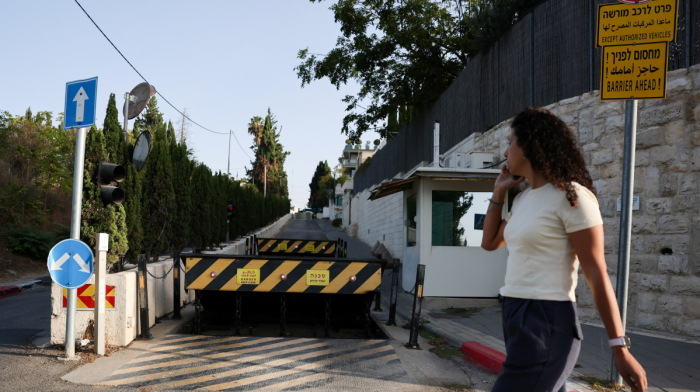
Britain and Israel have reached a temporary compromise over the future of the British Consulate General in East Jerusalem, easing a diplomatic dispute that had threatened to further strain relations between the two countries.
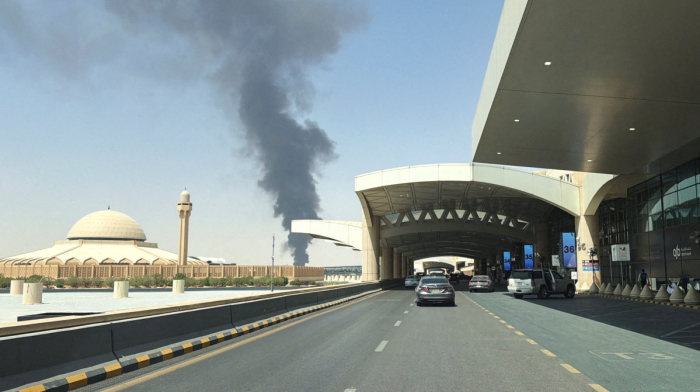
A powerful explosion has been reported at King Khalid International Airport in Riyadh, raising fresh concerns over aviation security in Saudi Arabia as tensions across the region continue to escalate.
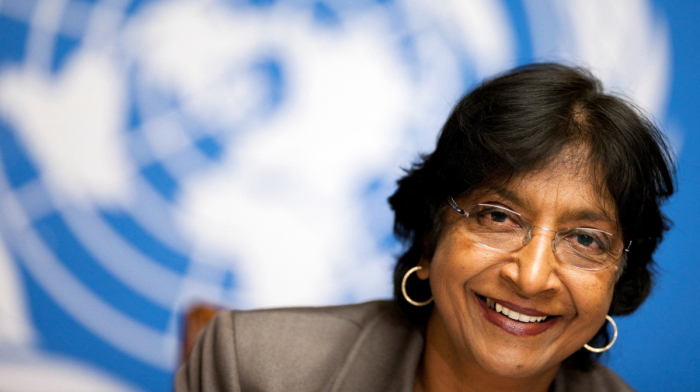
South African judge Navanethem “Navi” Pillay won the Nobel Peace Prize on Friday “for her efforts to promote peace and international law,” the Norwegian Nobel Committee said.
The U.S. has imposed sanctions on the International Criminal Court (ICC) on Friday (9 October) escalating tensions with European allies and potentially targeting companies that provide services to the tribunal. The move came hours after former ICC judge Navi Pillay won the Nobel Peace Prize.
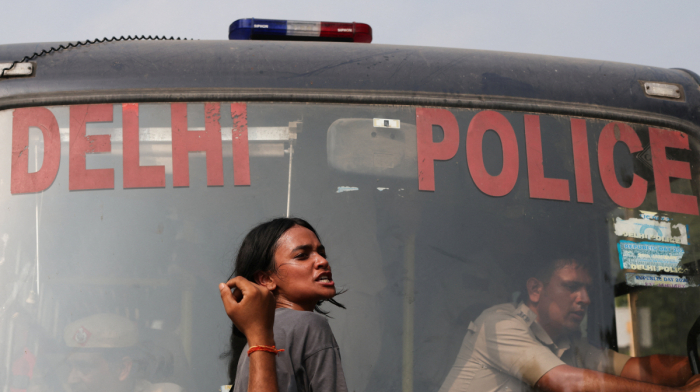
Indian police detained more than 2,000 protesters in Delhi on Saturday as authorities blocked a planned demonstration calling for the resignation of Chief Election Commissioner Gyanesh Kumar over disputed changes to voter lists.
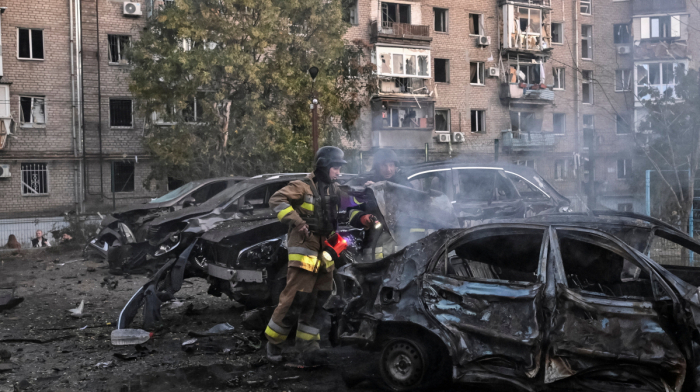
At least 12 people, including three children, have been killed in a Russian attack on the Ukrainian city of Zaporizhzhia, a day after U.S. President Donald Trump announced a deal to ease sanctions on Russian diesel.
Ukrainian President Volodymyr Zelenskyy has criticised U.S. President Donald Trump’s decision to ease sanctions on Russian diesel exports, questioning why Moscow was granted an economic benefit without an apparent concession towards ending the war in Ukraine.
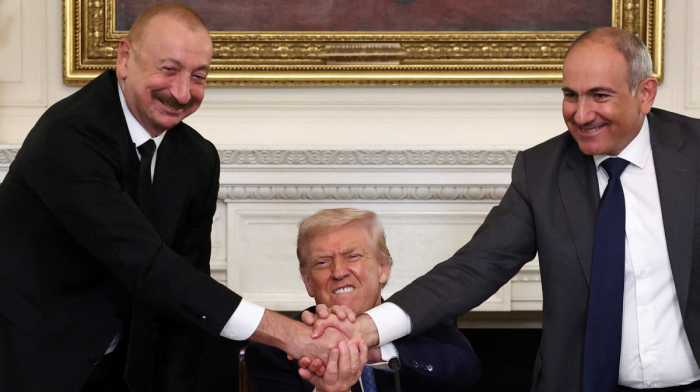
Russian President Vladimir Putin expressed surprise after Donald Trump mediated the Armenia-Azerbaijan peace agreement in 2025, the U.S. President said at a rally in New York state on Friday.
The United Nations has condemned a sharp rise in attacks on civilians in Ukraine, reporting that more than 100 people were killed and at least 429 injured in a single week as Russian strikes hit residential areas, passenger buses and critical infrastructure.
Download the AnewZ app
You can download the AnewZ application from Play Store and the App Store.











What is your opinion on this topic?
Leave the first comment