UK Prime Minister Keir Starmer has said former Prince Andrew should testify before the U.S. Congress following the release of millions of new documents linked to late sex offender Jeffrey Epstein, as the files also raise fresh questions about ties between Epstein and Microsoft founder Bill Gates.
The release of about three million pages of documents includes images appearing to show Andrew Mountbatten-Windsor kneeling over a woman lying on the floor inside what investigators say resembles Epstein’s New York mansion. There is no suggestion that appearing in the documents implies wrongdoing, and many people named in the files have denied any misconduct.
Starmer’s remarks follow comments from a U.S. congressman who said lawmakers have not abandoned efforts to hear from the former Prince. Andrew has not issued any public statement on the latest release of Epstein files and has previously denied any wrongdoing in connection with Epstein.
The documents also place renewed focus on Epstein’s links with prominent U.S. business figures. Draft emails in the release allege Bill Gates engaged in extramarital affairs and sought Epstein’s help obtaining drugs. The Gates Foundation has dismissed the claims as “absolutely absurd and completely false”.
The newly released files also reference or include correspondence involving other high-profile figures such as French President Emmanuel Macron, Elon Musk and Donald Trump, though none of the documents allege criminal wrongdoing by them.
Separate emails show Elon Musk discussing possible visits to Epstein’s private Caribbean island in 2012 and 2013, years after Epstein had been convicted of soliciting prostitution from a minor. Musk has said he had very little correspondence with Epstein, declined repeated invitations to visit the island or fly on Epstein’s jet, and welcomed the release of the files.
The records further include correspondence indicating U.S. Commerce Secretary Howard Lutnick arranged a visit to Epstein’s island in December 2012. Lutnick has described Epstein as “gross” and “the greatest blackmailer ever”, while a Commerce Department spokesperson said Lutnick had only limited interactions with Epstein in the presence of his wife and has never been accused of wrongdoing.
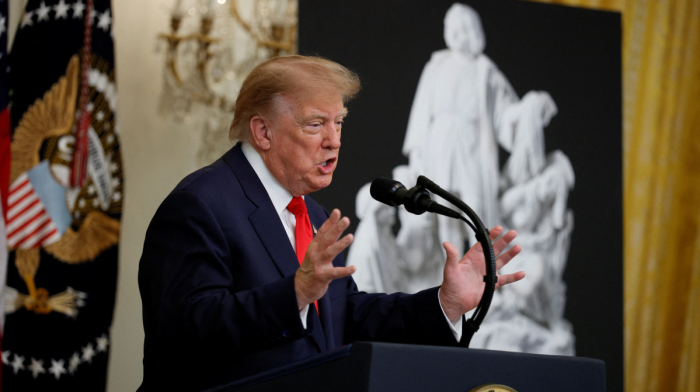
The document release follows a law signed by Donald Trump requiring Epstein-related material to be made public, though Democrats and survivors say only about half of the estimated six million pages have so far been released.
Mandelson resigns from Labour
Separately, in the UK, former senior Labour figure Peter Mandelson has resigned his membership of the governing Labour Party after fresh media reports about his links to Epstein.
Mandelson, who was fired by Starmer as Britain's ambassador to the United States last year after previous revelations about his connections to Epstein, said he did not wish to cause "further embarrassment" to the Labour party, the reports said.
"I have been further linked this weekend to the understandable furore surrounding Jeffrey Epstein and I feel regretful and sorry about this," Mandelson said in a letter to the Labour Party, according to reports.
Documents indicate Epstein paid Lord Mandelson $75,000 (£55,000) in three separate $25,000 (£18,261) transfers in 2003 and 2004.
Mandelson said claims of financial payments from Epstein, reported by British media based on U.S. Justice Department files, were false and would be investigated.
"While doing this I do not wish to cause further embarrassment to the Labour Party and I am therefore stepping down from membership of the party," the letter said.
Mandelson was key to the Labour Party's electoral success when Tony Blair was prime minister starting in the 1990s.
He came under scrutiny last year after U.S. lawmakers released documents including a letter in which he called Epstein "my best pal", leading to his dismissal as Britain's envoy in Washington.
Mandelson also had a turbulent earlier career in domestic politics. In 1998, he quit as trade minister over a loan he received from a fellow minister to buy a house amid questions over conflict of interest.
A second stint in the cabinet also ended in a resignation in 2001 when he was forced out over his alleged involvement in a passport scandal involving an Indian billionaire. He was later cleared of acting improperly.














What is your opinion on this topic?
Leave the first comment