Hungary announced on Friday it was blocking a €90 billion ($106 billion) European Union loan intended to support Ukraine’s 2026–2027 budget and military needs, citing disruptions to Russian oil deliveries via the Druzhba pipeline.
The veto at the EU level requires unanimous approval from all 27 members.
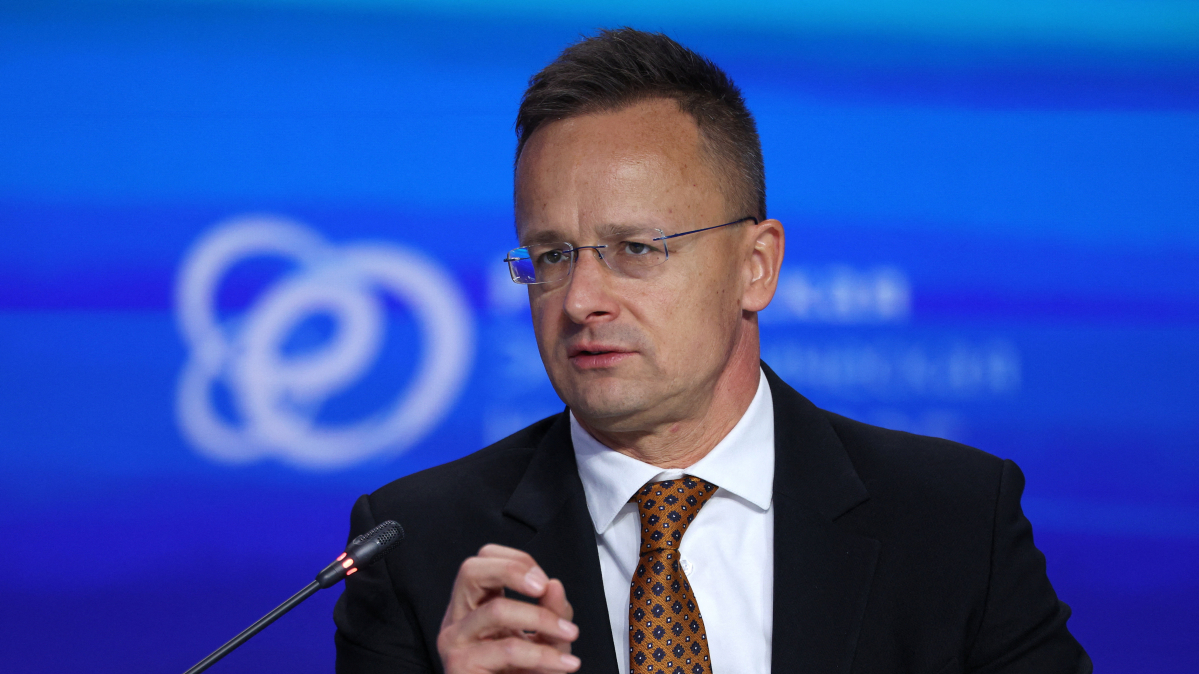
Hungarian Foreign Minister Péter Szijjártó confirmed on X that Budapest is linking its veto of the loan to interruptions in Russian oil transit through the Druzhba pipeline.
Szijjártó said Hungary is blocking the loan until shipments to Hungary resume. He accused Ukraine of deliberately halting transit in coordination with Brussels and the Hungarian opposition to create supply disruptions and push fuel prices higher ahead of upcoming elections.
“By blocking oil transit to Hungary through the Druzhba pipeline, Ukraine violates the EU‑Ukraine Association Agreement, breaching its commitments to the European Union. We will not give in to this blackmail,” Szijjártó added.
EU loan details
The loan, politically endorsed at a summit in Brussels earlier this month, is intended to prevent a funding shortfall in Kyiv. Under the plan, $35 billion (€30 billion) would support Ukraine’s general budget, and $71 billion (€60 billion) would fund weapons and ammunition. The funds would be raised through joint EU borrowing, guaranteed by the EU budget.
Hungary, Slovakia, and Czechia are to be exempt from financial obligations, including annual interest payments. The European Commission estimates the remaining 24 member states would contribute $2.4–3.5 billion (€2–3 billion) per year collectively.
Hungary’s ambassador to the EU has objected to the plan, according to the Financial Times.
Procurement rules prioritise suppliers in Ukraine, the EU, Iceland, Liechtenstein, Norway, and Switzerland. If necessary, Kyiv may purchase equipment from countries such as the United States.
Nations with defence partnerships with the EU, including the United Kingdom, Japan, South Korea, and Canada, may also participate if they contribute proportionately to the loan’s financing.
Disbursements would be phased and tied to conditions, including safeguards on anti-corruption reforms. Repayment would only be required if Moscow ends its aggression and compensates Ukraine for war damage.
Druzhba pipeline disruption
Tensions have intensified as Prime Minister Viktor Orbán has escalated his rhetoric ahead of April elections, portraying Ukraine as reliant on foreign aid and warning that its EU ambitions could prolong the conflict with Russia.
The immediate trigger for the dispute is a disruption to Russian oil transit via the Druzhba pipeline, the southern branch of which crosses Ukraine into Hungary and Slovakia.
Deliveries stopped after a 27 January Russian airstrike, according to Ukraine’s Foreign Minister Andrii Sybiha, who published images showing the burning conduit. Budapest has blamed Kyiv for failing to restore transit promptly, while Ukraine denies the accusation.
No Russian oil has reached Hungary or Slovakia in February. January flows averaged 150,000 barrels per day, compared with roughly 200,000 barrels per day in the first two months of 2022–2025.
The European Commission has scheduled an emergency meeting next week to address the crisis, though Brussels says Hungary’s oil reserves remain sufficient in the short term.
Szijjártó said diesel shipments to Kyiv would be suspended until transit resumes. EU sanctions exemptions allow Hungary and Slovakia to import Russian oil by sea if pipelines are disrupted, though the EU embargo on seaborne imports from Russia, adopted in December 2022, remains in effect.
Budapest and Bratislava have requested Croatia facilitate deliveries via the Adria pipeline from the Adriatic coast. Croatia’s Economy Minister Ante Šušnjar rejected claims of technical or financial obstacles, saying supplies could be ensured immediately.
Hungary’s veto highlights the intersection of energy security and war financing in the EU’s response to Russia’s invasion of Ukraine.


















What is your opinion on this topic?
Leave the first comment