Britain and Germany’s highest ranking military chiefs have made an unprecedented joint appeal to the public to accept the “moral” case for rearmament and prepare for the threat of war with Russia.
Air Chief Marshal Sir Richard Knighton, the UK’s chief of the defence staff, and General Carsten Breuer, Germany’s chief of defence, issued the warning in a joint letter first published in the Opinion section of The Guardian on Sunday (15 February).
The article reported that the pair said they were speaking not only as military leaders of two of Europe’s largest defence spenders, but “as voices for a Europe that must now confront uncomfortable truths about its security”.
In the letter, they acknowledged that after the Cold War many European governments chose to take a “peace dividend”, cutting defence budgets and prioritising public services. That decision, they said, was understandable at the time. But they said that the security environment has changed, and Europe now faces what they described as the most uncertain conditions in decades.
They warned that Russia’s military posture has “shifted decisively westward”, with its forces rearming and adapting after lessons learned in Ukraine. They said that Moscow’s military buildup, combined with its willingness to wage war on the continent, represents a heightened risk that Europe must prepare for, they argued.
“History teaches us that deterrence fails when adversaries sense disunity and weakness,” they wrote, cautioning that Russia could be emboldened if it perceives Europe as divided.
At last year’s NATO summit in The Hague, many alliance leaders committed to spending 5% of GDP on defence and security by 2035. The chiefs said this reflects a new strategic reality and will require difficult public spending choices.
They said they had a duty to explain why their governments have committed to the largest sustained increases in defence spending since the end of the Cold War.
“There is a moral dimension to this endeavour. Rearmament is not warmongering; it is the responsible action of nations determined to protect their people and preserve peace. Strength deters aggression. Weakness invites it.”
The letter stressed that NATO remains the most successful military alliance in history, with unmatched capabilities across land, sea, air, cyber and nuclear domains. Europe, they argued, is powerful, but only if it acts together.
They pointed to closer cooperation between the UK and Germany under the Trinity House agreement signed in 2024, calling it a foundation for deeper security and economic ties.
Industrial capacity was central to their message. The war in Ukraine, they said, shows that industrial output is decisive in modern conflict.
“We cannot deter if we cannot produce,” they wrote, urging sustained production of ammunition and military systems at scale.
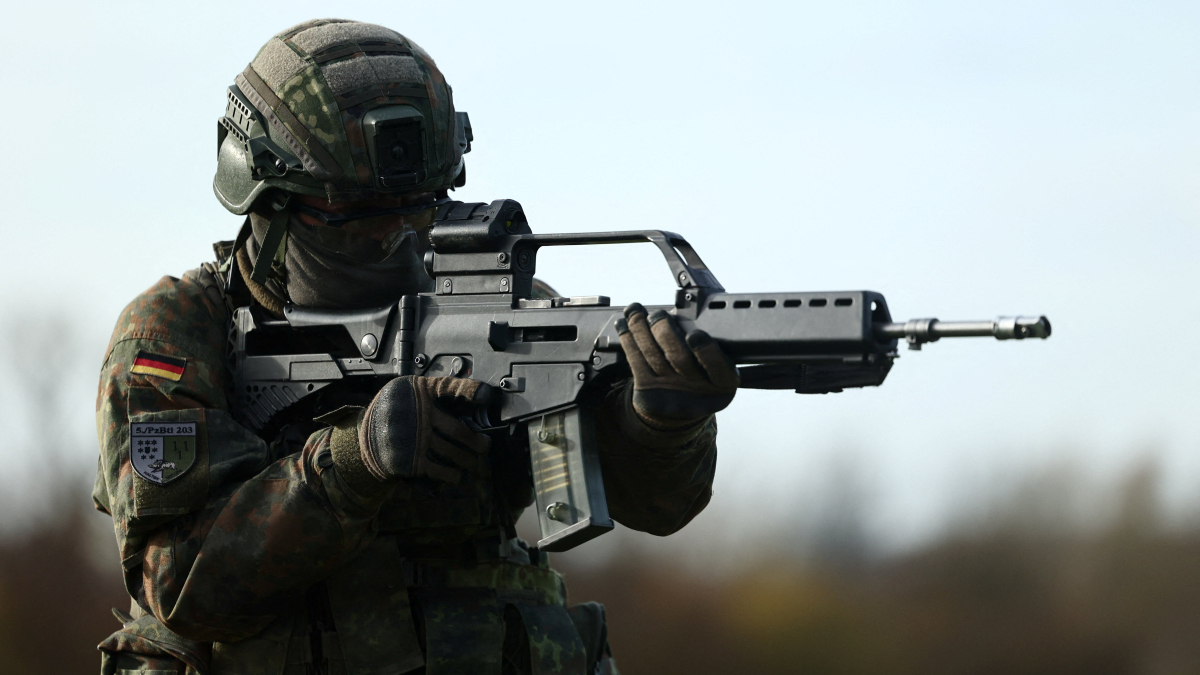
Germany has permanently stationed a combat brigade of 4,000 to 5,000 troops on NATO’s eastern flank and amended its constitution to allow essentially unrestricted defence funding. Procurement of several thousand armoured vehicles is under way, alongside expanded industrial capacity.
Britain is building at least six munitions factories to create what the Ministry of Defence describes as an “always on” capability to sustain stockpiles.
The two chiefs also called for a whole of society approach to defence, arguing that security can no longer rest solely with the armed forces. They urged resilient infrastructure, stronger defence industries and greater involvement from the private sector.
They also highlighted the European Union’s Security Action for Europe initiative, which aims to inject €150 billion into strengthening Europe’s defence industrial base.












What is your opinion on this topic?
Leave the first comment