Start your day informed with AnewZ Morning Brief: here are the top news stories for the 15th of February, covering the latest developments you need to know.
Munich Security Conference final day focuses on Europe’s global role and security strategy
The final day of the Munich Security Conference begins on Sunday (15 February) with discussions centered on Europe’s role in an increasingly unstable global environment, with leaders expected to address security coordination, economic competitiveness and the defence of democratic values. The morning opens with a panel titled 'Europeans Assemble! Reclaiming Agency in a Rougher World,' bringing together EU foreign policy chief Kaja Kallas, Latvian President Edgars Rinkevics, NATO Deputy Secretary General Radmila Sekerinska and French Armed Forces Minister Delegate Alice Rufo. Participants are expected to discuss Europe’s role and strategic positioning in a more challenging global environment.
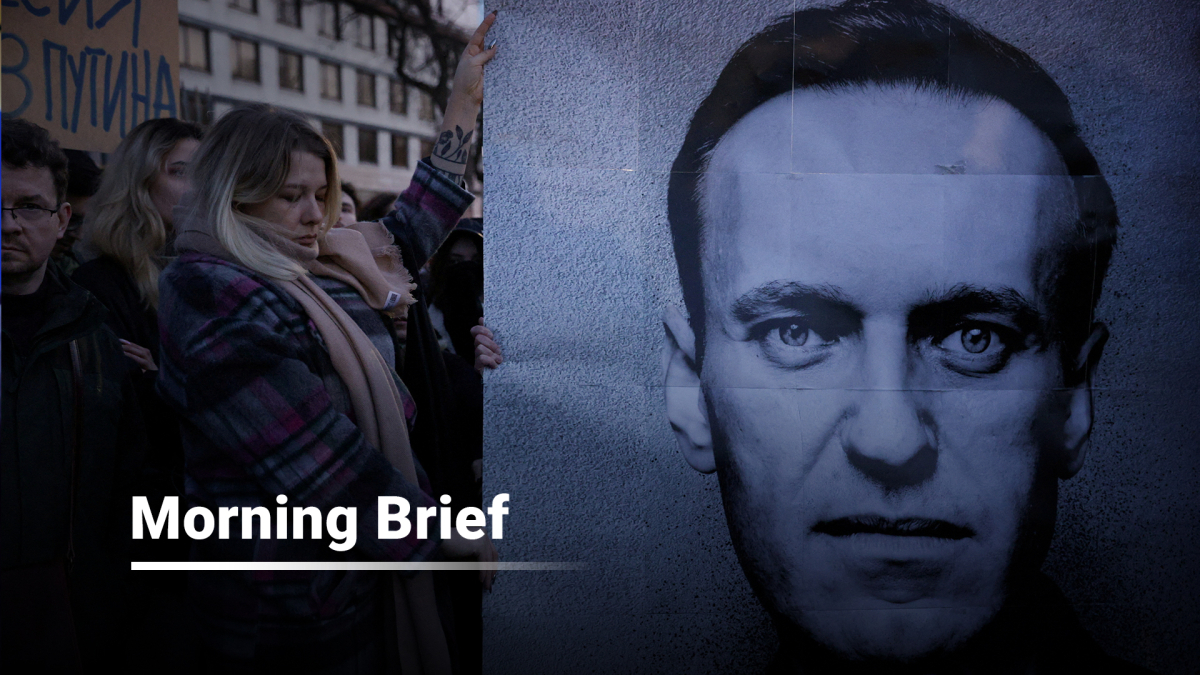
UK and European allies say Alexei Navalny was poisoned with lethal toxin
Britain, France, Germany, Sweden and the Netherlands said on Saturday (14 February) they are convinced that late Kremlin critic Alexei Navalny was poisoned with a lethal toxin in a Russian penal colony two years ago. The governments issued a joint statement in London, saying analyses of Navalny’s samples conclusively confirmed the presence of epibatidine, a powerful toxin found in South American poison dart frogs and not naturally occurring in Russia.The Russian government, which has repeatedly denied any responsibility for Navalny's death, dismissed the latest allegations as "a Western propaganda hoax," according to the Russian state's TASS news agency.
U.S. Department of Homeland Security partially shuts down amid immigration dispute
The U.S. Department of Homeland Security (DHS) has partially shut down after Congress failed to reach agreement on immigration enforcement changes, deepening a political standoff between the White House and Senate Democrats. Congress is not scheduled to return until 23 February, although leaders say members could be recalled if a deal is reached earlier. Most DHS employees, including staff at the Federal Emergency Management Agency, the Transportation Security Administration and the Coast Guard, are expected to continue working because their roles are considered critical.
Ilham Aliyev signals Armenia peace deal progress at Munich Security Conference
Azerbaijani President Ilham Aliyev said on Saturday (14 February) he hopes a peace agreement with Armenia will be signed this year, describing recent developments as evidence that lasting stability in the South Caucasus is within reach. Speaking at the Munich Security Conference during a panel discussion titled 'Open Corridor Policy? Deepening Trans-Caspian Cooperation', the President said the peace process had already produced tangible results on the ground. Aliyev also addressed the Trump Route for International Peace and Prosperity (TRIPP), also known as the Zangezur corridor. “If peace with Armenia is achieved, the corridor from Azerbaijan through Armenia to European destinations has great cargo potential,” Aliyev said.
New Zealand flooding threat grows after road collapses leave one dead
New Zealand's weather forecaster on Sunday (15 February) warned more flooding could hit the country's North Island, a day after floods caused power outages, road collapses, home evacuations. There was "threat to life from dangerous river conditions, significant flooding and slips" as a deepening low-pressure system east of the North Island brought heavy rain and severe gales to several regions, the weather bureau said. Authorities on Sunday had a state of emergency in place for the districts of Waipa and Otorohanga, an agricultural region home to about 10,000 people that is 180km (112 miles) south of the country's most populous city, Auckland.














What is your opinion on this topic?
Leave the first comment