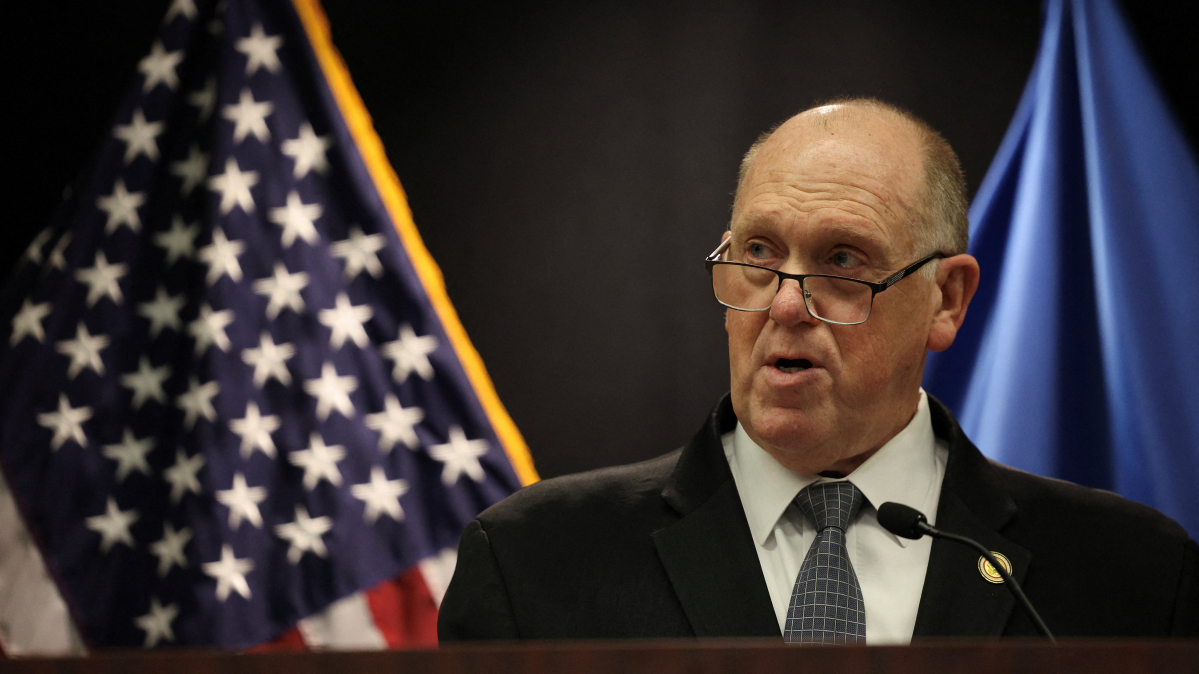
U.S. border chief Tom Homan said on Thursday (12 February) a federal immigration crackdown in Minnesota will end after months of raids that led to more than 4,000 arrests, mass protests and two fatal shootings.
The operation, launched by U.S. Immigration and Customs Enforcement on 1 December in the Minneapolis-St Paul area, is now being wound down with President Donald Trump’s approval.
Speaking at a news conference, Homan said he had proposed concluding what authorities called “Operation Metro Surge,” adding that Trump had agreed. He said the drawdown of federal officers began this week and would continue into next week, though he plans to remain in Minnesota to oversee the process.
Federal officials say the sweeps targeted what they described as “dangerous criminal illegal aliens.”
However, critics argue that individuals without criminal records, including children and U.S. citizens, were also detained during the operation.
Homan said the surge had made Minnesota “less of a sanctuary state for criminals” and insisted that Minneapolis was now safer. Last week he announced that 700 federal officers would leave the state immediately but more than 2,000 personnel remained deployed.
He previously cited increased co-operation with local jails holding deportable inmates as a reason for scaling back the federal presence.
Homan assumed direct oversight of the operation in late January.
Democratic Governor Tim Walz said he expected the operation to conclude within “days, not weeks and months,” following conversations with Homan and White House Chief of Staff Susie Wiles.
Minneapolis Mayor Jacob Frey also described a “positive meeting” with Homan to discuss further reductions.
The Department of Homeland Security did not respond to requests for comment on Walz’s remarks.
Grounds for scrutiny
Federal immigration enforcement in Minnesota drew widespread criticism after two U.S. citizens were fatally shot by federal agents during Operation Metro Surge, intensifying political and legal backlash.
On 7 January, an ICE agent shot and killed Renée Good, 37, during a raid in Minneapolis - a case that sparked protests and calls for accountability amid conflicting accounts of the incident and video evidence circulating online.
Days later, ICU nurse Alex Pretti, also 37, was shot dead by federal agents in Minneapolis, leading to further outrage and a homicide declaration by the local medical examiner.
The deaths prompted protests, lawsuits by state and city officials challenging the legality of the federal operation, and debates over use of force and transparency, including calls for civil rights investigations into the shootings.














What is your opinion on this topic?
Leave the first comment