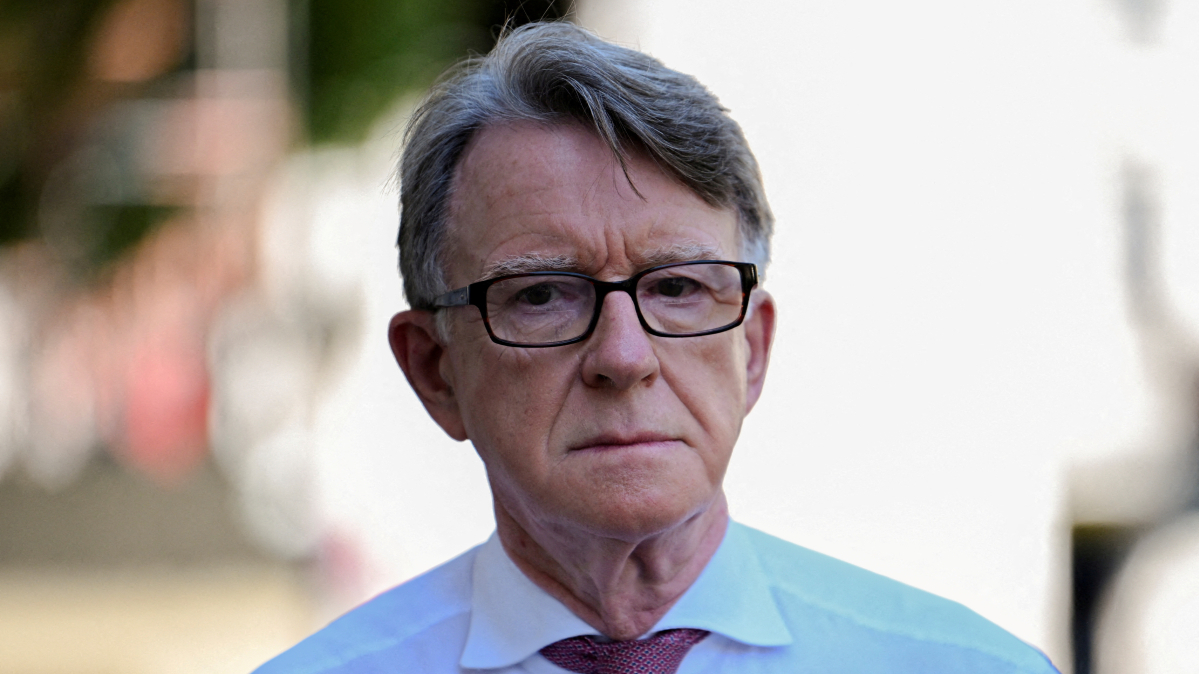
Peter Mandelson has been one of the most influential and controversial figures in British politics but disclosures about his past relationships and conduct in government have triggered a political crisis in the UK and raising questions internationally. But who is he and why is he in the headlines?
Peter Mandelson was a central architect of the ruling Labour Party’s transformation in the 1990s, he helped propel the centre-left to power after nearly two decades in opposition. Before briefly serving as the UK ambassador to the United States in 2025, he had held high-profile roles in Europe and international commerce.
Mandelson was born in 1953 into a prominent political family - his grandfather was former deputy prime minister Herbert Morrison - and Mandelson became a key figure in reshaping the Labour Party during the 1990s.
Working closely with then-party leader and future prime minister Tony Blair, Mandelson helped design the “New Labour” project, which repositioned the party toward the political centre and led to a landslide election victory in 1997.
He was elected to parliament in 1992 and quickly rose to senior cabinet positions, overseeing areas such as business and economic policy. He gained a reputation as one of the most skilled political operators of his generation but also one of the most divisive. He resigned from government twice amid ethical controversies during Labour’s years in power.
After leaving frontline British politics, Mandelson served as the European Union’s trade commissioner, a role that gave him global influence in international commerce and diplomacy. He later joined the unelected upper chamber of the UK parliament, the House of Lords, while continuing to act as an adviser behind the scenes.
In 2025, he was appointed UK ambassador to the United States in a role that would soon put him back at the centre of political scandal.
Mandelson denies any criminal wrongdoing or financial impropriety.
What triggered the current crisis?
The controversy centres on Mandelson’s long-standing friendship with the late Jeffrey Epstein, the U.S. financier whose network of elite contacts became the subject of global scrutiny after his conviction for sex offences.
Recently released U.S. court documents include private emails between Epstein and Mandelson. In them, Mandelson reportedly referred to Epstein as a close personal friend and, more seriously, appears to have shared advice and information connected to UK government business while he was a serving cabinet minister.
In September 2025, following initial disclosures, Mandelson was dismissed from his role as ambassador to Washington. Further revelations published in February 2026, which included allegations that he passed sensitive information and received payments linked to Epstein, intensified the fallout.
On 3 February 2026, Mandelson resigned from the House of Lords. Shortly afterwards, London’s Metropolitan Police confirmed they had opened a criminal investigation into possible misconduct in public office.
Why does this matter internationally?
The story has drawn attention well beyond the UK for several reasons:
-
Security and governance concerns: The allegations involve a senior official potentially sharing sensitive government information with a private individual who had no formal role and who was later exposed as a serial offender. This raises questions about safeguards at the highest levels of government.
-
Elite accountability: Mandelson was not a marginal figure. His career spans cabinet government, European leadership and top-level diplomacy. His case feeds into broader global debates about how powerful figures are vetted and held accountable.
-
Global resonance of the Epstein case: Epstein’s connections to political, financial and cultural elites across multiple countries have made any new revelations inherently international in impact.
-
Calls for reform: The scandal has reignited debate in Britain over how ambassadors and political appointees are selected, and whether current systems adequately protect against conflicts of interest or compromised judgment.
Why is this a problem for Prime Minister Keir Starmer?
The scandal has become a major challenge for Prime Minister Sir Keir Starmer because his government personally approved Mandelson’s return to public office.
Opposition politicians say Mandelson’s known past, including aspects of his relationship with Epstein, should have disqualified him from such a sensitive diplomatic role. Critics say the appointment reflects poor judgment and inadequate vetting.
Under intense questioning in parliament on Wednesday, Starmer acknowledged the scale of the failure. He said Mandelson had repeatedly misled officials about the nature of his relationship with Epstein and described the alleged sharing of sensitive information - including "leaking sensitive information at the height of the response to the 2008 crash" - as “beyond infuriating.”
Starmer said that, had he known then what is now alleged Mandelson would never have been appointed. He confirmed that government files have been referred to police and that legislation is being prepared to remove Mandelson’s honorary titles and formal privileges.
What happens next?
A police investigation is ongoing and further disclosures may follow. For the British government, the case has become a test not only of legal accountability but of political credibility.
For international observers, the Mandelson affair offers a stark illustration of how past relationships, informal influence and elite networks can resurface, often with serious consequences, long after a political career appears to have faded.















What is your opinion on this topic?
Leave the first comment