U.S. Secretary of State Marco Rubio said the Iranian government is likely weaker than at any point in recent history, warning that protests could reignite despite a violent crackdown that has killed thousands.
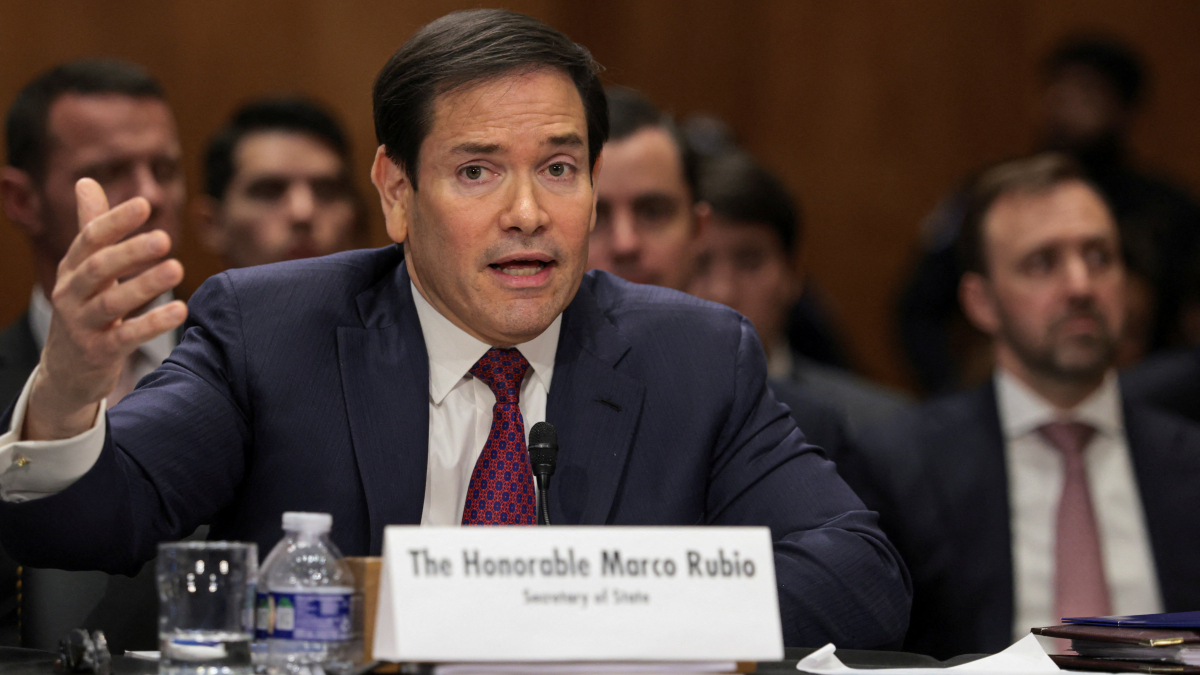
Speaking on Wednesday, 28 January, during a hearing before the U.S. Senate Foreign Relations Committee, Rubio was questioned by Senator David McCormick on the scale of casualties following Iran’s latest wave of unrest.
Asked for the State Department’s best estimate of deaths, Rubio said the toll was “in the thousands, for certain,” describing the tactics used by Iranian security forces as “horrifying”.
Rubio said authoritarian regimes, including Iran’s, had learned that using snipers against protesters was “effective”, adding that such methods had been deployed during the recent crackdown.
Despite the heavy use of force, Rubio said Iran’s leadership faces a deeper structural crisis that repression alone cannot solve.
He argued that unlike previous protest waves, the current unrest is driven by economic collapse, a problem the regime is unable or unwilling to address.
“Their economy is in collapse because they spend all their money and resources building weapons and sponsoring terrorist groups around the world instead of reinvesting it back into their society,” Rubio said.
He added that years of sanctions, compounded by Tehran’s own policies, have isolated Iran’s economy, leaving ordinary Iranians bearing the cost.
According to Rubio, protesters are demanding that the government redirect resources toward domestic needs and take steps to ease sanctions — demands he said the current leadership has no intention of meeting.
While acknowledging that protests have subsided in recent weeks, Rubio predicted renewed unrest.
“The protests may have ebbed, but they will spark up again in the future,” he said, adding that unless the regime changes course or steps aside, it has no way to respond to what he called the “legitimate and consistent complaints” of the Iranian people.
Rubio also said the United States was positioning military assets in the region to protect American personnel from potential Iranian retaliation.
He noted that Iran continues to invest heavily in missile development, saying it has amassed “thousands and thousands” of ballistic missiles despite its economic crisis.
Human rights groups have previously accused Iranian authorities of using excessive force, including live ammunition, during demonstrations sparked by economic hardship and political grievances.
The U.S.-based Human Rights Activists News Agency (HRANA) said the death toll from the nationwide protests has risen to 6,126, adding that 41,880 people have been arrested and at least 11,009 others seriously injured as of the 30th day of the demonstrations.
Iranian authorities have acknowledged casualties but put the death toll significantly lower, citing official figures of around 3,100 deaths. Tehran has not released a detailed breakdown and has accused some rights groups of relying on unverified or politically motivated claims.
Iranian officials have rejected allegations of excessive force, saying security forces acted to restore public order and protect state institutions. Authorities have blamed the unrest on what they describe as foreign-backed rioters and armed groups, insisting that law enforcement responses were proportionate.












What is your opinion on this topic?
Leave the first comment