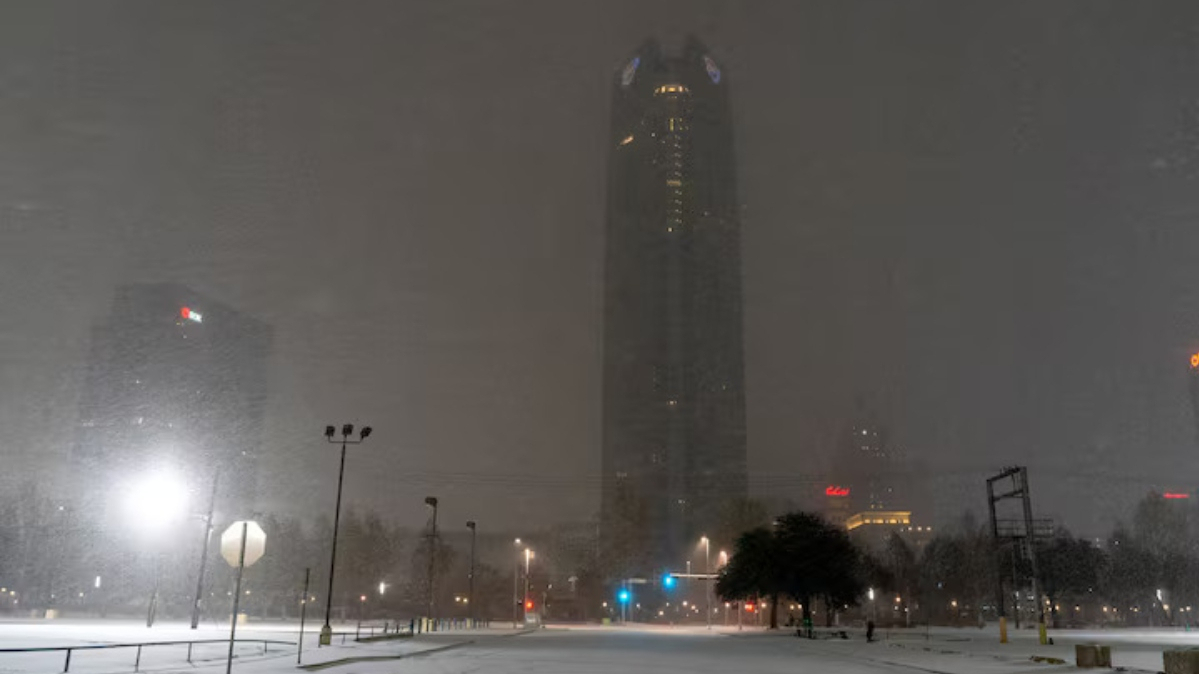
U.S. electricity grid operators ramped up preventive measures on Saturday to head off rotating power cuts as a severe cold snap affecting around half the country put heavy strain on their systems.
PJM Interconnection, the largest regional power grid in the United States serving roughly 67 million people across the eastern states and the Mid-Atlantic, reported brief surges in spot wholesale electricity prices. Prices jumped to more than $3,000 per megawatt hour on Saturday morning, up sharply from earlier levels below $200 per MWh.
According to Georg Rute, chief executive of grid software firm Gridraven and a specialist in the impact of weather on power transmission, ageing power stations that are usually offline for much of the year are being brought back into service to capitalise on the exceptionally high prices and meet unexpectedly strong demand.
“A 40-year-old gas turbine suddenly comes online because the prices are so high,” Rute told Reuters, adding that this is a clear sign of stress on the PJM system and other grids.
Electricity prices also rose sharply in other regions as storm conditions and temperatures close to zero degrees Fahrenheit (-18 Celsius) increased demand. At the same time, some natural gas production was shut in across major basins, while grid operators faced limits on gas pipeline capacity.
Dominion Energy, whose Virginia operations include the world’s largest concentration of data centres, warned that if ice forecasts prove accurate, the storm could become one of the most significant winter events to affect its network.
As regional grid operators grapple with tight fuel supplies, congested transmission lines and unpredictable weather, power utilities are positioning repair crews in anticipation of ice and snow damage to local distribution lines supplying homes and businesses.
Grids under pressure
With natural gas supplies constrained, regional grid operators have instructed coal- and gas-fired power plants to increase output, according to operational reports.
The Midcontinent Independent System Operator (MISO) urged generators to maximise production and reduced electricity exports across its footprint, which spans 15 U.S. states in the Midwest and South as well as Manitoba in Canada.
Over the past 24 hours, MISO has imported several thousand megawatts of electricity from PJM’s network to help meet demand, its reports showed.
Analysts at consultancy ICF International warned that PJM is particularly vulnerable during winter, as its heavy reliance on natural gas generation leaves it exposed to fuel shortages and equipment freezing during extreme cold.
MISO also issued a system-wide emergency alert, urging utilities to be ready to generate as much electricity as possible as some plants were forced offline or cut output due to freezing conditions.
Wholesale electricity prices in MISO’s Minnesota hub climbed to nearly $500 per MWh amid transmission bottlenecks in the Upper Midwest, while prices in the operator’s southern region remained below $50 per MWh.
In New England, oil-fired power stations were brought into extensive use to conserve natural gas, the region’s primary fuel. Early on Saturday, oil accounted for 35% of electricity generation, compared with a normal level of around 1% or less, according to ISO New England data. Natural gas, typically dominant, made up just 22% of output.
Spot power prices in New England exceeded $300 per MWh, roughly double Friday’s level.
Texas grid under scrutiny
For the Electric Reliability Council of Texas (ERCOT), the storm represents its biggest challenge since 2021, when extreme cold nearly triggered a catastrophic statewide blackout.
That event left more than 200 people dead after ERCOT lost around half of its generating capacity during freezing weather.
Since then, tougher state and federal regulations have been introduced to improve winter preparedness across utilities and grid operators nationwide.
Rute said ERCOT currently appears well positioned, with ample fossil fuel capacity, strong contributions from wind and solar energy, and more battery storage than any other U.S. grid.
“I think the chances of a repeat of 2021 are very slim,” he said. “But no two blackouts ever happen in the same way.”















What is your opinion on this topic?
Leave the first comment