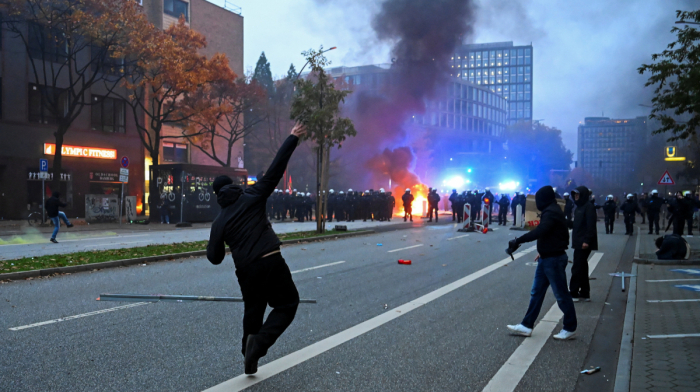
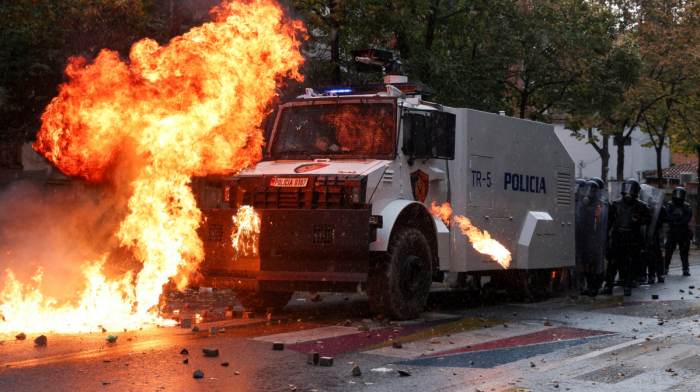
Why are Gen Z protesters taking to Germany's streets?
Gen Z protests swept 34 German cities on Saturday (31 October) over education, living costs and military service proposals. Violence erupted in Fra...
The United Kingdom has launched Project Nightfall, a fast-track programme to develop new long-range ballistic missiles for Ukraine, aiming to help Kyiv strike targets deep behind Russian lines.
According to a U.K. defence ministry handout, the ground-launched missiles could carry a 200-kilogram (440 lb) warhead over a range of more than 500 kilometres (310 miles). They are designed to be fired in rapid succession and then quickly relocated, allowing Ukrainian forces to hit high-value targets before Russian retaliation.
Defence Secretary John Healey disclosed details of the programme after a recent visit to Ukraine, during which he came close to a major Russian missile attack. He said the experience highlighted the need for Ukraine to combine strong air defences with the ability to strike back.
“You defend your cities by having layers of defence, and you partly defend by being able to attack,” he said.
During the visit, Russia fired an Oreshnik ballistic missile at western Ukraine, striking Lviv Oblast just 60km from the Polish border. A source said Mr Healey had a “close shave” near Lviv, where his train was forced to make an emergency stop as air raid sirens sounded.
“We were close enough to hear the air raid sirens,” Mr Healey said. “It was a serious moment and a stark reminder of the barrage of drones and missiles hitting Ukrainians in sub-zero conditions.”
Under Project Nightfall, Britain plans to award development contracts to three industry teams. Each will receive funding to produce initial missiles for test launches within a year, with a target production rate of up to ten missiles per month. The maximum unit cost is expected to be around $1.07m, with contracts due to be signed in March 2026.
UK defence officials say the programme is part of a broader effort to increase the cost of Russia’s war by enabling Ukraine to strike military and energy infrastructure, while easing pressure on its air defence systems.
Britain says European security depends on a resilient Ukraine capable of sustaining long-range operations as the conflict continues.
The U.S. has approved the sale of 500 Patriot PAC-3 missiles to Ukraine in a deal worth an estimated $2.1 billion, but Kyiv could face years of delays before receiving the weapons it urgently needs to defend against intensifying Russian attacks.
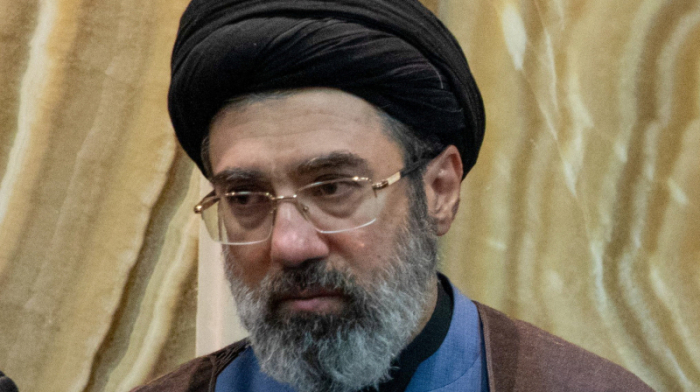
Iranian Supreme Leader Ayatollah Khamenei has ordered Iran's armed forces to respond to any threat immediately and without geographical limits in statements posted to social media platforms on Saturday (31 October).
Demonstrators carrying Iranian flags and placards supporting the hijab gathered outside the Azerbaijani Embassy in London.
A Chinese-made AI chip has matched Nvidia’s H200 in tests conducted by its developer, marking a potential breakthrough in China’s efforts to reduce its dependence on foreign technology.
A hacking group linked to North Korea is widely believed to be behind the theft of $6.3 billion from cryptocurrency giant Binance, a cyberattack that experts describe as the largest cryptocurrency heist on record.
Gen Z protests swept 34 German cities on Saturday (31 October) over education, living costs and military service proposals. Violence erupted in Frankfurt, where shops were looted and police reported Molotov cocktail attacks.
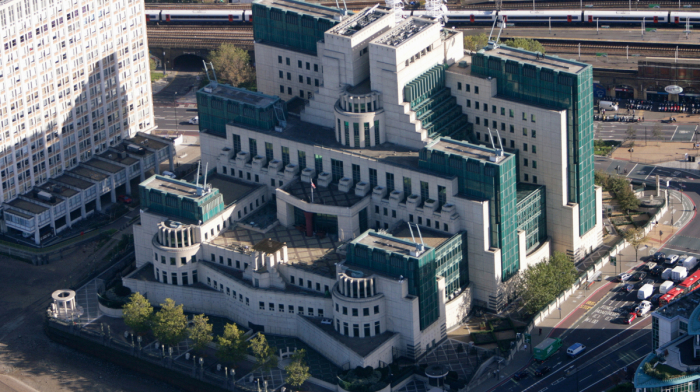
Iran designated Britain's Royal Navy and Royal Air Force as terrorist organisations on Sunday, (1 November), and classified the country's foreign intelligence agency, MI6, as a hostile group, according to a statement from the Iranian Foreign Ministry.
Thousands protested in Albania's capital, Tirana, on Saturday (31 October), demanding Prime Minister Edi Rama's resignation over perceived corruption allegations and dissatisfaction with the government over a lack of jobs and poor education standards.
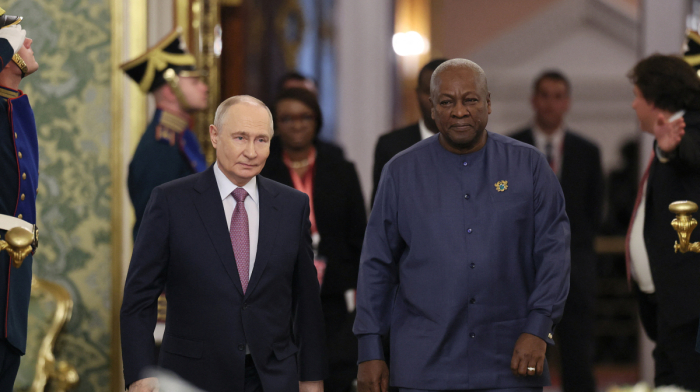
Russia has agreed to work with Ghana on developing a 2,000-megawatt nuclear power plant following talks at the Russia-Africa Summit in Moscow, Ghanaian Foreign Minister Samuel Okudzeto Ablakwa said on Saturday.
Foreign ministers from the U.S., Japan, Australia and India raised concerns over export restrictions and economic coercion at a Quad meeting in Atlanta, U.S., on Saturday, 31 October 2026, according to their joint statement.
You can download the AnewZ application from Play Store and the App Store.
What is your opinion on this topic?
Leave the first comment