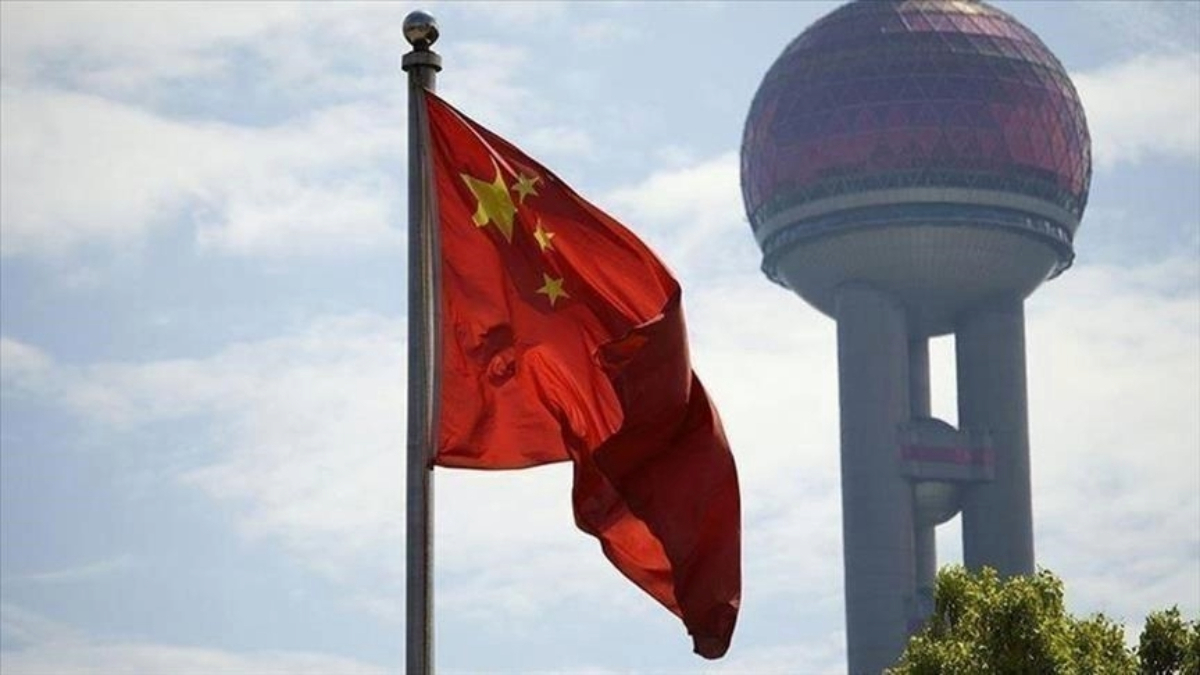
Senior officials from the Quadrilateral Security Dialogue, or Quad, met in Beijing this week for talks with Chinese counterparts, marking a rare in-person engagement between the four-nation grouping and China amid heightened strategic competition in the Indo-Pacific.
The meeting comes as regional powers seek to balance rivalry with dialogue at a time of growing security and economic uncertainty.
The discussions brought together representatives from the United States, Japan, India and Australia alongside Chinese officials, with talks focusing on regional stability, maritime security, supply chains and crisis management. While no joint statement was issued, participants described the exchange as candid and aimed at reducing misunderstandings, particularly as military activity and diplomatic friction continue to rise across the region.
The meeting in Beijing shows an effort by Quad members to keep communication channels open with China, even as they deepen coordination among themselves. Officials emphasized the importance of dialogue to avoid miscalculation, especially in sensitive areas such as the South China Sea, the Taiwan Strait and regional sea lanes critical to global trade.
The Quad is an informal strategic grouping made up of the United States, Japan, India and Australia. It was first formed in 2007 following cooperation on disaster relief after the 2004 Indian Ocean tsunami, but later faded before being revived in 2017 as concerns grew over China’s expanding influence in the Indo-Pacific. Since then, the Quad has evolved into a key platform for strategic coordination among the four countries.
While the Quad is not a formal military alliance, it has increasingly focused on security-related issues. The group regularly emphasizes its support for a “free and open Indo-Pacific,” respect for international law, freedom of navigation, and peaceful resolution of disputes. In addition to security, the Quad has expanded cooperation in areas such as infrastructure development, climate action, emerging technologies, cybersecurity and vaccine distribution.
China has long viewed the Quad with suspicion, portraying it as an exclusive bloc aimed at containing Beijing’s rise. Quad members have rejected that characterization, arguing that the grouping is not directed at any single country and is instead focused on promoting regional stability and cooperation. Still, the growing scope of Quad activities, including joint naval exercises and coordinated diplomatic messaging, has reinforced perceptions of strategic competition.
Against this backdrop, the Beijing meeting was seen as an effort to manage differences rather than resolve them. Participants proved that while disagreements remain, especially on security and governance issues, maintaining dialogue is preferable to confrontation. The talks also took place as China has sought to stabilize relations with major powers amid economic pressures and a more complex global environment.
Analysts say the engagement highlights a dual-track approach by Quad members: strengthening coordination among themselves while selectively engaging China to reduce the risk of escalation. The choice of Beijing as the venue was particularly notable, showing a willingness on both sides to engage directly despite deep mutual mistrust.
Although the meeting did not produce concrete agreements, it showed the importance of communication in an increasingly polarized Indo-Pacific. With strategic competition unlikely to ease in the near term, observers say such engagements may play a crucial role in preventing tensions from tipping into open conflict, even as rivalry between China and the Quad continues to shape the region’s future.

















What is your opinion on this topic?
Leave the first comment