Steel factory blast kills two in China's Inner Mongolia
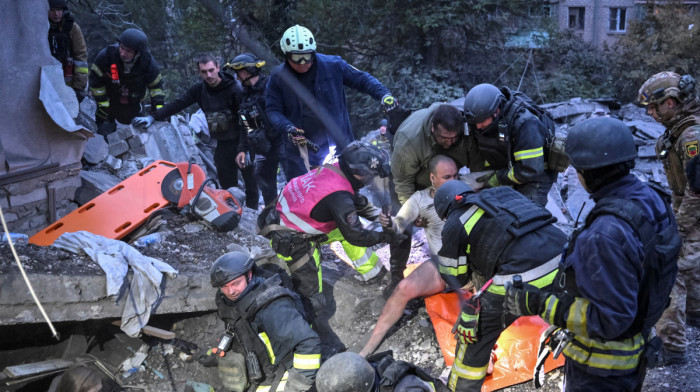
An explosion at a steel plate factory in China's northern region of Inner Mongolia killed two people and injured 84, Inner Mongolia Baotou Steel Union...
Germany’s military planners warn that cyberattacks, sabotage, and disinformation could signal the start of a new war, according to a confidential government document seen by Politico. The plan outlines how Germany would defend itself in a major NATO conflict.
The Operational Plan for Germany (OPLAN) describes hybrid warfare as an early indicator of military escalation. The document marks a shift in how Germany views threats, particularly as Russia’s aggression toward NATO countries grows. It also places Germany at the forefront of NATO’s logistical efforts, making it a primary target in any conflict.
OPLAN is classified as a "light version" of the overall defense strategy, coordinating military and civilian agencies. Germany would play a crucial role as an operational base and transit corridor for NATO forces, facing significant attacks early in the conflict, particularly on infrastructure.
The five-phase plan emphasizes civilian infrastructure as vital to military success. Transport, energy, and healthcare services are deemed essential, with the document noting that civilian support is necessary for the plan's success. Germany is now in the first phase, focused on threat detection and coordination.
Hybrid attacks against Germany have been on the rise, including espionage and cyberattacks, particularly from Russia.
According to Politico, German authorities have documented numerous incidents of hybrid warfare aimed at destabilizing the country, with Dobrindt describing it as a "daily target."

Italian Prime Minister Giorgia Meloni said on Saturday (17 January) that concerns over security in Greenland should be addressed within the framework of NATO, describing a ground military intervention as highly unlikely.
Elon Musk is seeking up to $134 billion from OpenAI and Microsoft, arguing that the companies profited unfairly from his early support of the artificial intelligence firm, according to a court filing made public on Friday.
European leaders voiced growing alarm on Sunday over U.S. threats to impose tariffs on eight NATO allies, warning the move could destabilize transatlantic relations and heighten tensions in the Arctic.
Trump administration officials held months-long discussions with Venezuela’s hardline interior minister Diosdado Cabello before the U.S. operation that led to the seizure of President Nicolás Maduro, according to multiple people familiar with the matter.
Syrian President Ahmed al-Sharaa has signed a decree recognising Kurdish language rights, as government forces advanced against U.S.-backed Kurdish-led fighters despite U.S. calls for restraint.
An explosion at a steel plate factory in China's northern region of Inner Mongolia killed two people and injured 84, Inner Mongolia Baotou Steel Union said on Monday, adding that eight are missing.
Russian President Vladimir Putin has been invited to join his U.S. counterpart's Gaza Board of Peace, the Kremlin says. Moscow says it is studying the proposal and hoping for contact from Washington, DC.
A fresh consignment of precision-guided munitions has departed from the Indian city of Nagpur bound for Yerevan, marking the latest phase in the rapidly expanding defence partnership between India and Armenia.
Start your day informed with AnewZ Morning Brief: here are the top news stories for 19 January, covering the latest developments you need to know.
U.S. President Donald Trump has renewed demands for U.S. control of Greenland and threatened tariffs on European allies, prompting pushback from Denmark, the European Union, Britain and Norway, who say the island is not for sale and already covered by NATO.
You can download the AnewZ application from Play Store and the App Store.
What is your opinion on this topic?
Leave the first comment