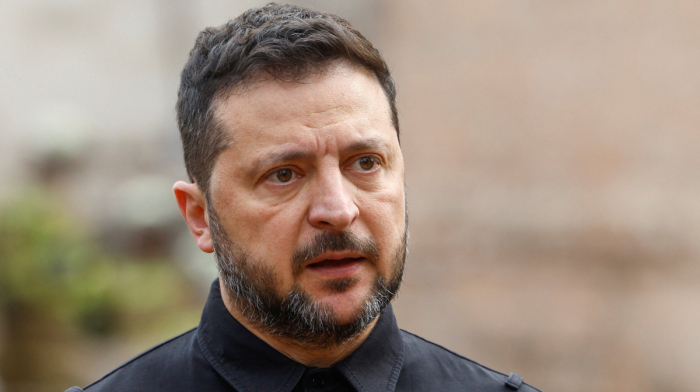
Pashinyan says Armenia open to Azerbaijani fuel imports
Armenian Prime Minister Nikol Pashinyan has confirmed that fuel imports from Azerbaijan have resumed, saying the market is open to all businesses and ...
Kazakh President Kassym-Jomart Tokayev’s first official visit to Japan marks a notable moment in relations between the two countries, reflecting a shared interest in deepening cooperation.
Beyond diplomacy, the visit underscores growing strategic and economic considerations, as both sides seek to diversify partnerships and reduce over-reliance on dominant regional powers.
Speaking to Daybreak on AnewZ, Seijiro Takeshita, Professor at the University of Shizuoka, explained to Nadia Gyane why the visit carries particular significance for both Kazakhstan and Japan.
Takeshita highlighted the symbolic and practical weight of the visit, noting that it extends well beyond ceremonial diplomacy.
“It's very significant I mean he's also met with our emperor and it's not only a diplomatic but it's much more to do with economic side as well as you reported earlier.”
He said the visit reflects mutual strategic needs, as both countries look to rebalance their external dependencies.
“I think Japan and both the parties really need each other considering that you need to basically reduce the amount of excess reliability to interior states like that in Russia." he said.
"Kazakhstan is aiming to do that. Japan is aiming also to basically decrease the level of dependency to China.” he added.
According to Takeshita, Kazakhstan and Japan are well positioned to strengthen cooperation in logistics and trade, with significant untapped potential on both sides.
“So, you know we have a very interesting strategic logistic ties that we can strengthen. And at the same time we can boost our trade, there are so much potential on both sides of benefiting from each other.”
He described the visit as a positive step forward for bilateral relations.
“So, I think this is a very very important and a very good move.”
Takeshita’s remarks suggest that President Tokayev’s visit represents a strategic opportunity for Kazakhstan and Japan to expand economic cooperation, enhance logistics connectivity and diversify international partnerships.
Both countries seek to navigate evolving regional dependencies, the visit signals a shared interest in building a more resilient and mutually beneficial relationship.

Open-source intelligence (OSINT) sources reported a significant movement of U.S. military aircraft towards the Middle East in recent hours. Dozens of U.S. Air Force aerial refuelling tankers and heavy transport aircraft were observed heading eastwards, presumably to staging points in the region.
Snow and ice stalled travellers in northwest Europe on Wednesday, forcing around a thousand to spend the night in Amsterdam's Schiphol airport but delighting others who set out to explore a snow-blanketed Paris on sledges and skis.
Diplomatic tensions between Tokyo and Beijing escalated as Japan slams China's export ban on dual-use goods. Markets have wobbled as fears grow over a potential rare earth embargo affecting global supply chains.
Two people have been killed after a private helicopter crashed at a recreation centre in Russia’s Perm region, Russian authorities and local media have said.
Iran’s chief justice has warned protesters there will be “no leniency for those who help the enemy against the Islamic Republic”, as rights groups reported a rising death toll during what observers describe as the country’s biggest wave of unrest in three years.
Iran’s Commander-in-Chief of Army, Major General Amir Hatami has warned against hostile rhetoric from U.S. and Israeli officials. “Iran considers the intensification of the enemies' rhetoric against the Iranian nation as a threat and will not leave its continuation unanswered,” Hatami said.
Türkiye says it's prepared a self-sustaining international stabilisation force for Gaza and has already begun training, Defence Minister Yaşar Güler said, reiterating Ankara’s readiness to deploy troops to support humanitarian efforts and help end the fighting.
Turkish President Recep Tayyip Erdogan has dismissed reports that Nicolas Maduro, Venezuela’s toppled leader, was previously offered asylum in Türkiye. “We have not received any such news,” Erdogan was quoted as saying by local media after a Cabinet meeting held Wednesday in Ankara.
Former NATO Deputy Secretary-General Rose Gottemoeller has warned that Europe could face a future without U.S. nuclear deterrence.
Start your day informed with AnewZ Morning Brief: here are the top news stories for the 8th of January, covering the latest developments you need to know.
You can download the AnewZ application from Play Store and the App Store.
What is your opinion on this topic?
Leave the first comment