Venezuela Oil Exports Rise, Output Cuts Continue
Venezuela’s oil exports under a flagship $2bn supply deal with the U.S. reached around 7.8 million barrels on Wednesday, vessel-tracking data and st...
Chinese Foreign Minister Wang Yi has begun a multi-nation diplomatic tour of the Middle East, showing Beijing’s deepening engagement in a region undergoing conflicts, shifting alliances and major geopolitical realignments.
The trip, spanning December 12 to 16, includes official visits to the United Arab Emirates, Saudi Arabia and Jordan, three key partners for China’s expanding political and economic agenda in the Arab world.
According to the Chinese Foreign Ministry, Wang is traveling at the invitation of his counterparts in each country - the UAE’s Sheikh Abdullah bin Zayed Al Nahyan, Saudi Arabia’s Prince Faisal bin Farhan Al Saud and Jordan’s Ayman Safadi.
The tour aims to consolidate political trust, strengthen economic ties and broaden cooperation in trade, investment, energy, infrastructure and people-to-people exchanges. Beijing has framed the visits as part of its effort to “expand cooperation across multiple fields” and reinforce what it describes as longstanding friendships with Arab nations.
A major component of the trip is expected to be China’s diplomatic push on regional security issues. Wang will hold consultations on the Iran nuclear question, reiterating Beijing’s long-standing call for a political and diplomatic settlement to prevent further escalation.
China has increasingly positioned itself as a neutral broker in Middle Eastern affairs, advocating dialogue over confrontation and emphasizing non-interference and multilateralism.
Officials in the UAE, Saudi Arabia and Jordan have welcomed Wang’s arrival, seeing the trip as an opportunity to deepen cooperation and explore new areas of partnership.
As Wang continues his journey, potential announcements are expected on strategic agreements, expanded economic initiatives and China’s stance on ongoing regional crises - developments likely to influence Middle East diplomacy in the year ahead.

More than 100 vehicles were involved in a massive pileup on Interstate 96 in western Michigan on Monday (19 January), forcing the highway to shut in both directions amid severe winter weather.
Several locally-developed instant messaging applications were reportedly restored in Iran on Tuesday (20 January), partially easing communications restrictions imposed after recent unrest.
There was a common theme in speeches at the World Economic Forum on Tuesday (20 January). China’s Vice-Premier, He Lifeng, warned that "tariffs and trade wars have no winners," while France's Emmanuel Macron, labelled "endless accumulation of new tariffs" from the U.S. "fundamentally unacceptable."
Dozens of beaches along Australia's east coast, including in Sydney, closed on Tuesday (20 January) after four shark attacks in two days, as heavy rains left waters murky and more likely to attract the animals.
U.S. President Donald Trump said Washington would “work something out” with NATO allies on Tuesday, defending his approach to the alliance while renewing his push for U.S. control of Greenland amid rising tensions with Europe.
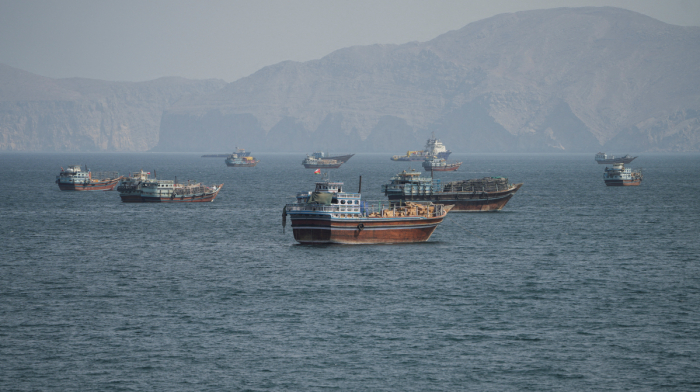
Venezuela’s oil exports under a flagship $2bn supply deal with the U.S. reached around 7.8 million barrels on Wednesday, vessel-tracking data and state-run PDVSA documents show, with shipments accelerating after Washington eased its blockade — but not enough for PDVSA to fully reverse output cuts.
Azerbaijan’s State Oil Fund, State Oil Fund of Azerbaijan (SOFAZ), has signed a long-term strategic cooperation agreement worth up to $1.4 billion with Brookfield Asset Management on the sidelines of the World Economic Forum in Davos, officials said.
A senior official at the Transportation Security Administration (TSA) said on Wednesday that roughly 6% of U.S. air travellers are not presenting identification that meets stricter federal standards, as the agency prepares to start charging passengers without enhanced ID a $45 fee from 1 February.
The United States is placing renewed emphasis on regional partnerships that offer predictability, security cooperation and economic continuity as instability deepens across the Middle East and parts of Eurasia
A fire alarm prompted the partial evacuation of the Davos Congress Centre on Wednesday evening while Donald Trump was inside the building attending the World Economic Forum, Swiss authorities said.
You can download the AnewZ application from Play Store and the App Store.
What is your opinion on this topic?
Leave the first comment